5 Ways to Support a Patient With Flight Anxiety
Flight anxiety is more than ordinary nervousness. Takeoff, turbulence, or landing can trigger distress and physical symptoms such as a rapid heartbeat, sweating, or shortness of breath. Knowing how to keep a patient calm during air travel starts with understanding their specific concerns and preparing support around them, rather than asking them to simply push through the fear.
A calm, supportive approach can make the journey feel more manageable. Slow breathing and familiar distractions may help a passenger focus, while a conversation with their healthcare provider can clarify whether medication is appropriate. Preparation matters too: discussing triggers, comfort needs, and what to expect can give the patient a clearer sense of support before boarding. This article covers practical ways to help, from breathing and distraction to medication discussions and travel planning.
Table of Contents
1. What is flight anxiety?
Flight anxiety is fear or distress connected with flying. It may start before departure or intensify during takeoff, turbulence, or landing. A passenger might express dread, ask repeated questions, or become tense when the aircraft moves. Physical effects can include sweating, a rapid heartbeat, headaches, muscle tension, fatigue, stomach problems, and shortness of breath. These reactions can make routine changes during a flight feel harder to manage.
Start by identifying the patient’s specific triggers. One person may fear takeoff, while another becomes distressed when turbulence interrupts a quiet flight. Some worry about being unable to leave their seat or get help. Ask what feels difficult, what signs appear first, and which explanations or comforts help. This gives the care team a practical basis for preparing support instead of treating every passenger’s stress the same way.
A medical escort can explain the journey in clear stages. Before takeoff, the escort can describe that the aircraft is preparing to leave the gate, then explain expected sounds or movement in plain language. If the patient becomes unsettled during turbulence, the escort can calmly describe what is happening and what comes next. The flight crew remains responsible for operating the aircraft, so communication should support the patient without distracting crew members from their duties.
Patient and flight-crew safety both shape the plan. Before travel, a fitness-to-fly assessment should consider the patient’s current condition, mobility, care needs, and ability to tolerate the planned journey. The clinician can use this review to identify the support the patient may need in transit and whether the travel plan should be adjusted. A medical escort can then understand the care plan and communicate relevant needs through the appropriate channels.
For U.S. flights, passengers who need medical assistance or a caregiver should communicate their needs to the airline and plan clinical support separately. Airline assistance and a caregiver’s or medical escort’s role address different needs, so describe the practical help the passenger requires.
To arrange wheelchair assistance, boarding accommodations, or help through airport security, contact the airline before travel and explain the passenger’s specific needs. Coordinate the travel-day plan with airline and airport staff, including where assistance is needed and whether the passenger needs support moving between airport stages.
Preparation can make the experience more comfortable without promising that anxiety will disappear. For example, knowing that takeoff is the patient’s main trigger helps the escort prepare a calm explanation before that stage. Clear communication, an individualized assessment, and a plan that can be adjusted to the patient’s condition help keep support focused throughout the flight.
2. Breathing and distraction techniques
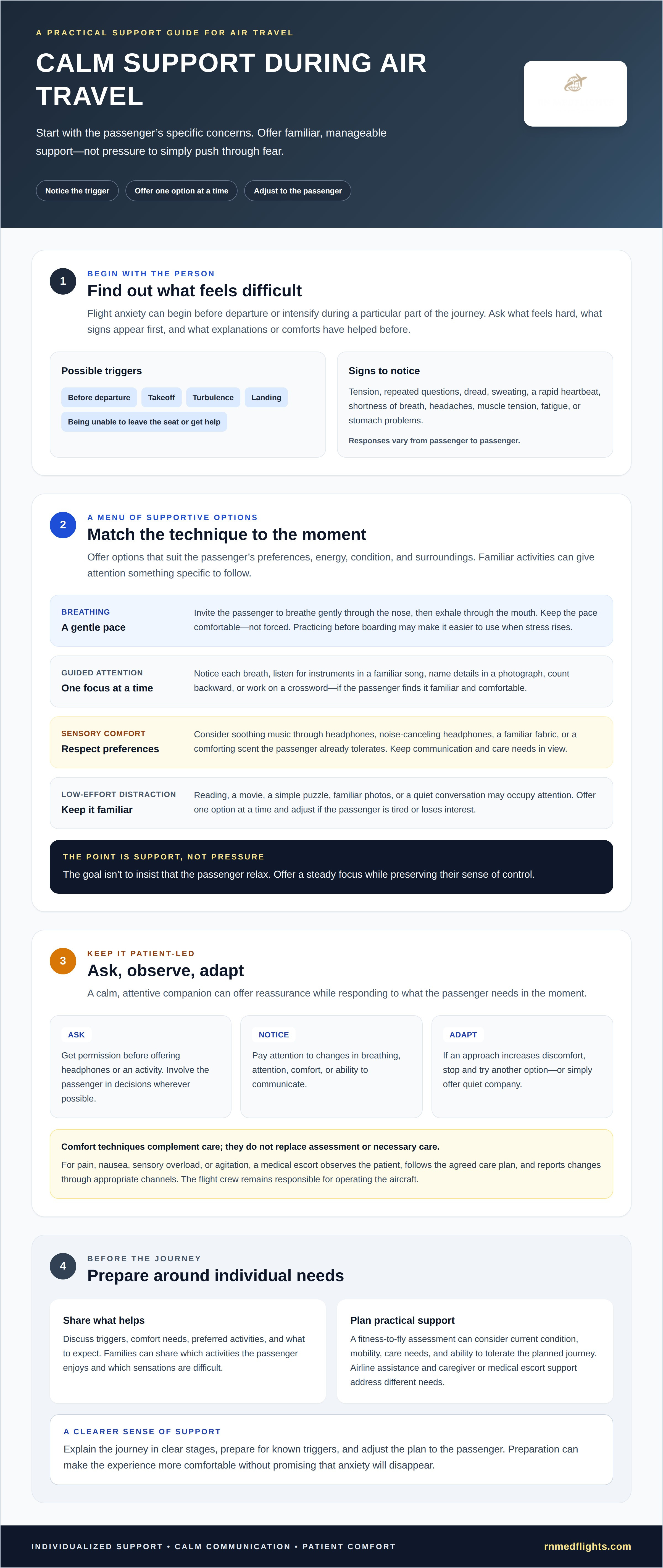
A medical escort can help a patient use calming techniques suited to their condition, preferences, and surroundings. Slow breathing is one option: the escort can invite the patient to breathe gently through the nose, then exhale through the mouth. The pace should feel comfortable, not forced. Practicing this approach before boarding may make it easier to use when stress rises during the flight.
Guided attention can also interrupt anxious thought patterns. An escort might ask the patient to notice each breath, listen for separate instruments in a familiar song, or name details in a photograph. These small tasks give the mind something specific to follow. If counting backward or doing a crossword feels familiar, the escort can help the patient focus on that activity instead of repeatedly anticipating what might happen next.
Sensory choices matter because a passenger may feel overwhelmed by cabin sounds, light, or nearby activity. Keeping the patient’s preferences in mind, an escort can help them listen to soothing music through headphones, touch a familiar fabric, or focus on a comforting scent they already tolerate. Noise-canceling headphones may reduce surrounding sound. The escort should keep communication and care needs in view while using any distraction.
Activities should match the patient’s energy and ability to participate. Reading, a movie, a simple puzzle, or familiar photos can occupy attention without requiring a complicated response. The escort can offer one option at a time, then adjust if the patient becomes tired or loses interest. A quiet conversation may feel more comfortable than an activity during a difficult moment.
For pain, nausea, sensory overload, or agitation, a medical escort observes the patient, follows the agreed care plan, and reports changes through appropriate channels. Comfort-focused distraction can complement that support, but it doesn’t replace assessment or necessary care.
Timing and consent help these techniques feel supportive. An escort can ask before offering headphones or an activity, then watch for changes in the patient’s breathing, attention, or ability to communicate. If an approach increases discomfort, the escort can stop and try another option. The goal isn’t to insist that the patient relax, but to offer a steady focus and preserve their sense of control.
Families arranging medical escort support for air travel can share which activities the patient enjoys and which sensations they find difficult. That information helps the escort prepare appropriate options and respond to the patient as an individual throughout the journey.
Deep breathing may help the body feel calmer during a flight. Patients may also use meditation or yoga to manage travel anxiety. Taking deep breaths in a dark environment may help relax the body and muscles, while familiar scents such as lavender or peppermint can provide another distraction.
3. Prescription anti-anxiety and sleep medication
Travel anxiety can affect a patient emotionally and physically. Before a flight, worry may build around takeoff, turbulence, landing, or feeling unable to leave the aircraft. Intense anxiety may involve a rapid heartbeat, sweating, shortness of breath, or stomach discomfort. A panic attack can also include chest pain, trembling, dizziness, and a sense of impending doom. These symptoms can be frightening, so calm observation matters.
Prescription medication may provide additional support for some passengers, but it isn’t suitable for everyone. A healthcare provider can discuss the patient’s symptoms, medical history, current medicines, and the demands of the trip. The conversation should cover potential benefits, side effects, and whether a medicine could affect alertness or care needs during the flight. Some anxiety medicines can leave a traveler tired for hours after landing.
Benzodiazepines may reduce flight anxiety for a short time, such as during a flight. They also carry risks: these medicines can be addictive, and misuse increases the risk of overdose and death. Suddenly stopping benzodiazepines after dependence develops can cause life-threatening withdrawal. A clinician determines whether this type of medication is appropriate and makes any prescription decisions.
Are sedatives or anti-anxiety medications safe for patients on flights? Suitability depends on the patient and the medicine, so discuss the risks, benefits, side effects, and travel-related care needs with a healthcare provider. Don’t start, stop, or change a prescription solely to make a flight more soothing.
Sleep medication also deserves a specific discussion. A patient hoping to sleep through the flight should consider how drowsiness could affect communication, mobility, or the support they need in transit. A medical escort can follow the agreed care plan and observe the patient, but medication selection and dosing remain clinical decisions.
For a U.S. flight, patients should carry their prescribed medicines and the medical supplies required by their care plan, with several days of additional medication to prepare for delays. Keep essential items accessible during the journey rather than relying on checked baggage for something needed in transit.
Before departure, clarify which symptoms the patient commonly experiences, what medication has been prescribed, and what changes should prompt attention. A written medication list can help the care team understand the plan. Discussing these details in advance aligns anxiety support with the patient’s health needs instead of treating sedation as the only answer.
Fast-acting anxiety medications such as lorazepam may be prescribed to anxious fliers, though benzodiazepines can have drawbacks and side effects. Medication may provide additional support during high-anxiety moments for some people who fear flying. Patients should consult a healthcare provider about the risks, benefits, and suitability of medication for travel anxiety. A psychiatrist advised one participant to try a newly prescribed medication at home at least two times before considering taking it on a plane.
Benzodiazepines are controlled substances because they can be addictive, and only certain clinicians can prescribe them in limited amounts. A forum participant said their primary care physician would provide a prescription for a limited number of Xanax pills, which they estimated as 10 pills. These examples do not determine what is appropriate for another patient; medication decisions remain a matter to discuss with a healthcare provider.
4. Discussing a passenger’s concerns before flying
A focused conversation before departure helps an escort understand what the passenger fears and what support feels acceptable. The escort can ask whether takeoff, turbulence, separation from family, or feeling unwell is most concerning. Then they can agree on a simple plan: how the patient prefers to receive updates, what signs show distress is increasing, and what response feels supportive. Specific preferences give the patient a role in decisions.
Before boarding, the escort can explain the sequence of travel in manageable steps, from boarding to takeoff and landing. They can invite questions and describe what the patient may notice, such as engine noise or changes in movement. If the patient fears flying, the escort can offer a visualization exercise. For example, the patient can picture settling into the seat and moving through each stage with support nearby.
What can a medical escort do to support patients with anxiety or panic attacks before and during a flight? The escort can listen to concerns, help prepare a response plan, and watch for changes in the patient’s condition. If distress rises in flight, they can use agreed communication and calming strategies while following the care plan.
That support must not distract the pilot from operating the aircraft. The escort can focus on the patient, while flight-related questions or requests go through the appropriate crew communication. Calm, concise updates help the passenger understand what is happening without asking the pilot to divide attention. The crew remains responsible for flight operations.
Planning can also account for conditions that may feel easier for a particular passenger. If the schedule and travel needs allow, an early-morning flight may reduce the time available for worry to build. Seat preference can matter too: one passenger may feel more comfortable in an aisle seat, while another prefers a window. The escort can help incorporate these preferences into the travel plan.
Preventive preparation starts before travel day. The escort can review the passenger’s concerns, care needs, and preferred ways to communicate, then identify what support may be needed at each stage. If the passenger is prone to motion sickness, discussing it beforehand lets the team plan appropriate support. A clinician may also discuss cognitive behavioral therapy for persistent fear of flying.
Families can help by sharing useful information, such as the passenger’s known triggers and calming routines. The escort can then follow a consistent approach, explain changes clearly, and involve the patient in decisions. This preparation helps passengers feel heard while keeping support organized before and during the flight.
5. Maintaining a calm and supportive attitude
A medical escort supports the patient through steady, respectful communication. A calm voice, clear explanations, and unhurried responses can make each step easier to follow. For example, the escort can explain that boarding is next, then check whether the patient is ready to move. Managing the journey this way avoids adding pressure when the passenger is already distressed.
Emotional support starts with listening, not correcting every fear. If a patient says they feel unsafe, the escort can acknowledge the feeling and ask what would help in that moment. Short statements and one question at a time may work better than a long explanation. The escort can also keep familiar routines in mind, such as a preferred way to communicate or a familiar comfort item.
For a patient with dementia or cognitive impairment, a medical escort can use simple language, familiar cues, and a predictable sequence of steps. The escort can calmly repeat key information and allow time for the patient to respond, adapting communication to the individual’s needs.
A trusted travel companion can offer continuity from departure through landing. A familiar person may help the patient understand what is happening and feel less alone. However, a family member or friend may find distressing events difficult to manage. The patient’s support plan should account for both the companion’s presence and their ability to stay focused if the passenger becomes upset.
The escort’s role is to stay attentive to the patient while respecting the flight crew’s work. If the patient becomes agitated, the escort can use a calm tone, limit unnecessary conversation, and follow the care plan. Any concern requiring crew involvement should be communicated clearly and appropriately. This keeps attention on the patient without interrupting flight operations.
If the patient uses prescribed benzodiazepines or other medication, the escort follows the agreed medical plan rather than changing doses. The doctor’s directions guide medication use and support during the flight. The escort can also observe changes in alertness or communication and share relevant concerns with the appropriate care team.
Support continues through landing and the transition afterward. The escort can explain that the aircraft has arrived, stay with the patient as the next steps begin, and maintain familiar communication. A calm, consistent presence can be especially useful when the patient feels tired or disoriented after travel.
For patients who need a steady companion and support during a commercial flight, arrange medical travel companion support suited to their care needs.
RN MEDflights: travel companion
RN MEDflights provides travel companion support and Commercial Airline Medical Escort for patients who need assistance during a commercial flight. This may suit someone who feels anxious traveling alone or needs medical support alongside reassurance. For patients who need coordinated transfers, Domestic Medical Relocation and Bed-to-Bed Medical Transport can support the journey from pickup through delivery to the receiving bed.
A travel plan can account for the patient’s care needs, comfort, and concerns during air travel. A medical escort can provide attentive support throughout the flight, while a travel companion offers a steady presence during the journey. The right option depends on the support the patient needs while traveling.
To discuss support for a patient’s flight, contact RN MEDflights.
Plan the next step with confidence
RN MEDflights offers Commercial Airline Medical Escort, International Medical Repatriation, and Domestic Medical Relocation. These services support different travel needs, from an escorted commercial flight to relocation between locations. Discuss the patient’s circumstances and the assistance needed for the journey with RN MEDflights.
Contact RN MEDflights for support to discuss travel arrangements for your patient. Thoughtful planning can help the patient feel supported as the journey begins.
Frequently Asked Questions
What is flight anxiety?
Flight anxiety is fear or distress linked to flying, and it can affect a passenger before departure or during a flight. A specific concern, such as turbulence or feeling confined, may prompt emotional distress and physical symptoms. For example, someone may become tense as the aircraft prepares for takeoff. Identifying the passenger’s individual concern helps shape supportive communication and travel planning.
What calming techniques can a medical escort use during takeoff, turbulence, and landing?
A medical escort can offer a familiar, low-effort focus suited to each stage. Before takeoff, the escort might guide the passenger through gentle breathing or help them start a familiar playlist. During turbulence, they can briefly explain what is happening and invite the passenger to focus on music or a simple mental task. As landing approaches, clear updates can help the passenger know what to expect. Planning how to keep a patient calm during air travel starts with their preferences.
What are the risks of flying for patients with heart, lung, or other serious medical conditions?
The main concern is whether the patient’s current condition and care needs can be managed safely throughout the journey. A pre-flight assessment considers medical stability, mobility, required support, and the patient’s ability to tolerate travel. Heart or lung disease, for example, should be discussed with the treating clinician as part of that assessment. The resulting plan should match the patient’s needs; a commercial flight with an escort is intended for medically stable patients cleared by a physician to fly.