Ensuring Patient Dignity During Transport: A Clinical and Compassionate Guide for 2026
- 4 days ago
- 12 min read
Imagine standing in a crowded airport terminal, feeling the weight of every curious glance as you assist your parent or spouse with their medical equipment. The fear that a private health struggle might become a public spectacle is a heavy burden for many families. When you are tasked with moving a loved one across the country or across an ocean, ensuring patient dignity during transport becomes just as vital as the medical care itself. You want them to feel like a traveler, not a patient on display.
We understand that the loss of independence can be heartbreaking for a patient and overwhelming for their caregivers. This article explores how professional medical escorts use clinical expertise and 2026's updated "safe and dignified" travel standards to preserve a patient's agency. You'll learn how a bedside-to-bedside approach minimizes public exposure while providing the continuous supervision of a licensed flight nurse. From navigating new DOT accessibility rules to managing discreet clinical handoffs, we'll outline the steps to a journey that feels like traveling with a trusted, capable companion.
Table of Contents
The Core Principles of Patient Dignity in Medical Transport
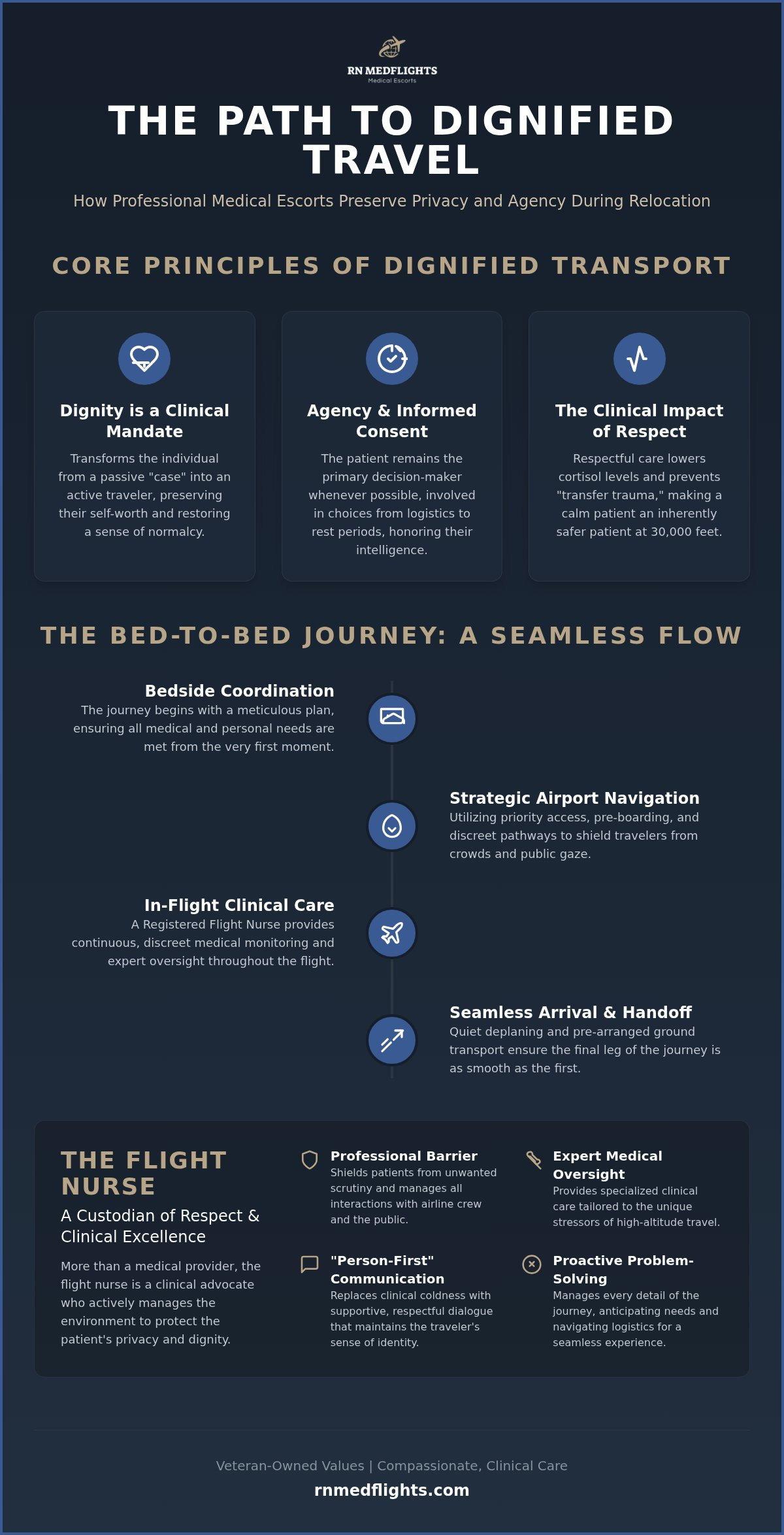
Dignity isn't merely a soft skill or a polite gesture; it's a clinical requirement. In the context of medical relocation, dignity involves the active preservation of a person's self-worth and agency during their most vulnerable moments. When we focus on ensuring patient dignity during transport, we're adhering to the fundamental principles of patient rights that remain constant regardless of whether the care happens in a hospital or at 30,000 feet. This shift in perspective transforms the individual from a passive "case" into an active traveler, restoring a sense of normalcy that is often stripped away in traditional clinical environments.
The psychological link between physical comfort and emotional respect is profound. A patient who feels exposed or ignored experiences heightened anxiety, which can complicate medical management and increase the risk of physiological instability. By prioritizing privacy and autonomy, we create a stable emotional foundation for the entire journey. We treat every traveler with the weight of medical expertise but the heart of a caregiver, prioritizing their emotional security as much as their physical safety.
To better understand how these principles translate into real-world care, watch this helpful video:
Agency and Informed Consent During Travel
Agency means the patient remains the primary decision-maker whenever cognitively possible. We involve travelers in logistical choices, such as meal preferences, the timing of rest periods, and even small details about their seating arrangement. Before any clinical intervention occurs, especially in a public space like an airport terminal, we provide a clear, quiet explanation. This practice honors their intelligence and prevents the feeling of being "handled" by others. Respecting personal preferences in communication and diet isn't just about comfort; it's about maintaining the patient's identity throughout the relocation process.
The Clinical Impact of Respectful Care
Respectful care has measurable physiological benefits. Maintaining a patient's dignity helps lower cortisol levels, which is crucial for preventing "transfer trauma" during long-distance moves. A specialized flight nurse is trained to monitor these subtle signs of psychological distress alongside vital signs. Because high-altitude travel places unique stressors on the cardiovascular and respiratory systems, a calm and respected patient is inherently a safer patient. Ensuring patient dignity during transport is a proactive safety measure that optimizes clinical outcomes by keeping the traveler's stress levels manageable from bed to bed.
Maintaining Privacy in Public Spaces: Airports and Commercial Flights
The modern airport terminal is a high-exposure environment that can feel intimidating for those managing a chronic condition or recovery. Our approach to ensuring patient dignity during transport focuses on neutralizing the "public gaze" by managing the environment before the traveler even arrives at the curb. We view the airport not as an obstacle, but as a series of controlled transitions. By coordinating with airline ground staff and utilizing priority access, we shield our patients from unnecessary curiosity and long queues that can lead to physical exhaustion and emotional distress.
Strategic boarding and deplaning are essential components of this protective shield. We typically arrange for pre-boarding to allow the patient to settle into their seat before the main cabin fills, or we wait until the aircraft has cleared to ensure a quiet, unhurried exit. During these moments, the flight nurse acts as a professional barrier, managing the physical space and interacting with crew members so the patient doesn't have to explain their presence or needs to strangers. If you are planning a move and feel overwhelmed by the logistics of a major terminal, our Commercial Airline Medical Escort team can manage every detail to ensure a quiet, private journey.
We also utilize discreet medical monitoring to maintain a non-clinical atmosphere. Instead of bulky, loud equipment that draws attention, our nurses use sophisticated, portable technology that integrates into a standard travel setting. This allows for continuous clinical oversight without the "hospital room" optics that can make a patient feel self-conscious. For those requiring higher levels of support, a Commercial Airline Stretcher Service provides a fully partitioned area within the cabin. This creates a private sanctuary where care can be administered behind a curtain, ensuring the patient remains completely out of the public view for the duration of the flight.
Navigating TSA and Security with Discretion
Security checkpoints are often the most stressful part of the journey. We pre-coordinate with TSA Cares to ensure that agents are aware of the medical nature of the trip, which often facilitates a smoother, more respectful process. Every medical traveler has the legally protected right to request a private screening area for themselves and their medical equipment to maintain their personal privacy. Our nurses manage the handling of all medical supplies and medications, ensuring they are processed quickly and placed back into secure, discreet storage without being displayed to other passengers.
In-Flight Privacy Management
Privacy management continues once we are at cruising altitude. We carefully select seating that maximizes personal space and allows the nurse easy access for clinical checks without disturbing the rest of the cabin. Managing hygiene and personal care in a confined space requires both technical skill and deep empathy. We use specialized coverings and attire that prioritize clinical access for the nurse while maintaining the patient's modesty. This methodical approach ensures that even in a public cabin, the patient's personal space remains a private, respected zone.
Clinical Protocols for Preserving Patient Identity
Preserving a patient’s identity during a long-distance move requires a deliberate shift from clinical task management to person-first advocacy. We don't view the traveler as a set of symptoms or a diagnosis to be managed. Instead, we see an individual with a history, preferences, and a right to self-worth. Ensuring patient dignity during transport means maintaining this perspective even when the environment becomes challenging. Our communication strategies reflect this by using professional yet warm language that acknowledges the traveler’s intelligence and agency. We explain every step of the process in private tones, ensuring the patient never feels like a passive object being moved from one location to another.
The "vulnerability gap" often occurs during hand-offs between ground and air teams. These are the moments when a patient is most likely to feel exposed or forgotten. We bridge this gap by providing a constant, unwavering presence. Our flight nurses manage the entire clinical narrative, ensuring that no detail of the patient’s comfort or history is lost during transitions. This continuity of care serves as an emotional anchor, reducing the cognitive load on families who are already under significant stress. By maintaining a steady pulse of communication, we lower the emotional temperature of the situation for everyone involved.
Bed-to-Bed Continuity as a Dignity Tool
A single point of contact is the most effective way to reduce patient confusion and fear. When a traveler knows their nurse will be with them from the initial bedside assessment to the final arrival, their anxiety levels drop significantly. This model eliminates the stress associated with multiple non emergency ambulance service transfers, where different teams might not be familiar with the patient’s specific nuances. The nurse acts as a translator and advocate, ensuring that logistical partners understand the traveler’s clinical needs without compromising their privacy or comfort.
Managing Sensitive Medical Needs in Transit
Discretion is the hallmark of professional medical escorting. We've developed rigorous protocols for managing sensitive needs, such as oxygen administration, catheter care, or wound management, in a way that remains invisible to the public. Proactive pain management is equally vital; we don't wait for a patient to show distress before intervening. By staying ahead of physical discomfort, we prevent the visible suffering that can lead to feelings of shame or loss of control. Proactive clinical advocacy prevents patient embarrassment by anticipating needs before they become public issues. This methodical approach ensures that the traveler’s dignity remains intact, even when their medical needs are complex.
The Flight Nurse as a Custodian of Respect
A licensed Registered Nurse (RN) possesses the clinical authority and professional stature required to safeguard a traveler’s self-worth in complex environments. While a non-medical companion provides basic help, a flight nurse functions as a vigilant protector of both physiological stability and personal honor. Ensuring patient dignity during transport demands an advocate capable of navigating the intersection of aviation protocols and intensive care. This expert oversight ensures the traveler is always treated as a person rather than a logistical case, prioritizing their emotional security alongside their physical safety.
The nurse serves as a professional shield against the scrutiny of public spaces. They manage all interactions with airline staff and curious passengers with a quiet, firm confidence that prevents the patient from feeling like a spectacle. For those utilizing international medical repatriation services, this protection includes a high degree of cultural competence. Respecting diverse traditions and communication styles is essential when moving a patient across international borders. The nurse balances this clinical vigilance with a level of supportive companionship that feels like traveling with a trusted, highly capable family member.
Professional Advocacy in the Air
Inside the cabin, the nurse coordinates with the flight crew to ensure all medical needs are addressed discreetly and without unnecessary fanfare. If a clinical intervention is required, the nurse performs it with a "quiet" precision that avoids drawing attention from other travelers. This advocacy ensures the patient’s voice is heard by every stakeholder, from the pilot to the ground ambulance team. By maintaining a steady, rhythmic pulse of care, the nurse creates a sanctuary of respect within the bustling environment of a commercial flight.
Emotional Support for the Family
The presence of a flight nurse significantly reduces the caregiver burden on family members. When a professional takes over the clinical logistics, families are free to focus on providing emotional support to their loved ones. We provide frequent, real-time updates that help lower the anxiety levels often associated with long-distance medical moves. This validation of the patient’s status as a valued individual reinforces the sense of security that everything is being handled by experts. If you are ready to secure a dedicated advocate for your journey, request a clinical consultation to learn how we can support your family.
Choosing a Partner Committed to End-to-End Dignity
Selecting a transport partner is a decision that impacts both the clinical safety and the emotional well-being of your loved one. When evaluating a potential medical escort service, it's essential to look beyond the equipment and certifications. You must assess their foundational commitment to ensuring patient dignity during transport. A provider should be able to articulate exactly how they protect a patient’s agency and privacy during every mile of the journey. This level of accountability is what transforms a simple relocation into a respectful, clinical mission.
The influence of veteran-owned values cannot be overstated in this industry. Discipline, respect, and a relentless focus on the mission are qualities that ensure no detail is overlooked. At RN MEDflights, these values guide our bed-to-bed coordination. We believe that continuity of care is a psychological necessity. When the same nurse manages the transition from the hospital bed to the aircraft seat and finally to the destination, it eliminates the "fragmented care" that often leads to patient distress. This seamless hand-off is a cost-effective alternative to private air ambulances, providing high-level clinical supervision without sacrificing the human element of the experience.
Questions to Ask Your Transport Provider
To ensure your provider aligns with your standards of care, consider asking these specific questions during your initial consultation:
How do you manage hygiene and personal privacy during a long-haul flight of 10 hours or more?
What specific protocols do you have in place for patients with cognitive impairments, such as dementia or Alzheimer’s, to reduce confusion?
How do your nurses act as advocates if the journey is interrupted by airline delays or technical issues?
A truly professional service will have documented, sequential steps for each of these scenarios. Their answers should reflect a readiness to protect the traveler under any circumstances, prioritizing emotional security as much as physical safety.
The RN MEDflights Difference
Since 2010, RN MEDflights has operated as a nurse-led, veteran-owned organization dedicated to the highest standards of aeromedical care. We combine a global reach with the personalized attention of a small business, ensuring that you never feel like just another case number. Our licensed Registered Flight Nurses are trained to be vigilant protectors, managing the complex logistics so families can focus on their roles as loved ones. We remain a steady presence, organized and detail-oriented, providing the security that every aspect of the journey is under control. Contact us for a respectful, dignified transport quote.
Moving Toward a Respectful Future in Medical Travel
The journey from hospital to home doesn't have to be a source of anxiety or public exposure. By prioritizing clinical advocacy and bed-to-bed continuity, families can replace fear with a sense of profound security. We've explored how 100% Licensed Registered Flight Nurses act as custodians of respect, managing everything from TSA protocols to in-flight hygiene with discreet precision. Ensuring patient dignity during transport is about more than just moving a traveler; it's about honoring the person behind the diagnosis and restoring their sense of agency.
Since 2010, our veteran-owned and operated organization has specialized in comprehensive bed-to-bed medical coordination that treats every traveler as a valued individual. You don't have to manage this complex transition alone. Our team is ready to provide the professional supervision and empathetic care your family deserves. We focus on the logistical details so you can focus on being a supportive presence for your loved one. It's a commitment to safety that never loses sight of the human heart.
Trust that with the right partner, a seamless and respectful journey is entirely possible.
Frequently Asked Questions
How do you handle personal care or bathroom needs on a commercial flight?
We manage personal care with the highest degree of discretion using the aircraft’s private facilities or specialized medical supplies. For patients with limited mobility, the flight nurse utilizes discreet hygiene protocols and protective coverings that maintain modesty in the confined cabin space. Every action is planned to minimize notice from other passengers, ensuring the traveler’s dignity remains intact throughout the flight.
Can a patient remain lying down during a commercial medical transport?
A patient can remain lying down if we utilize a Commercial Airline Stretcher Service. This specialized setup involves removing several rows of seats to install an FAA-approved stretcher and a privacy curtain. It allows the traveler to remain recumbent and fully partitioned from the rest of the cabin. This is a vital option for ensuring patient dignity during transport when mobility is severely restricted.
How do you protect a patient's medical privacy (HIPAA) in a public airport?
We protect medical privacy by utilizing low-profile digital records and conducting all clinical discussions in quiet, private tones. During security transitions, we coordinate with TSA for private screening areas to ensure that medical equipment and physical assessments are never conducted in public view. This methodical approach ensures that sensitive health information and the patient’s physical person remain shielded from the public gaze.
What happens if a patient becomes distressed or confused during the flight?
If a traveler becomes distressed, the flight nurse uses professional de-escalation techniques and clinical interventions to restore calm. Because our nurses are licensed professionals, they can administer prescribed medications or adjust the environment to manage anxiety immediately. Their steady, authoritative presence helps to lower the emotional temperature of the situation, preventing the distress from becoming a public event or a safety risk.
Will the medical escort be with the patient for the entire journey?
The medical escort remains with the patient for the entire journey, providing constant, unwavering supervision from the initial bedside to the final destination. This bed-to-bed continuity ensures there are no gaps in care during ground ambulance transfers or airport transitions. Having a single, highly capable protector throughout the process provides a sense of security for both the patient and their family, leaving no room for doubt.
How do you ensure dignity for patients with dementia or Alzheimer's during travel?
We ensure dignity for patients with cognitive impairments by maintaining a familiar routine and using clear, soothing communication. The flight nurse acts as a vigilant shield, anticipating potential triggers in the airport environment and intervening before the patient becomes overwhelmed. By prioritizing a calm, rhythmic pace and providing constant reassurance, we help the traveler feel safe and respected despite the challenges of a changing environment.
What is the difference between a medical escort and a private air ambulance regarding dignity?
The primary difference lies in the travel environment and cost, as a medical escort utilizes commercial flights while an air ambulance is a private aircraft. However, both services prioritize the same high clinical standards. A commercial escort is a sophisticated choice for stable patients, offering a more integrated travel experience that focuses on ensuring patient dignity during transport through discreet, professional advocacy rather than isolation.
Can family members fly with the patient and the medical escort?
Family members are encouraged to fly with the patient and the medical escort, as their presence often provides significant emotional comfort. We coordinate seating arrangements to ensure loved ones are positioned nearby, allowing the family to remain connected while the flight nurse handles all clinical responsibilities. This arrangement allows families to step out of the caregiver role and simply be present as a supportive companion for the traveler.


