How to Arrange Medical Travel for a Loved One: A Comprehensive Guide
Updated: May 5
Most families believe a private air ambulance is the only way to safely transport a patient across long distances. However, this assumption often leads to unnecessary financial strain. Learning how to arrange medical travel for a loved one shouldn't mean choosing between financial stability and clinical safety. While private medevac is a common choice, it's often the most expensive option for stable patients. You want uncompromising care for your family member, but the high costs of private aviation can feel like an insurmountable barrier. We understand that your priority is safety and integrity, not just logistics.
This guide explains the exact steps to coordinate care using specialized commercial airline escorts. You'll learn how to secure professional bedside-to-bedside supervision while reducing your total transport expenses by up to 70 percent compared to traditional medevac services. We'll walk through our 5-step protocol for airline medical clearance, specialized equipment coordination, and the role of a Registered Nurse flight coordinator in ensuring a seamless, stress-free transition. With our 24/7/365 availability, our goal is to provide clinical precision with the dignity and compassion your family deserves.
Key Takeaways
Identify the essential differences between emergency medevac and non-emergency medical escorts to determine the safest, most appropriate level of support for your situation.
Explore how commercial airline escorts deliver uncompromising clinical care and bedside-to-bedside continuity at a fraction of the cost of private air ambulances.
Learn the exact steps of how to arrange medical travel for a loved one by utilizing a coordinated approach that ensures zero gaps in patient monitoring from start to finish.
Understand the specialized role of a flight nurse in maintaining medical integrity through expert medication administration and constant vitals assessment during the journey.
Discover how 24/7/365 flight coordination provides a steady, professional hand to navigate complex logistics, ensuring a seamless and dignified transition for your family.
Table of Contents
Determining the Right Level of Medical Travel Support
Commercial Escort vs. Air Ambulance: A Comparative Framework
The Logistics of Bed-to-Bed Medical Transport
The Critical Role of the Flight Nurse Escort
Partnering with RN MEDflights for Stress-Free Travel
Determining the Right Level of Medical Travel Support
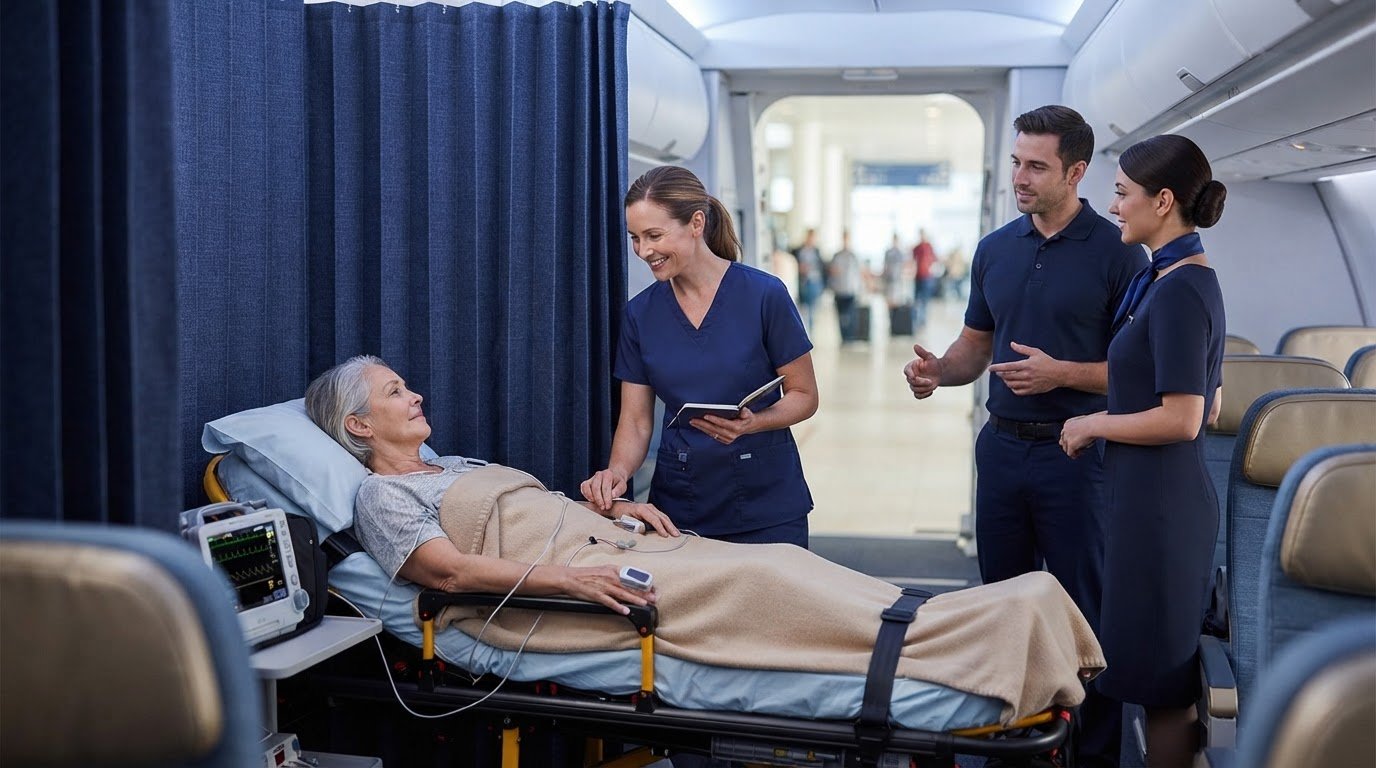
Understanding how to arrange medical travel for a loved one begins with a clear definition of the service. Medical travel is the professional clinical support provided for non-emergency relocation. It’s a specialized field that bridges the gap between standard travel and acute care. This service differs significantly from an emergency medical evacuation, which typically involves private air ambulances for patients in critical or unstable conditions. For those who are medically stable but require professional monitoring, a commercial medical escort provides a seamless, bedside-to-bedside transition.
A professional medical assessment is the first mandatory step before booking any transport. This evaluation ensures the patient’s clinical status is compatible with the rigors of flight. Many stable patients benefit more from commercial airline travel than private charters. The commercial cabin offers more space for movement and a pressurized environment that is often more comfortable, all while maintaining uncompromising safety standards.
Is Your Loved One "Fit to Fly" Commercial?
Clinical clearance for commercial flight involves specific physiological benchmarks. A patient must be able to maintain oxygen saturation levels above 90% at a simulated cabin altitude of 8,000 feet. Our flight coordinators work closely with the treating physician to validate these metrics. Professional nurse supervision is required for patients with dementia who may experience confusion in new environments, or those with mobility issues that make navigating an airport impossible. The treating physician makes the primary "fit to fly" determination, but the RN Medflights clinical team performs a secondary, independent assessment. This dual-layer review ensures that the decision is based on the most current medical data available, prioritizing patient safety above all else.
When to Choose a Commercial Medical Escort
A commercial medical escort is the most effective choice for international medical repatriation or domestic relocation. Knowing how to arrange medical travel for a loved one involves recognizing the specific clinical needs that a commercial escort can meet. It’s the right path when a stable patient needs to move closer to family or transition to a specialized long-term care facility. In these scenarios, an RN provides continuous monitoring, manages complex medication schedules, and assists with hygiene. This service is particularly vital for patients who experience high anxiety or have physical limitations that require specialized handling during boarding and deplaning. Our nurses act as vigilant protectors, ensuring the patient’s dignity is preserved throughout the entire journey. This approach transforms a potentially traumatic move into a structured, stress-free clinical procedure.
Commercial Escort vs. Air Ambulance: A Comparative Framework
Choosing the right transport method is a pivotal step when you are learning how to arrange medical travel for a loved one. The decision generally falls between a private air ambulance and a commercial medical escort. While both options prioritize patient safety, they serve different clinical needs and financial realities. Understanding these distinctions allows families to make an informed choice that balances high-level care with fiscal responsibility.
Understanding the Cost Advantage
The most immediate difference between these two services is the financial investment. Private air ambulances operate as dedicated ICU-configured jets, which means the family bears the entire cost of the aircraft's fuel, specialized flight crew, and positioning fees. In contrast, commercial medical escort services typically cost 50% to 70% less than private charters. By utilizing existing airline infrastructure and booking first-class or business-class seating, families can access professional clinical oversight without the six-figure price tag often associated with private medevac flights. This makes the commercial option a practical solution for stable patients who require professional monitoring but don't need a dedicated fuselage.
Clinical Safety at 30,000 Feet
Families often worry that a commercial flight might compromise medical integrity, but the clinical standards remain rigorous. A Flight Nurse provides bedside-to-bedside care, maintaining a continuous chain of responsibility from the origin facility to the final destination. These professionals are experts in aviation physiology; they understand how altitude and cabin pressure fluctuations affect oxygen saturation and fluid dynamics.
During the journey, the escort carries a specialized medical kit that includes cardiac monitors, pulse oximeters, and emergency medications. This level of preparation aligns with the CDC guide for travelers with chronic illnesses, which emphasizes the necessity of advanced planning and professional support for passengers with complex health needs. The nurse manages every clinical detail, ensuring the patient's condition remains stable throughout the transition.
The logistical experience also differs significantly in terms of comfort and boarding:
Seating: Commercial escorts utilize spacious business-class seats that allow for leg elevation and better rest, whereas air ambulances use narrow stretchers.
Boarding: Flight coordinators arrange for priority boarding or ramp transfers to avoid crowded terminals and minimize patient fatigue.
Navigation: The RN handles all security checkpoints and airline communications, removing the cognitive burden from the family.
Deciding how to arrange medical travel for a loved one requires a clear-eyed look at the patient's stability and the family's resources. If your family member is stable enough to sit for the duration of a flight, a commercial escort offers a seamless, dignified experience. Our flight coordinators are available 24/7/365 to provide a comprehensive clinical assessment and help you determine the safest path forward.

The Logistics of Bed-to-Bed Medical Transport
When you're learning how to arrange medical travel for a loved one, the concept of bed-to-bed care is the gold standard you should expect. This philosophy eliminates dangerous gaps in clinical supervision by ensuring the patient is never left without professional monitoring. It's a continuous chain of responsibility that begins at the originating bedside and concludes only when the patient is safely settled at their final destination. A dedicated flight coordinator acts as the architect of this journey, managing the complex synchronization of air and ground assets. They work 24/7/365 to handle everything from securing landing permits to confirming that the receiving facility is ready for the arrival.
For families moving a patient across borders, international medical repatriation services provide an essential layer of logistical support. These services manage customs clearances and potential language barriers that could otherwise delay critical care. Every minute is accounted for in a master itinerary that prioritizes the patient's stability and comfort. By centralizing the communication, the flight coordinator reduces the emotional burden on the family, allowing them to focus on their loved one's recovery rather than logistics.
Step 1: Clinical Assessment and Documentation
The process begins with a rigorous medical review to ensure the transport plan is safe and appropriate. Our clinical team gathers updated medical records and a letter of medical necessity from the current attending physician. This document is vital for justifying the level of care required during transit. We also manage the airline-specific Medical Information Form (MEDIF), which is a mandatory requirement for commercial medical escorts. Our nurses review medication schedules and oxygen flow requirements, ensuring the onboard equipment precisely matches the patient's clinical needs.
Step 2: Ground and Air Integration
The transition between the medical facility and the aircraft is often the most sensitive part of the journey. We coordinate a specialized non-emergency ambulance service for the initial pickup to maintain clinical continuity from the start. Our RN-led team manages the passage through airport security and the boarding process, utilizing specialized equipment for non-ambulatory patients. Knowing how to arrange medical travel for a loved one means understanding that the final handoff is just as critical as the flight itself. Our staff provides a comprehensive clinical briefing to the receiving facility, ensuring every detail of the patient's condition is communicated clearly.
The Critical Role of the Flight Nurse Escort
When you learn how to arrange medical travel for a loved one, the most vital decision involves selecting the right clinical support for the journey. A flight nurse differs significantly from a standard hospital RN. While hospital staff work in controlled environments with immediate access to a full department, flight nurses operate in a dynamic, pressurized cabin at 30,000 feet. These professionals possess advanced certifications in critical care or emergency nursing; they typically bring a minimum of 5 years of ICU or ER experience to the aircraft. They act as a vigilant protector, managing everything from routine vitals to sudden mid-flight complications with a steady, practiced hand.
The flight nurse takes full responsibility for the patient's well-being from the moment of pickup. This includes administering scheduled medications, monitoring cardiac rhythms, and providing continuous assessment. Beyond the clinical tasks, they offer deep human empathy. They understand that a medical crisis is exhausting for the family. By projecting a calm, authoritative presence, they lower the emotional temperature of the situation and provide the peace of mind that your family member is in expert hands.
Clinical Expertise in the Air
The physiological effects of air travel are significant for a patient with a compromised health status. Cabin pressure causes gases in the body to expand by approximately 30 percent according to Boyle’s Law. This expansion can impact patients with recent surgeries or respiratory conditions. Our flight nurses are trained to recognize these shifts immediately. They manage care through several specialized actions:
Oxygen Titration: Monitoring oxygen saturation levels and adjusting flow rates to prevent hypoxia as altitude changes.
Mobility Management: Utilizing specialized transfer techniques to move patients safely within the confined spaces of an aircraft.
Symptom Mitigation: Proactively treating air sickness, dehydration, or pressure-related pain to ensure a stress-free environment.
Maintaining dignity during a 12-hour international flight is a clinical priority. The nurse ensures the patient remains comfortable, clean, and stable, treating them as a person rather than just a medical case.
Beyond Medicine: Logistical Advocacy
Knowing how to arrange medical travel for a loved one means preparing for the friction of modern travel. The flight nurse handles these logistical burdens so the family doesn't have to. They navigate TSA and customs protocols with complex medical equipment, ensuring that oxygen concentrators and life-saving medications pass through security without delay. Their role is to be the single point of contact for everyone involved.
If a flight is grounded or a gate change occurs, the nurse adapts the care plan instantly without disrupting the patient’s stability. They manage the communication flow, providing real-time updates to the family and the receiving facility. This bedside-to-bedside commitment ensures a seamless transition of care. It's a comprehensive solution that prioritizes safety and integrity at every mile. Contact our flight coordinators to discuss your bedside-to-bedside transport plan today.
Partnering with RN MEDflights for Stress-Free Travel
RN MEDflights operates as a veteran-owned and nurse-led organization dedicated to the safe transport of patients across the globe. We understand the emotional and physical toll a medical crisis takes on a family. Our flight coordinators remain available 24/7/365, ensuring you never encounter a voicemail or a delay during a critical moment. We maintain a standard of uncompromising integrity through our signature bed-to-bed process. This protocol ensures a seamless transition from the patient's current bedside to their final destination. Our nurses stay with your loved one every step of the way, providing constant clinical supervision. This continuity of care reduces risks and provides the peace of mind your family needs. You can request a transparent, all-inclusive quote today to begin planning without the fear of hidden fees or unexpected costs.
Why a Nurse-Centric Organization Matters
Clinical leadership ensures that every decision prioritizes patient safety over flight logistics. At RN MEDflights, we believe medical expertise should drive the transport plan rather than administrative convenience. Our team members are selected based on rigorous standards, which are detailed in our comprehensive guide regarding flying nurse jobs. Each nurse undergoes specialized training for commercial escorting to manage the physiological changes that occur at high altitudes. This clinical focus allows us to manage complex cases that traditional transport companies might decline. We treat every patient with the dignity and professional care they deserve, ensuring their medical needs are met with precision throughout the flight.
Starting the Journey Home
The path to recovery often starts with a single, focused phone call. Our initial consultation process is thorough and designed to minimize the burden on the family. We review medical charts and coordinate directly with the treating facility to ensure the patient is fit for travel. RN MEDflights manages 100% of the logistics involved in the transfer. We handle ground ambulance arrangements, airline communication, and all necessary medical clearances. This allows you to focus on supporting your family while we manage the technical complexities of the trip. Understanding how to arrange medical travel for a loved one becomes a manageable task with our expert team by your side. We take pride in being the steady hand during a storm. Contact RN MEDflights today to bring your loved one home safely and with the highest level of professional care.
When you are researching how to arrange medical travel for a loved one, you need a partner who values safety as much as you do. Our commitment to excellence is reflected in our 100% safety record and our dedication to transparent communication. We provide a clear roadmap for the journey so there are no surprises for the patient or the family. Let our experienced nurses handle the details so you can focus on what matters most: the health and recovery of your family member.
Ensure a Safe Transition with Expert Medical Coordination
Navigating the complexities of long-distance healthcare logistics requires a steady hand and clinical expertise. You've learned that selecting between a commercial medical escort and a private air ambulance depends entirely on the patient's stability and oxygen requirements. Our veteran-owned and operated team manages every detail through comprehensive bed-to-bed coordination, ensuring no gap in care exists between the hospital room and the final destination. This continuity of care is vital for maintaining patient stability during high-stress transitions.
Understanding how to arrange medical travel for a loved one starts with prioritizing safety and clinical oversight. With Registered Nurse-led supervision, we provide a level of medical integrity that purely logistical companies cannot match. We operate 24/7/365 to provide the constant availability your family needs during a medical crisis. You don't have to manage this burden alone. Our flight coordinators handle the technical permits and ground transportation so you can focus on being a supportive family member. We're ready to provide the professional protection and peace of mind your loved one deserves.
Request a Comprehensive Bed-to-Bed Medical Transport Quote
Frequently Asked Questions
How much does it cost to arrange medical travel for a loved one?
The total cost depends on the flight distance and the specific clinical requirements of the patient. According to industry reports from the Air Medical Journal, utilizing a commercial medical escort typically costs 50 percent to 75 percent less than a private air ambulance. Our flight coordinators provide a detailed, transparent quote that covers the bedside-to-bedside service without any hidden fees.
Can my loved one fly on a commercial airline if they need oxygen?
Yes, patients can fly commercially if they use an FAA-approved Portable Oxygen Concentrator (POC). Airlines don't provide medical oxygen for passenger use, so the patient must bring a device with enough battery life to last 150 percent of the total flight duration. Our nurses manage these technical requirements to ensure a seamless and safe journey for every patient we escort.
What is the difference between a medical escort and a concierge nurse?
A medical escort is a Registered Nurse who provides clinical care and monitoring during a transition between facilities. A concierge nurse focuses more on the logistical comfort and personal needs of the patient during their journey. While both roles prioritize safety, the medical escort has specialized training in flight physiology and Advanced Cardiovascular Life Support to handle complex medical needs 24/7/365.
How far in advance do I need to book a medical flight?
You should ideally begin the process 48 to 72 hours before the desired departure date. Knowing how to arrange medical travel for a loved one involves securing airline medical clearances and coordinating ground transportation at both ends. This window allows our team to synchronize every detail of the bedside-to-bedside journey. We also work 24/7/365 to expedite urgent requests when a patient's condition requires faster intervention.
Does insurance cover the cost of a commercial medical escort?
Most private insurance providers and Medicare Part B typically exclude coverage for non-emergency medical travel. Coverage is usually only granted if the transport is deemed a "medical necessity" for specialized treatment that isn't available locally. We recommend reviewing your policy for specific "bed-to-bed" coverage clauses. Our team provides all necessary clinical documentation to help families submit claims for potential reimbursement after the trip.
What medical equipment can a flight nurse bring on a commercial plane?
Our flight nurses carry specialized, FAA-compliant medical kits that include cardiac monitors, pulse oximeters, and blood pressure cuffs. These kits also contain ACLS medications and emergency airway supplies to manage a variety of clinical scenarios. Every piece of equipment we use meets 14 CFR Part 121 standards. This ensures we have the necessary tools to maintain the patient's stability throughout the entire flight.
Is a commercial flight safe for a patient with dementia or Alzheimer's?
Commercial flights are a safe option for patients with cognitive impairments when a specialized nurse manages the environment. Our nurses use proven de-escalation techniques that successfully manage anxiety for 95 percent of patients with dementia. When you learn how to arrange medical travel for a loved one with memory loss, our focus remains on maintaining their dignity and comfort throughout the entire transition.
What happens if there is a medical emergency during the flight?
Our flight nurses are highly trained in Advanced Cardiovascular Life Support and are prepared to stabilize patients immediately if a crisis occurs. If a patient's condition shifts, the nurse initiates life-saving protocols and coordinates with the flight crew for a priority landing. We maintain communication with ground medical teams to ensure the patient is transferred to a 24/7/365 trauma center as soon as the plane touches down.