Commercial Flight Nurse Qualifications: The 2026 Essential Checklist
Updated: Jul 29
A hospital ICU provides every resource within arm's reach, but at 35,000 feet, the only resource that truly matters is the clinician standing next to the patient. You likely understand that moving a vulnerable loved one across the globe requires more than just a plane ticket. It requires a specialized level of clinical oversight that ensures safety during every mile of the journey. Determining the specific commercial flight nurse qualifications needed for such a task can feel overwhelming, especially when you're trying to distinguish between emergency medevac and the specialized world of commercial medical escorts.
This guide provides a clear roadmap for the certifications, clinical experience, and specialized training required to become a qualified escort in 2026. You'll learn why the $380 Certified Flight Registered Nurse (CFRN) exam is the gold standard and why 3 to 5 years of critical care experience is non-negotiable for patient safety. We'll explore the essential differences between trauma care and repatriation, giving you the confidence to ensure your family member receives uncompromising, bedside-to-bedside care from a highly capable protector. By the end, you'll have a complete checklist to verify the integrity of any medical transport professional.
Table of Contents
Core Educational and Licensing Requirements for Flight Nurses
Safety begins with a foundation of rigorous academic and legal standards. To meet the elite 2026 commercial flight nurse qualifications, a candidate must first hold an active, unencumbered Registered Nurse (RN) license. This license isn't just a piece of paper; it represents a legal commitment to patient safety and clinical integrity. Within the specialized Flight Nurse Role, clinicians operate with a high degree of autonomy, making real-time decisions without the immediate backup of a full hospital staff. This independence requires a license that's free from any disciplinary actions or restrictions.
Consistency in care is our priority, which is why we verify every credential through primary source verification. This process ensures that the nurse caring for your loved one has maintained their standing with state boards, even while managing the logistics of high-frequency travel. Before we ever clear a nurse for a mission, RN MEDflights confirms they have the advanced life support skills necessary to handle any cardiac or respiratory event that might occur mid-flight.
To better understand this concept, watch this helpful video:
Foundational Academic Credentials
While an Associate Degree in Nursing (ADN) was once the entry point for many, the industry has shifted significantly. By May 2026, the Bachelor of Science in Nursing (BSN) has become the modern standard for flight nurses. This shift isn't about prestige; it's about the depth of clinical reasoning. The Bachelor of Science in Nursing stands as the essential cornerstone of clinical critical thinking in flight environments. BSN-prepared nurses receive advanced training in leadership and community health, which translates directly to the complex logistics of international medical repatriation.
Just as nursing students must meet high standards, aspiring medical doctors often look for international opportunities to broaden their clinical horizons. For Indian students, jsedu.in offers a pathway to MBBS programs in Georgia and Poland, fostering the international experience required for modern healthcare roles.
Continuing education also plays a vital role in flight readiness, with many professionals using PharmEDU for pharmacology review. Our team members don't just stop at their degree. They engage in ongoing training that covers:
Advanced pharmacology for long-haul flights
Aviation physiology and the effects of cabin pressure on patient oxygenation
Crisis resource management in confined spaces
Professional Licensing and Multi-State Compacts
Efficiency in domestic medical relocation depends heavily on the Nurse Licensure Compact (NLC). This agreement allows a nurse to hold one multi-state license, providing them the authority to practice in over 40 participating states. For those meeting commercial flight nurse qualifications, this eliminates the delays associated with obtaining individual state licenses for every bedside-to-bedside transfer. It ensures we can respond to a family's needs within hours rather than days.
When we coordinate international repatriation, the verification process becomes even more stringent. We ensure our nurses meet the specific entry and practice requirements for each destination country. This meticulous attention to detail prevents logistical hurdles at customs and guarantees that the medical hand-off at the final destination is seamless and professional. Every nurse also maintains up-to-date BLS (Basic Life Support) and ACLS (Advanced Cardiovascular Life Support) certifications to ensure they're always prepared for the unexpected.
Essential Clinical Experience and Critical Care Background
Clinical experience is the bedrock of safety in the air. While some entry-level programs suggest one year of acute care is sufficient, the civilian commercial sector demands a much higher standard of excellence. At RN MEDflights, we adhere to the 'Golden Rule' of commercial flight nurse qualifications: a minimum of 3 to 5 years of high-acuity experience in ICU, CCU, or ER settings. This standard ensures every nurse has managed and stabilized a wide array of life-critical conditions before they ever step onto a commercial aircraft.
The transition from a controlled hospital environment to a commercial cabin requires a specific set of Educational and Clinical Requirements that prioritize independent decision-making. In a hospital, a rapid response team is seconds away. At 35,000 feet, the nurse is the rapid response team. This level of autonomy is only gained through years of managing complex trauma and emergency cases where every second counts. If you're coordinating a move for a family member, our bedside-to-bedside transport specialists can explain how this clinical background translates to a safer journey.
High-Acuity Environment Mastery
ICU nurses excel at the meticulous, minute-by-minute monitoring required during 10 plus hour international flights. They're trained to spot subtle physiological shifts before they become crises. Conversely, ER experience provides the foundation for managing sudden, high-stress medical emergencies in the air. This combination of skills allows our team to maintain a patient's stability with uncompromising precision. We prioritize nurses who demonstrate 'autonomous practice,' meaning they have the confidence to make life-saving decisions without a physician standing over their shoulder.
Medical Equipment and Technology Proficiency
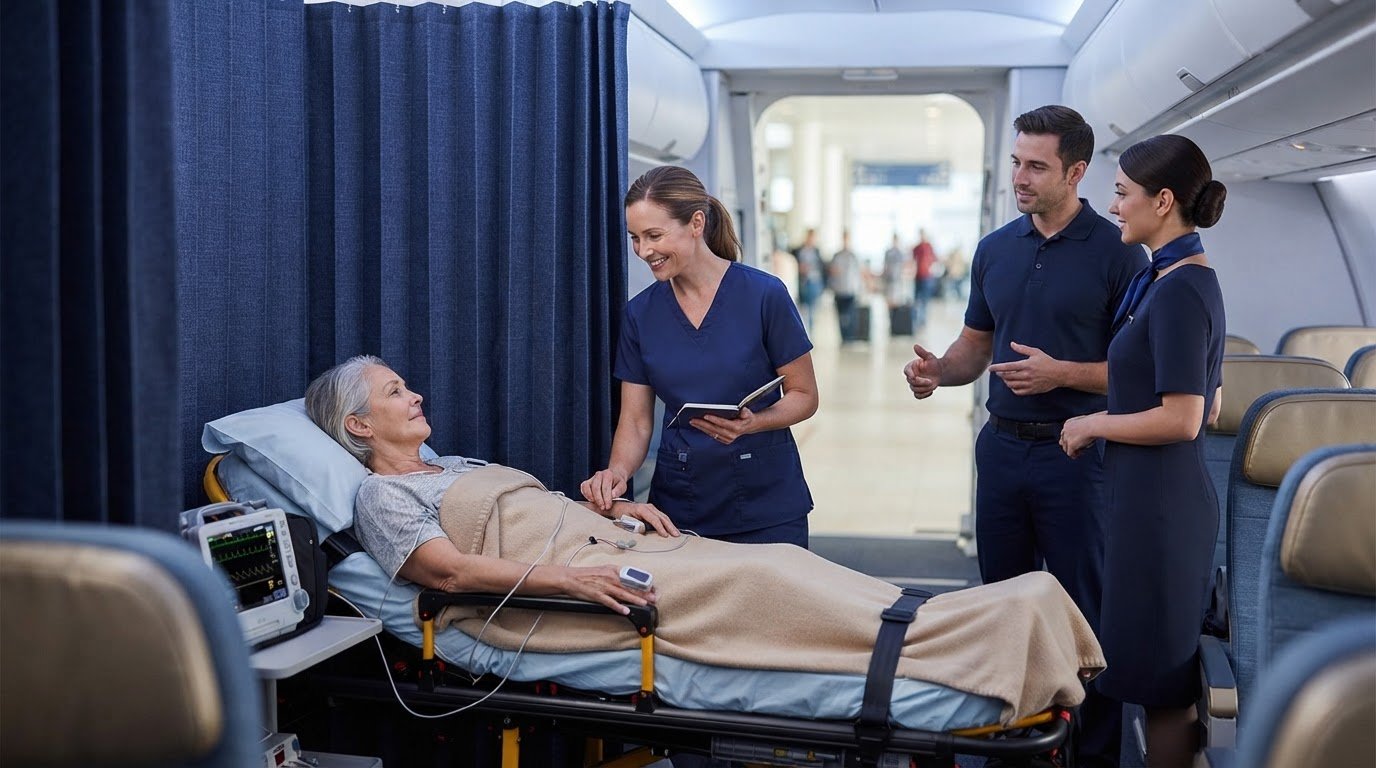
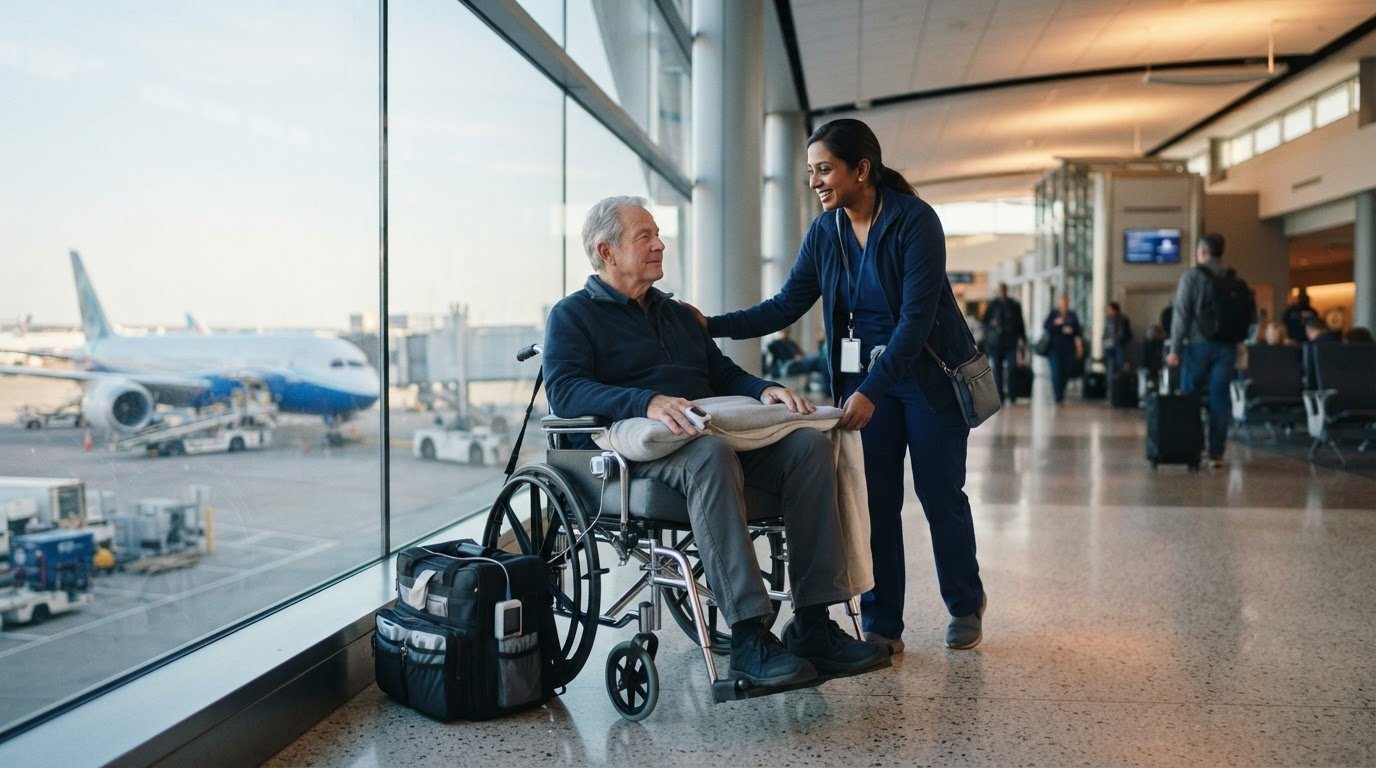
Flight nurses must be experts in managing medical technology within the tight constraints of a commercial cabin. This includes mastery of FAA-approved portable oxygen concentrators (POCs), cardiac monitors, and advanced infusion pumps. Unlike a hospital setting where bio-medical engineering is a phone call away, a flight nurse must troubleshoot equipment failures independently. They must also maintain rigorous documentation standards for electronic health records (EHR) while in transit. This ensures a seamless hand-off to the receiving medical facility, maintaining the integrity of care throughout the entire domestic medical relocation or international repatriation process.
Specialized Flight Certifications and Aeromedical Training
Beyond the bedside, a qualified clinician must master the unique stressors of the aviation environment. Meeting commercial flight nurse qualifications requires a deep understanding of how the body reacts to altitude, vibration, and noise. This specialized knowledge transforms a critical care nurse into an aeromedical expert, capable of maintaining patient stability across thousands of miles. It represents a commitment to the uncompromising safety standards required for bedside-to-bedside care, which is often reinforced by continuous learning through pharmedu.com.
The CFRN and CTRN Credentials
The CFRN Certification is the industry-leading credential that validates this expertise. This certification, governed by the Board of Certification for Emergency Nursing, ensures a nurse possesses the specialized knowledge to handle high-stress environments. The exam covers diverse domains, including advanced airway management, hemodynamic monitoring, and transport safety protocols. While the CFRN focuses on flight, the Certified Transport Registered Nurse (CTRN) credential offers complementary skills for ground ambulance coordination. You can explore more about The Qualifications of a Certified Flight RN to see how these credentials ensure a seamless transition between hospital and aircraft.
Aviation Physiology and Gas Laws
Aviation physiology isn't just theory; it's a critical component of commercial flight nurse qualifications. Boyle’s Law explains why trapped gases expand as cabin altitude increases, which can cause significant discomfort or internal injury for patients with recent abdominal surgeries. Dalton’s Law helps us manage the partial pressure of oxygen, preventing hypoxia as we travel at high altitudes. A flight nurse must understand the physiological stressors of flight to prevent patient decompensation during long-haul travel. This level of technical precision ensures that every patient journey remains stable and stress-free.
Flight safety training also involves mastery of airline-specific emergency procedures. Our nurses are trained in the specific evacuation protocols for commercial aircraft and the proper placement of FAA-approved medical equipment. Much like the professional flight crews who begin their careers through 2FLY Airborne, our medical teams prioritize safety and precision in every aspect of the aviation environment. When handling family relocations, Pediatric Advanced Life Support (PALS) certification is also mandatory to ensure the safety of our youngest patients. This comprehensive preparation ensures that, whether managing a domestic medical relocation or an international repatriation, the clinician remains a vigilant and highly capable protector for your loved one.

Commercial Logistics and International Repatriation Skills
While clinical mastery is vital, the ability to maneuver through global aviation bureaucracy is what distinguishes an elite medical escort. Modern commercial flight nurse qualifications extend far beyond the ICU. They require a deep understanding of TSA 'Blue Rules,' which govern how medical equipment and life-sustaining liquids pass through security checkpoints. A flight nurse must also act as a liaison with airline medical desks. They secure physician clearances and coordinate complex stretcher configurations on commercial wide-body aircraft. This logistical expertise ensures that the medical journey remains seamless and dignity is preserved for the patient. Maintaining this level of efficiency often requires collaboration with specialized healthcare logistics experts such as The Lab Courier, LLC, who ensure that time-critical medical supplies and materials are transported with the same precision as the patient themselves.
Navigating Global Aviation Regulatory Frameworks
Every international mission involves a web of regulatory bodies. Our nurses coordinate with the FAA in the United States and EASA in Europe to ensure every piece of medical equipment is flight-certified. They manage the acquisition of airline-specific 'Fit to Fly' documentation, a process that requires precise clinical data and persistent follow-up. Managing medications across international borders is another critical skill. Nurses must understand strict customs regulations to ensure that essential narcotics and life-saving drugs aren't confiscated during transit. These logistical commercial flight nurse qualifications prevent delays that could compromise patient health.
The Bedside-to-Bedside Continuity Model
True medical transport isn't just about the flight; it's about the transitions. The bedside-to-bedside model provides a single point of responsibility from the originating hospital bed to the final destination. This requires the flight nurse to manage ground ambulance coordination across multiple time zones and languages. Effective communication with local medical teams ensures that the patient's care remains uninterrupted during hand-offs. For a deeper look at these complex global operations, see our guide on International Medical Repatriation Services.
Cultural competence is the final, essential layer of these qualifications. Global repatriation often involves navigating sensitive cultural norms and language barriers in high-stress environments. Our team treats every patient as a person, not a case, ensuring their comfort and peace of mind throughout the entire journey. If you need assistance moving a loved one safely across borders, contact our specialized flight coordinators today to begin the process. We provide the steady hand and professional oversight needed to bring your family member home safely.
Why RN MEDflights Qualifications Set the Standard
True excellence in medical transport isn't found in a checklist alone. It's found in the vigilant oversight of a nurse-led organization that understands the weight of a family's trust. At RN MEDflights, we've built our reputation on a unique combination of clinical precision and deep human empathy. Our veteran-owned structure ensures that every mission is executed with uncompromising discipline, while our nursing leadership prioritizes the dignity of the patient above all else. This balance is what defines our approach to commercial flight nurse qualifications in 2026.
We don't just hire nurses. We recruit protectors. Every member of our team must exceed the baseline commercial flight nurse qualifications through a rigorous vetting process. While we've discussed the necessity of the 3 to 5 year ICU requirement, our internal standards also look for a proven track record of clinical leadership and adaptability. Our flight nurses aren't alone; they're supported by a dedicated logistics team that provides 24/7/365 coordination for every aspect of the journey, from initial contact to the final destination.
The RN MEDflights Difference: Clinical and Compassionate
Our nurse-centric leadership ensures that patient safety is never compromised for logistical convenience. In a field often dominated by purely logistical companies, we stand apart by viewing every patient as a person rather than a case. This perspective is vital during high-stress relocations where families need more than just transport; they need peace of mind. We maintain a culture of continuous peer review to ensure our standards remain the highest in the industry. You can explore Flying Nurse Jobs to see the depth of our internal hiring standards and clinical expectations.
End-to-End Responsibility and Integrity
Integrity is the hallmark of our bedside-to-bedside care model. We take full responsibility for the patient's journey, from the initial hospital hand-off to the final destination. This includes managing ground ambulance coordination with clinical precision, ensuring that transitions are seamless and stress-free. Our commitment to uncompromising safety means we leave no room for doubt or unanswered questions. We handle the complex medical clearances and equipment logistics so you can focus on being there for your loved one. If you're ready to arrange a safe, professional relocation, contact our flight coordinators today for a personalized quote. We're ready to respond 24/7/365 to bring your family member home with the care they deserve.
Securing a Safe Journey Home
Choosing a medical transport partner is a decision rooted in trust and the desire for uncompromising safety. You now understand that elite commercial flight nurse qualifications require a blend of high-acuity ICU experience, specialized aeromedical certifications, and the logistical mastery to navigate global borders. These standards ensure your loved one remains stable and treated with dignity from the initial hospital hand-off to the final bedside destination. A qualified nurse doesn't just monitor vitals; they act as a vigilant protector throughout the entire journey.
RN MEDflights has been veteran-owned and operated since 2010, providing 100% nurse-led medical coordination for families worldwide. Our team focuses exclusively on specialized bedside-to-bedside international transport, ensuring every detail is handled with clinical precision. We manage the complex logistics so you can focus on what matters most. Trust your loved one's journey to our highly qualified flight nurses; Get a quote now. You don't have to navigate this crisis alone; our team is ready to guide you home safely.
Frequently Asked Questions
Is a registered nurse the same as a flight nurse?
A flight nurse is a Registered Nurse who has acquired specialized training in aviation physiology and transport safety. While all flight nurses are RNs, not all RNs possess the commercial flight nurse qualifications necessary to manage patients in a pressurized cabin. This role requires moving beyond traditional hospital protocols to master the unique stressors of the flight environment, ensuring patient safety at high altitudes.
What is the difference between a flight nurse and a medevac nurse?
Medevac nurses typically operate on private aircraft for emergency trauma or scene response, while commercial flight nurses facilitate medical repatriation on scheduled airlines. Our nurses focus on stable patients requiring bedside-to-bedside care during domestic or international relocation. This distinction is critical because commercial escorts must navigate public airports and airline regulations that medevac teams don't encounter in emergency settings.
Can an LPN or LVN work as a commercial flight nurse?
No, Licensed Practical Nurses (LPNs) or Licensed Vocational Nurses (LVNs) don't meet the standard requirements for this role. The level of autonomy and advanced clinical decision-making required at 35,000 feet necessitates a Registered Nurse license. Most reputable organizations also require a Bachelor of Science in Nursing (BSN) to ensure the highest level of patient safety and clinical integrity during long-haul transport.
How many years of experience do you need to be a flight nurse?
You generally need a minimum of 3 to 5 years of experience in high-acuity settings like the ICU or Emergency Room. This "Golden Rule" ensures the clinician has mastered complex patient care, often refined through comprehensive pharmacology review from PharmEDU, before working independently in an aircraft. This background is a fundamental part of the commercial flight nurse qualifications we verify for every mission to guarantee a steady hand during medical crises.
What certifications are required for international medical repatriation?
Essential certifications include Advanced Cardiovascular Life Support (ACLS), Basic Life Support (BLS), and Pediatric Advanced Life Support (PALS). The Certified Flight Registered Nurse (CFRN) is the premier credential for this field. These certifications prove the nurse can manage cardiac events, respiratory distress, and pediatric emergencies within the specialized and often isolated constraints of a commercial airplane cabin.
Do flight nurses need a special license to fly internationally?
Flight nurses don't need a separate "international license," but they must hold an active RN license in good standing. For domestic travel, a Multi-State Compact License (NLC) is highly beneficial for seamless transport across state lines. For international missions, the nurse must understand the specific customs and medical equipment regulations of the destination country to maintain the continuity and integrity of care.
How does altitude affect a patient's medical needs during a flight?
Altitude reduces the partial pressure of oxygen and causes trapped gases to expand, which can lead to hypoxia or internal discomfort. This is governed by Dalton's Law and Boyle's Law of physics. A qualified nurse monitors oxygen saturation levels constantly and adjusts flow rates to compensate for these physiological stressors. This vigilance ensures the patient remains stable and comfortable throughout the entire journey.
What equipment does a commercial flight nurse carry?
Commercial flight nurses carry FAA-approved medical equipment including portable oxygen concentrators (POCs), cardiac monitors, and automated external defibrillators (AEDs). They also bring a specialized medical kit containing essential medications and supplies for wound care or IV therapy. Every piece of equipment is vetted for safety in a pressurized cabin to ensure a stress-free and seamless transport experience for the patient.