Flying a Patient Home for Palliative Care: Costs and Planning
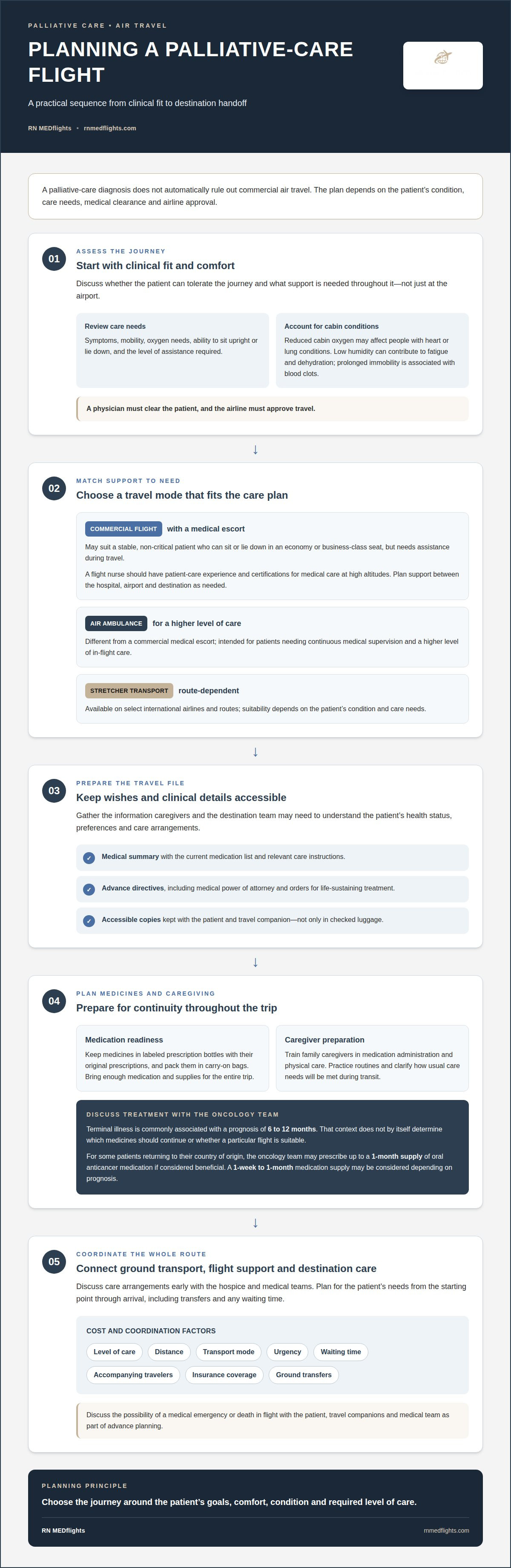
A palliative-care diagnosis does not automatically rule out commercial air travel. A patient with a terminal condition may be able to fly if a physician clears them and the airline approves their travel. Flying a patient home for palliative care may be possible when the journey suits their condition and care needs. The right plan may include a travel companion, a medical escort or, on select international airlines and routes, stretcher transport.
Being closer to family or returning to a familiar place can matter deeply to a patient and the people supporting them. At the same time, symptoms, mobility, oxygen needs and the care required during the journey all affect what is practical and comfortable.
This article explains how transport costs are determined, which medical and travel documents to prepare, and what assistance options may suit different needs. It also covers planning around symptoms and care arrangements, helping families understand the decisions involved and discuss the journey more clearly.
Table of Contents
What affects the cost of medical transport for palliative care patients?
Risks include lower cabin oxygen, dehydration, fatigue and blood clots associated with prolonged immobility. Symptoms may also worsen in flight, so the care plan needs to account for the patient’s condition and support needs.
Families may arrange medical transport so a patient can spend time with loved ones, reach a hospice closer to family, or reunite with relatives elsewhere. Costs depend on the case. Key factors include the level of care, distance, transport mode, urgency, waiting time, accompanying travelers and insurance coverage.
For example, a trip involving airport transfers and extended waiting requires different coordination from a direct journey. The patient’s ability to sit upright or lie down, along with the support they need in flight, also shapes the transport plan. These details help determine which mode may suit the patient.
In-Flight Care and Accommodations
In-flight care and accommodations support a patient’s comfort and medical needs during air travel. Cabin conditions and time in transit can affect symptoms. Reduced cabin oxygen may affect people with heart or lung conditions, while low humidity can contribute to fatigue and dehydration. The plan should account for the patient’s needs throughout the flight, not just at the airport.
Medical Escorts on Commercial Flights
A medical escort accompanies a patient on a commercial flight and provides support suited to the patient’s condition. This option may suit a stable, non-critical patient who can sit or lie down in an economy or business-class seat. It can make flying home for palliative care more manageable when the patient needs assistance during travel but can use a standard airline seat.
A flight nurse should have experience providing patient care and certifications for medical care at high altitudes. The patient’s care needs inform the level of support required, including assistance while travelling between the hospital, airport and destination. A commercial escort is not the same as an air ambulance, which is intended for patients needing continuous medical supervision and a higher level of in-flight care.
Planning also includes discussing the possibility of death or a medical emergency in flight with the patient, travel companions and medical team. A study of nearly 11,000 emergencies reported to a physician-directed communications center from January 2008 through October 2010 found that in-flight death comprised 0.3% of emergencies. There are no worldwide airline guidelines specifying whether a flight should continue or divert if a passenger dies onboard. Discussing this possibility in advance helps the travel group understand the plan.
Advance directives and medical documentation for travel
A clear travel file keeps the patient’s wishes, clinical needs and medication information accessible throughout the journey. Prepare it as part of care planning, rather than waiting until departure is near.
Travel Directives and Medical Records
Medical records and advance directives explain the patient’s health status, treatment preferences and care needs. Keep a medical summary and copies of relevant directives together, including medical power of attorney and orders for life-sustaining treatment. Carry these records so they remain accessible during the journey.
Include the current medication list and relevant care instructions in the medical summary. The treating team can use these details to communicate the plan to caregivers at the destination. Keep copies with the patient and travel companion rather than packing every document in checked luggage. Essential information will then remain accessible if bags are delayed or separated.
Terminal Illness in Travel Planning
In medical travel planning, terminal illness describes a condition expected to end in death; it is commonly associated with a prognosis of 6 to 12 months. This context helps frame the journey around the patient’s goals, comfort and remaining treatment options. It does not, by itself, determine which medicines should continue or whether a particular flight suits the patient.
Before departure, the oncology team and patient should discuss whether disease-modifying treatment remains beneficial during travel. For some patients returning to their country of origin, the oncology team may prescribe up to a 1-month supply of oral anticancer medication if it is thought beneficial. The decision should fit the treatment plan and the patient’s priorities, not simply the travel schedule.
Medication safety also depends on preparation. Keep medicines in labeled prescription bottles with their original prescriptions, and place them in carry-on bags. Hospice patients should have enough medication and supplies for the entire trip. For patients traveling to their country of origin, a 1-week to 1-month medication supply may be considered, depending on prognosis.
Before the journey, train family caregivers in medication administration and physical care. Practice the routine they will support, such as giving an oral medicine at the prescribed time, and clarify how the patient’s usual care needs will be met during transit. This preparation helps caregivers understand their role and maintain continuity when the patient is away from the regular care setting.
For Medicare hospice patients, the Medicare Modernization Act of 2003 provides that most may receive care from another Medicare-certified hospice at their destination. A stay away from home longer than 15 days may prompt a care plan review and consideration of provider changes. There is no limit to the length of a hospice patient’s stay away, although the patient or caregiver may initiate a transfer or revoke Medicare hospice benefits. Upon arrival, contact the managing hospice provider.
Keeping directives, prescriptions and care notes together can make travel planning clearer. Medical transport planning can help coordinate the journey around the patient’s records and care needs.
Choosing travel modes and planning practical assistance
If flying is not suitable, consider ground transport when the destination is reachable and the patient can tolerate the journey. A conventional vehicle may not meet the patient’s needs, so the care team should assess their condition and required support.
Travel planning connects the patient’s clinical needs with the route, transport mode and assistance available along the way.
Pre-Trip Planning With Patients and Families
Pre-trip planning brings the patient, family and care team together to assess whether travel is practical and what support it requires. Airline staff make their own boarding decision, and the patient must be able to tolerate the travel arrangements. The medical team assesses whether the patient can maintain safe oxygenation and sit upright if required. A recent heart attack or stroke may make commercial flying unsuitable.
Start with discharge planning. If the patient hopes to return to their country of birth, discuss repatriation while travel remains a practical option. Compare the proposed route with the patient’s symptoms, mobility and care plan. Prolonged immobility during air travel can increase the risk of venous thromboembolism. The care team can consider how movement, positioning and assistance fit the patient’s needs.
Mode choice follows the level of support required. A stable, non-critical patient who can sit or lie in an airline seat may be suited to a commercial medical escort. A patient unable to sit upright may need an airline stretcher option. These arrangements differ from an air ambulance, intended for continuous medical supervision and a higher level of in-flight care.
Preparing Caregivers for Travel
Caregiver preparation means planning who will support the patient and how essential care will continue throughout the trip. It matters because airport transitions, boarding and time in transit can place practical demands on the patient and accompanying family. Family members should learn medication administration and physical care before travel, then understand how those tasks fit the planned route.
Map the journey from the hospital to the departure airport, through the flight, and onward to the destination. For each transition, identify whether the patient needs help moving, taking medicines or maintaining a comfortable position. A travel companion can support communication and routine care, while a medical escort provides clinical assistance suited to the patient’s needs.
International plans require attention to airline and travel requirements. Choose transport support familiar with the relevant airlines and airports at departure and destination. Discuss assistance at each handoff, including how the patient will move between ground transport and the aircraft. Coordinated planning helps families determine whether the proposed mode matches the patient’s abilities and care needs.
Timing travel around disease progression and symptom control
Timing depends on symptoms, treatment plans and the patient’s ability to tolerate the journey. Early clinical discussion gives the patient, family and care team time to weigh personal goals against the demands of travel.
Travel Timing and Disease Progression
Travel timing means choosing a period when the patient’s symptoms and care needs make the journey manageable. Disease progression can change mobility, alertness and support requirements. Discuss the goal early if the patient hopes to return to their country of birth or spend meaningful time with family. Waiting until travel becomes urgent may leave fewer practical options.
For some patients, a suitable window may fall between treatment cycles, when symptoms are relatively controlled, or after disease-directed treatment has been maximized. For journeys lasting many hours or days, clinicians generally describe a patient who is cognitively interactive, can take medicines orally and can move with single-person support. At this functional level, life expectancy is many days to several weeks.
These considerations support clinical conversations; they do not replace an individual assessment. For example, a patient whose nausea is controlled between treatment cycles may find that period more manageable than a time when symptoms are active. Discuss how symptoms could change in transit, what comfort measures are part of the care plan, and how the timing supports the patient’s priorities.
From Hospital to Hospice by Commercial Airline
Commercial airline travel from hospital to hospice involves coordinating the transition from inpatient care to the destination hospice. Discharge, ground transfers, airport procedures and the flight all need to align with the patient’s condition. A patient may travel to be closer to family or reach hospice support elsewhere.
Before arranging travel, the hospice provider and family should determine whether the patient is stable enough for the journey. A doctor should assess fitness to travel before plans are made. The clinical team considers symptoms and the patient’s ability to tolerate the route, including transfers between the hospital, airport and aircraft. The airline makes its own safety determination when the patient boards.
Hospice Eligibility and Travel Stability
Hospice eligibility and fitness to travel are separate considerations: hospice care focuses on comfort, while travel suitability depends on whether the patient can manage the journey. Receiving hospice care alone does not determine whether a flight is appropriate. The patient’s current function and care needs remain central.
Late-stage Alzheimer’s disease or dementia may involve criteria that prevent travel. For other hospice patients, assess whether they can tolerate the planned seating arrangement and receive needed support throughout transit. Some airlines offer stretcher options for passengers who cannot sit upright. Airline requirements and relevant travel regulations can change, so planning should account for current rules and the patient’s clinical condition.
Palliative transport service components
Palliative transport is a coordinated journey, not simply an aircraft booking. Each component connects the patient’s care needs with the transfers from the starting facility to the destination. Understanding these parts helps families identify where assistance is needed and how arrangements can support continuity.
The first component is the transfer from the point of departure. A patient leaving a hospital or hospice may need ground transport to the airport, with support matched to their mobility and clinical needs. For example, a patient unable to sit upright needs a different arrangement from someone able to travel seated. The care plan informs how this first handoff is organized.
The flight arrangements depend on the patient’s condition and required level of care. A medical escort may accompany a medically stable patient cleared by a physician to fly. Airline stretcher transport is available on select international airlines and routes. The patient’s ability to tolerate the flight and airline approval shape which options can be considered.
Ground transport at the destination is another essential part of the journey. A flight alone does not complete the trip if the patient still needs a transfer from the arrival airport to a family home, hospice or hospital. Coordinating ground transport at both ends helps avoid an unsupported gap between the aircraft and receiving care. Each handoff should reflect the patient’s condition at that point.
Continuity of care also depends on information travelling with the patient. Medical records, medication details, advance directives and the destination care plan help connect transport arrangements with ongoing support. For instance, a hospice-bound patient benefits from a clear handoff between the sending and receiving care teams. The family’s role and the travel companion’s support should also be clear before departure.
These components work together as one transport plan: ground movement, flight arrangements, in-transit assistance and destination transfer. The balance changes with the route and patient. A person who can travel seated may need a different combination from someone requiring a stretcher. Palliative bed-to-bed transport may combine ground transport with a commercial medical escort or air ambulance, depending on the patient’s needs. Air ambulance services are a separate transport category.
When reviewing a plan, trace the journey from the origin facility to the final destination. Identify each transfer, the support needed at that point, and how care information follows the patient. This reveals whether arrangements cover the complete route rather than only the flight. Plan coordinated palliative transport around the patient’s route and care needs.
RN MEDflights
RN MEDflights provides Commercial Airline Medical Escort, Domestic Medical Relocation, Bed-to-Bed Medical Transport and Ground Ambulance Coordination. U.S.-licensed registered nurses or critical-care paramedics accompany medically stable patients cleared by a physician to fly. The bed-to-bed service coordinates ground transport, airline logistics and delivery to the receiving bed.
For a palliative-care journey, start with the complete route: where the patient is leaving, how they can travel, and what arrangements they need at the destination. Sharing these details helps clarify which transport components may suit the patient’s needs.
Contact RN MEDflights to discuss planning a journey home for palliative care.
Let the next step reflect the patient’s wishes
Planning to fly a patient home for palliative care is about more than reaching a destination. It may bring someone closer to loved ones, familiar surroundings or care that aligns with their priorities. Bring the patient’s goals and clinical needs into one conversation so the proposed journey can be planned around both.
RN MEDflights provides Commercial Airline Medical Escort, International Medical Repatriation and Domestic Medical Relocation. These services help families plan transport around the route and the patient’s needs. Share the intended destination, current care setting and support required to begin a focused discussion.
Discuss travel planning with RN MEDflights and explore a route that respects the patient’s wishes. A thoughtful plan can help families move forward with greater clarity and care.
Frequently Asked Questions
Can terminally ill patients fly on a commercial flight?
Yes. A terminal diagnosis alone does not rule out commercial air travel. A medically stable patient may be able to fly if a physician clears them and the airline approves their travel. The practical question is whether the patient can tolerate the flight and receive appropriate support. Someone able to travel in an airline seat may have different options from someone who cannot sit upright. The airline makes its own boarding decision.
How do doctors determine whether a patient is fit to fly?
Doctors consider whether the patient can maintain safe oxygenation and tolerate the planned journey, including sitting upright if required. They also assess current symptoms, mobility, medication needs and the demands of transit. A useful discussion covers each stage, from leaving the hospital to transferring at the airport and reaching the destination. Medical clearance supports planning, but the airline makes its own boarding decision.
When may commercial flying not be recommended?
Commercial flying may not be recommended after a recent heart attack or stroke. Heart or lung conditions also need consideration because cabin oxygen levels are reduced. A patient who cannot tolerate the planned travel position or whose care needs exceed the available support may need another plan. Late-stage Alzheimer’s disease or dementia can also affect travel eligibility, so assess the patient’s specific abilities and needs.
How much does it cost to fly a patient home for palliative care in the US?
There isn’t one standard cost for flying a patient home for palliative care. The total depends on care level, distance, transport mode, location, urgency, waiting time, accompanying travelers and insurance coverage. Ground transfers and the type of in-flight assistance also affect arrangements. For a useful estimate, provide the route, the patient’s current condition and the support required during travel. A quote request can then reflect those case-specific factors.
What medical conditions make a patient fit or unfit to fly?
No single diagnosis determines fitness to fly in every case. Clinicians assess current stability, symptoms, safe oxygenation, mobility, ability to tolerate the travel arrangement and required in-flight care. Heart or lung conditions warrant attention because cabin oxygen levels are reduced. A recent heart attack or stroke may make commercial flying inadvisable. Late-stage dementia may also create barriers. The patient’s condition and functional ability guide the assessment.
What documents and airline approvals are needed to fly a seriously ill patient?
Plan for medical clearance and airline approval before the journey. Keep a medical summary, medication details and copies of advance directives accessible during travel. International trips also require travel documents suited to the destination and itinerary. Airline requirements can change, and airlines make their own boarding decisions. Organizing clinical records and travel paperwork together helps the care team communicate the patient’s needs at departure and arrival.
How do you arrange oxygen, medications, equipment, and medical staff during the flight?
Start with the patient’s clinical needs and the airline’s requirements for the proposed flight. The medical team assesses whether the patient can maintain safe oxygenation and identifies the support needed during travel. Keep medicines in labeled prescription bottles with original prescriptions in carry-on bags. A medical escort may accompany a medically stable patient cleared by a physician to fly. Any oxygen or equipment arrangements must fit the patient’s plan and airline approval.
Will Medicare, Medicaid, or private insurance cover medical transport home?
Coverage depends on the insurance plan and transport arrangements, so hospice enrollment alone does not establish that a flight is covered. For most patients receiving Medicare hospice benefits, care may be available from another Medicare-certified hospice at the destination. That concerns hospice care, not automatic payment for transport. Review the specific benefit and transport details with the insurer before making financial decisions, and include coverage when assessing overall costs.