Nursing Home Medical Escort: RN-Led Facility Transfers
Transfers between nursing homes are a routine part of long-term care, yet the journey itself is often the least planned step. A resident may move to a facility with a higher level of skilled care, closer to family, or to continue treatment after a short hospital stay. Each move carries clinical risk, especially for residents who use oxygen or require frequent monitoring. A nursing home medical escort places a licensed registered nurse beside the resident for the trip, which supports continuity of care between facilities. This article explains when an escort is appropriate, how an RN closes gaps in care in transit, and how to plan a safe transfer.
Table of Contents
Quick Takeaways
Key Insight | Explanation |
|---|---|
Eligibility screening | Residents with active skilled services, oxygen dependence, or unstable monitoring values are the strongest candidates for an RN escort. |
Handoff documentation | Send a current medication record showing last administered doses, code status, and recent vital sign trends before departure. |
Role of the escort | An RN escort monitors the resident, supports scheduled care in transit, and documents a structured handoff at arrival. |
Commercial versus dedicated transport | An RN-accompanied commercial flight suits clinically stable residents. Critical conditions may still require a dedicated air ambulance. |
Timing of the transfer | Schedule travel only after the receiving facility confirms bed availability and signed admission orders, and allow lead time for airline approval. |
Total cost of transfer | Compare transport charges with the cost of delays, cancellations, and readmission, not with transport charges alone. |
Family communication | Share the departure time, expected arrival, and receiving facility contact with family members and case managers before the transfer date. |
A transfer from one nursing home to another is often handled as an administrative event. Paperwork moves, a bed is confirmed, and the resident is placed in a vehicle. Clinically, however, the journey introduces variables that the receiving team cannot observe directly, including changes in oxygen saturation, blood pressure, heart rate, and mental status.
Why Facility Transfers Carry Clinical Risk
A transfer from one nursing home to another is often handled as an administrative event. Paperwork moves, a bed is confirmed, and the resident is placed in a vehicle. Clinically, the journey introduces variables that the receiving team cannot observe directly, including changes in oxygen saturation, blood pressure, heart rate, and mental status.

Residents in this population frequently have several chronic conditions, such as heart failure, chronic obstructive pulmonary disease, diabetes, or dementia. Each condition can become unstable when routines change, when a resident sits for extended periods, or when cabin pressure alters oxygen requirements. For residents with cognitive impairment, a new environment alone can trigger confusion, agitation, or refusal of care.
Where Care Gaps Typically Appear
Care gaps usually emerge in the information that travels with the resident. Medication lists may omit recent dose changes, code status documents may be missing from the transport packet, and laboratory results may arrive after the resident has departed. When the receiving nurse cannot verify these details, treatment is often delayed while calls are placed to the sending facility.
A second gap appears during the transit window itself. A resident who is stable at departure may develop a fever, a drop in oxygen saturation, or a change in alertness before arrival. Without a clinician present, these changes may be noticed only after the resident has been received, which reduces the time available for response.
A resident is not unstable simply because a transfer is taking place. The clinical question is whether a person with nursing training will be present to observe, document, and act during the move. This distinction shapes every decision that follows in the planning process.
Who Typically Needs a Nursing Home Medical Escort
Not every nursing home transfer requires an RN escort. Facilities and case managers benefit from a clear screening step that separates routine moves from transfers with foreseeable clinical risk. The categories below describe the residents most often referred for an escort.
Residents Returning From a Hospital Stay
Medicare guidance indicates that a patient generally must enter a skilled nursing facility within 30 days of leaving the hospital, and that the patient requires skilled services related to the hospital stay. Residents who move between facilities during this period often carry active orders for wound care, intravenous therapy, or medication adjustments. The clinical picture may still be changing, which makes the transfer a higher-risk point.
Residents Who Need Ongoing Clinical Monitoring
Some residents require frequent observation, such as pulse oximetry, blood glucose checks, or monitoring after a recent cardiac or respiratory event. These needs do not pause because the resident is traveling. An escort allows monitoring to continue on schedule and creates a documented record of the resident's status throughout the journey.
Residents Who Cannot Sit Upright or Travel Unassisted
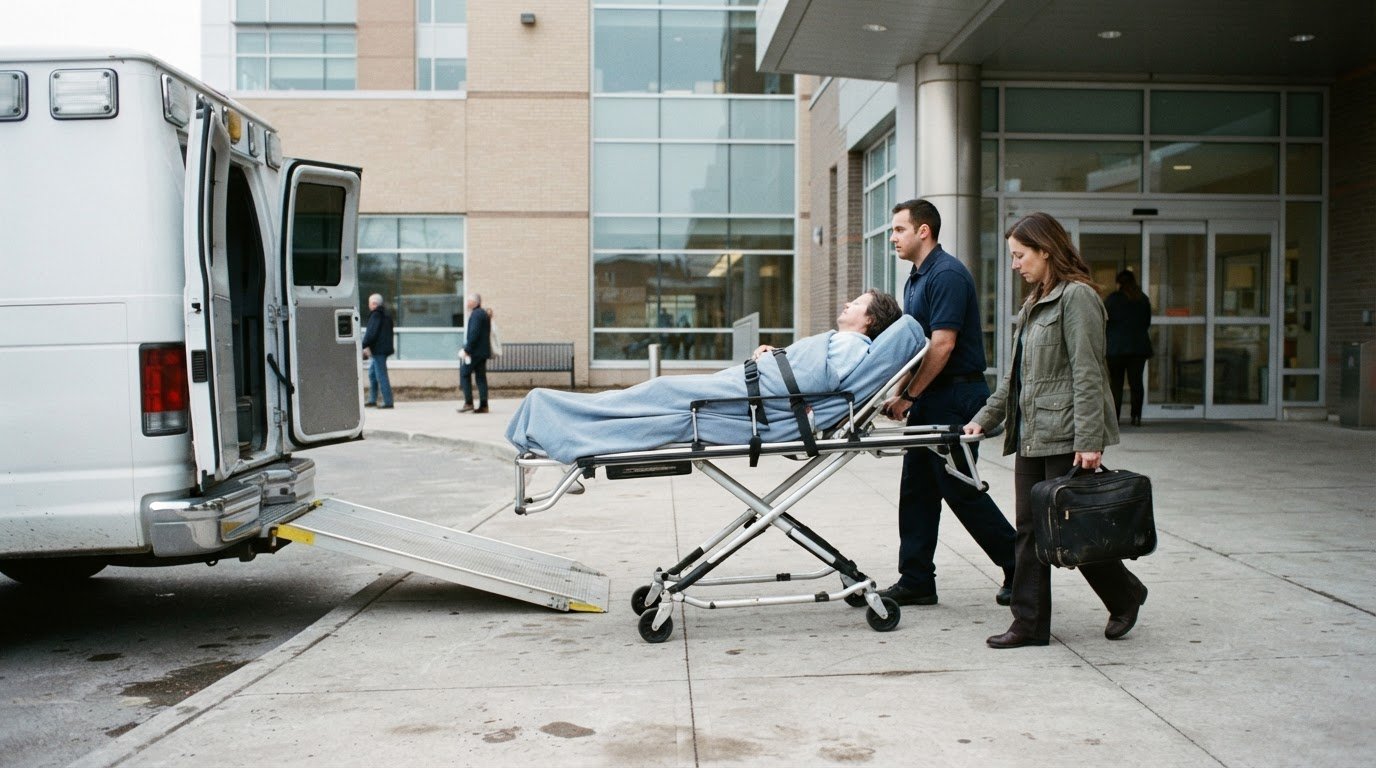
Residents with limited mobility, pressure injuries, or positioning requirements may need stretcher transport or specialized seating. Stretcher services can be combined with an RN escort so that positioning, skin protection, and monitoring are managed by the same clinician. Residents with advanced dementia who cannot follow instructions also benefit from direct, consistent supervision.
Pro tip: Ask the sending facility to complete a one-page clinical summary covering diagnoses, active orders, and the last 24 hours of vital signs. Receiving clinicians can act on a focused summary more quickly than on a discharge packet assembled under time pressure.
How an RN Escort Bridges the Gap in Care
An RN escort does not replace the sending facility's clinical team or the receiving facility's admission process. The escort functions as a continuous link between the two, carrying the resident's clinical status from one setting to the next. Responsibilities begin before departure and end only after a documented handoff.
Before Departure: Clinical Review and Handoff
The escort reviews the transfer packet with the sending nurse. This review confirms medication administration times, allergy information, code status, and any pending results. Where documents conflict, the discrepancy is resolved before the resident leaves the building.
During Transit: Monitoring and Scheduled Care
During transit, the escort tracks vital signs at intervals set by the sending clinician and supports scheduled medication times as directed. The escort manages oxygen delivery where applicable and watches for early signs of deterioration, such as increasing respiratory effort, new confusion, or uncontrolled pain. Findings are recorded in a timeline that accompanies the resident.
On Arrival: Structured Handoff to the Receiving Team
On arrival, the escort gives a verbal and written handoff to the receiving nurse. The handoff covers changes during transit, the most recent vital signs, and any interventions performed. A structured handoff reduces the time the receiving team spends reconstructing the resident's status, which allows care to resume without interruption.
Continuity of care depends less on the vehicle than on the quality of information that moves with the resident.
Commercial Flight Versus Dedicated Air Ambulance
Families and case managers often assume that long-distance transfers require a dedicated air ambulance. For many stable residents, a commercial flight accompanied by an RN escort meets the clinical need at a substantially lower cost. The appropriate choice depends on the resident's acuity, the length of the journey, and the level of care required during the flight.

A dedicated air ambulance is designed for patients who may require intensive interventions in flight, such as advanced life support or ventilator management. Those requirements are not typical for most nursing home residents moving between facilities. For residents who are clinically stable, a commercial route with RN supervision offers a practical alternative.
The following comparison outlines the typical trade-offs. Each option suits a different clinical profile, and none is appropriate for every resident.
Transport Option | Best Suited For | Key Limitation |
|---|---|---|
Dedicated air ambulance | Residents with critical or unstable conditions who may need intensive in-flight care | Substantially higher cost and tighter scheduling constraints |
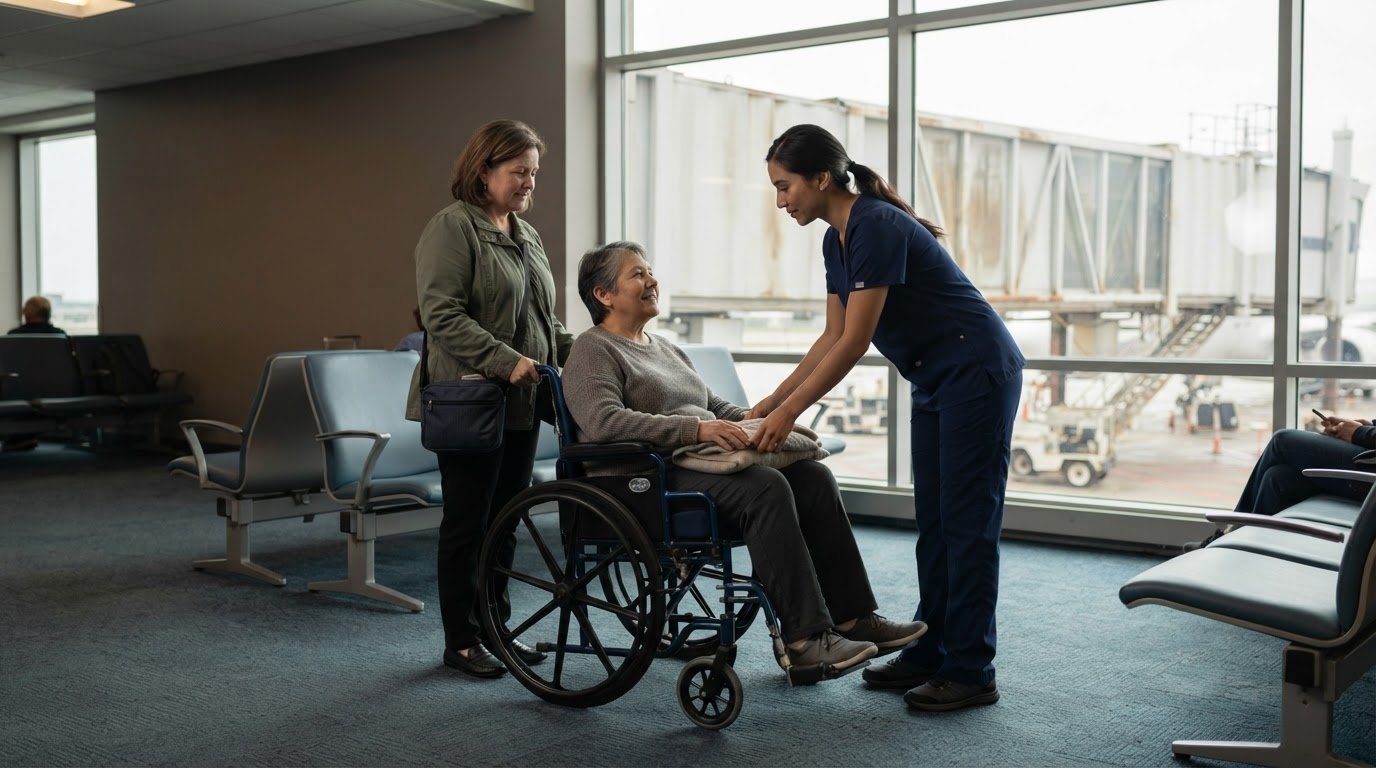
RN escort on a commercial airline | Stable residents who need skilled monitoring, oxygen management, or medication timing during a long-distance move | Airline policies govern oxygen, equipment, and seating, so advance approval is required |
Ground stretcher transport with RN escort | Residents who cannot fly, or regional moves where a flight offers no advantage | Longer travel time for distant facilities |
Airline rules are a central planning element. Most carriers require advance notice for in-flight oxygen and may restrict certain medical conditions or equipment. Confirm these requirements before booking, because a route that appears suitable on paper may not be approved by the airline.
Coordinating With Receiving Facilities
A transfer is only as safe as the admission that follows it. Receiving facilities need to confirm bed assignment, admission orders, and clinical capability before the resident is scheduled to travel.
Confirming Admission Orders and Bed Readiness
Many delays occur because the receiving facility has not finalized admission orders or assigned a bed when the resident arrives. A confirmed bed time and signed orders should be in place before booking. If the receiving facility cannot accept the resident on the planned date, the transfer should be rescheduled rather than held in transit.
Arranging Medications, Supplies, and Equipment
Medications needed during the transit period, oxygen supplies, and durable medical equipment should be listed in writing. Receiving facilities often stock common medications, but specialized items may require pharmacy lead time. A written list reduces the risk of a missed dose on arrival day.
Aligning Family and Case Manager Communication
Families and case managers frequently request updates at different points in the process. A single schedule shared with all parties, including departure time, expected arrival, and the receiving facility contact, reduces confusion. Naming one point of contact on each side keeps decisions with the people who hold clinical authority.
Planning Timeline and Cost Considerations
Planning a nursing home medical escort involves several parallel tasks. The timeline is often compressed by the time required for physician documentation and airline coordination. Facilities that begin early generally avoid last-minute cancellations.
Lead Time for Booking and Documentation
Airline arrangements for medically supported passengers require advance coordination, and physician documentation often takes several days to assemble. A practical approach is to begin the request as soon as the transfer decision is made, then confirm all clearances before the travel date. Shorter timelines are possible but leave little room for correction.
Comparing the Total Cost of a Transfer
The transport charge is only one part of the total cost. A transfer that is delayed, cancelled, or followed by a readmission can create costs for the facility, the family, and the resident. Dedicated air ambulance transport is generally priced well above a commercial escort, so a side-by-side comparison of options is useful. Coverage varies by payer and plan, so case managers should confirm benefits in writing before scheduling. Families may request a free quote by phone to compare options before making a decision.
Common Mistakes That Delay Safe Transfers
Several mistakes recur across facility transfers. Most are preventable with a standard checklist and early coordination between the sending and receiving teams.
Sending Incomplete Medication Records
A medication list that omits recent changes is among the most frequent causes of post-arrival errors. Records should show the last administered dose and time for each medication, not only the active order. Where a dose was held or changed, the reason should be documented.

Assuming Flight Suitability Without Clinical Review
Some residents are assumed to be suitable for air travel because they are ambulatory or because a previous trip went smoothly. Current oxygen needs, recent cardiac events, and changes in mental status can alter suitability. A clinical review by the attending physician should precede any booking.
Scheduling Late in the Discharge Process
Requests made on the day of discharge leave little time for airline approval, equipment arrangements, and receiving facility confirmation. Transfers scheduled with adequate lead time generally proceed without interruption, while last-minute requests often result in rescheduling.
Pro tip: Create a single transfer checklist that both facilities sign before departure. The checklist should cover documentation, medications, equipment, airline approvals, and the named contact at each facility.
Frequently Asked Questions
What is a nursing home medical escort?
A nursing home medical escort is a licensed registered nurse who accompanies a resident during a transfer between facilities, whether by commercial airline, ground transport, or another route. The escort monitors the resident, supports scheduled care within the sending clinician's orders, and documents a structured handoff on arrival.
How does an RN escort differ from a companion who travels with the resident?
An RN escort is assigned to clinical monitoring and documentation throughout the journey. A family member or companion may provide comfort but does not assess clinical status or respond to changes in the resident's condition in the same way.
Can a resident who uses oxygen travel on a commercial flight with an escort?
A resident who uses oxygen may travel on a commercial flight when the airline approves the oxygen arrangement in advance and the attending physician confirms that the resident is stable for air travel. An RN escort helps manage oxygen equipment and monitors oxygen saturation during the flight.
Is an RN escort the same as an air ambulance?
No. An air ambulance is a dedicated aircraft configured for patients who may need intensive in-flight care. An RN escort on a commercial airline serves clinically stable residents who need skilled supervision, at a lower cost than dedicated air transport.
How far in advance should a nursing home transfer be scheduled?
Planning should begin as soon as the transfer decision is made. Airline approvals, physician documentation, and receiving facility confirmation each require time, and shorter timelines leave little room for correction.
Are medical escort services available for international transfers?
Yes. Medical escort services are available for both domestic and international transfers. International moves require additional documentation and may involve different airline and regulatory requirements, so planning should begin earlier.
We welcome feedback from case managers, nursing staff, and families who have coordinated a facility transfer, particularly about the steps that proved most useful in your own experience.