What to Pack for a Patient on a Medical Flight: The 2026 Essential Checklist
Imagine standing at the security checkpoint, heart racing, as you wonder if the medication in your carry-on meets the latest TSA requirements for 2026. You want this journey to be seamless, yet the fear of forgetting a single document or a vital comfort item feels overwhelming. It's exhausting to manage the logistics of a relocation while also worrying about your loved one's dignity in a crowded terminal. We understand that the pressure of getting everything right can be paralyzing during a medical crisis. This guide shows you exactly what to pack for a patient on a medical flight to ensure their safety and emotional security from takeoff to landing.
You'll discover a clear, actionable checklist of clinical essentials, personal items, and legal paperwork required for a commercial medical escort. We also explain how a licensed flight nurse takes the lead on clinical details, allowing you to focus on being a supportive family member. By the end of this article, you'll have a complete strategy to reduce logistical stress and ensure a smooth, professional transport that prioritizes patient comfort at every step.
Table of Contents
Essential Medical Documentation and Patient Identification
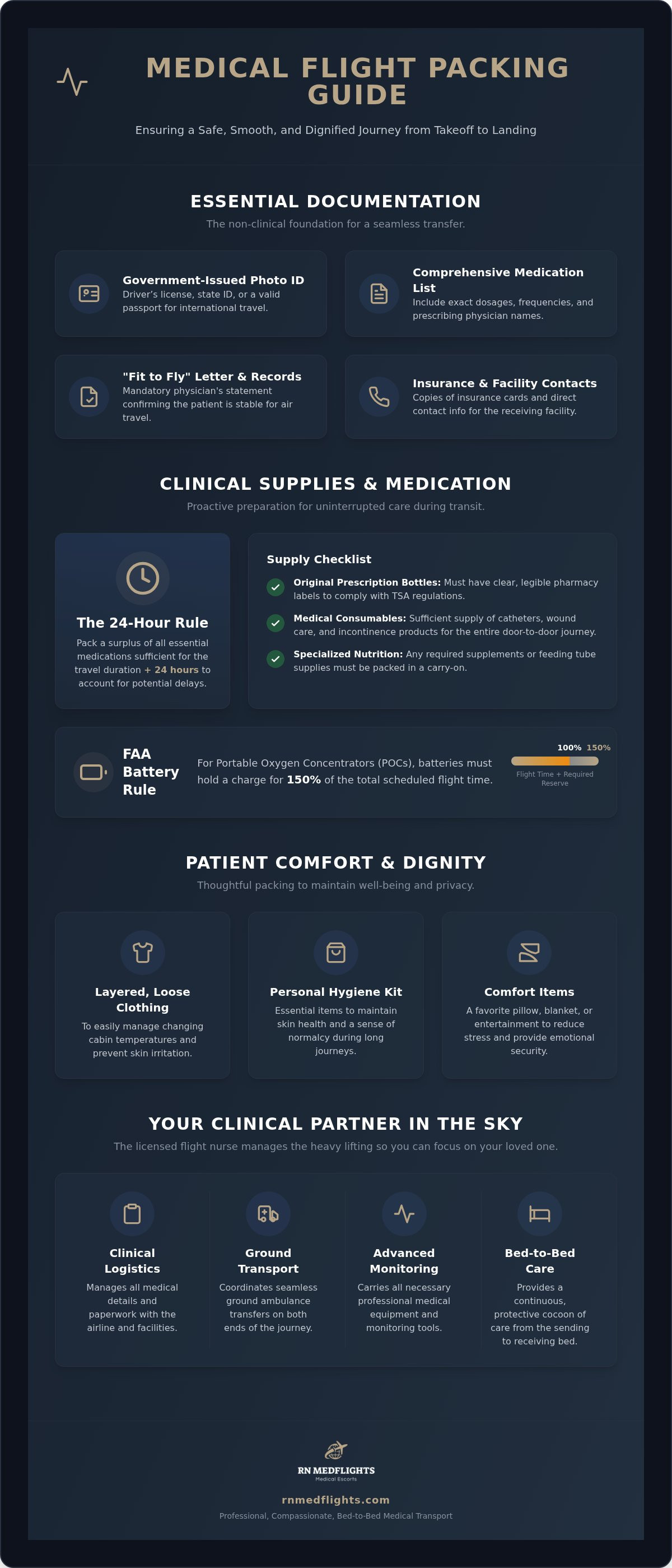
The success of a medical relocation depends on a foundation of accurate information. When you're determining what to pack for a patient on a medical flight, documentation is the most critical non-clinical item you'll manage. It serves as the bridge between the sending facility and the receiving team, ensuring that every detail of the patient's history is preserved during transit. Without these documents, even the most prepared clinical team can face significant delays at check-in or during hospital admission.
You should gather these essential items into a dedicated folder before the departure day:
Government-issued photo ID: A driver’s license or state ID for domestic travel; a valid passport for international journeys.
Comprehensive medication list: This must include exact dosages, frequencies, and the names of all prescribing physicians.
Clinical records and "Fit to Fly" letter: A formal statement from the attending physician confirming the patient is stable for commercial air travel is mandatory for airline clearance.
Insurance and facility contacts: Keep copies of insurance cards and the direct phone number for the receiving facility's admissions desk.
The Clinical Paper Trail
Digital records are convenient, but they aren't always accessible in the high-altitude environment of a commercial cabin. We recommend maintaining a physical binder of all medical summaries. This hard copy acts as a reliable reference for your flight nurse, providing immediate access to clinical data if technology fails or internet connectivity drops. It ensures that the transition from a ground ambulance to the aircraft remains seamless. This physical record allows the air and ground teams to coordinate care without any gaps in the patient's clinical narrative.
International Travel Requirements
Crossing borders adds a layer of complexity to the packing process. Most countries require passports to be valid for at least six months beyond the travel date. You must also verify visa requirements for both the patient and any family members traveling alongside. Our international medical repatriation services include guidance on these specific document preparations. When you know exactly what to pack for a patient on a medical flight in terms of legal paperwork, you eliminate the risk of bureaucratic delays. This proactive approach allows our team to focus entirely on the clinical needs of your loved one while we manage the regulatory hurdles of global transport together.
Clinical Supplies and Medication Management for the Flight
While documentation provides the clinical history, physical supplies sustain the patient during the journey. Understanding what to pack for a patient on a medical flight requires a clear distinction between the patient's personal prescriptions and the professional equipment our team manages. We prioritize a proactive approach to packing, ensuring that every medical consumable is accounted for before the ground ambulance arrives at the first facility.
Your packing list should include these specific clinical essentials:
Original prescription bottles: All medications must remain in their original packaging with clear, legible pharmacy labels to comply with airline and TSA regulations.
Medical consumables: Pack a dedicated supply of catheters, wound care materials, and incontinence products sufficient for the entire door-to-door duration.
Specialized nutrition: If the patient requires specific nutritional supplements or feeding tube supplies, ensure these are easily accessible in a carry-on bag.
FAA-approved equipment: Portable Oxygen Concentrators (POC) must be approved for flight and verified by our team before departure.
The 24-Hour Rule for Medications
Flight schedules can change due to weather or air traffic control, so we enforce a strict 24-hour surplus rule for all essential medications. You shouldn't pack just enough for the flight; instead, prepare for the possibility of an overnight delay. This surplus ensures the patient's treatment remains uninterrupted regardless of logistical shifts. For patients requiring oxygen, battery management is equally vital. The FAA requires that portable oxygen concentrator batteries maintain a charge for 150% of the total scheduled flight time to account for potential taxiing or weather delays.
Equipment Provided by the Flight Nurse
You don't need to worry about advanced monitoring tools. Every RN MEDflights flight nurse carries a comprehensive clinical kit designed for the commercial cabin environment. This kit includes professional-grade pulse oximeters, blood pressure cuffs, and thermometers to track vital signs throughout the relocation. Our nurses also manage the disposal of clinical waste and sharps, maintaining a clean and safe environment for the patient. By handling these technical details, we allow you to focus on the emotional well-being of your loved one. If you have questions about specific equipment needs, you can consult with our clinical coordination team to finalize your packing strategy.
Prioritizing Patient Comfort and Dignity
A medical relocation is more than a logistical transfer; it's a deeply personal journey for the patient. While the clinical focus often lands on vitals and medications, the emotional experience is shaped by physical comfort and the preservation of dignity. When you're deciding what to pack for a patient on a medical flight, you must account for the unique environment of a commercial aircraft cabin. The air is dry, temperatures fluctuate, and the space is public. Addressing these factors transforms a stressful trip into a manageable, dignifying transition.
We recommend including these specific items in the patient's personal comfort bag:
Layered, loose-fitting clothing: Cabin temperatures can shift rapidly between the tarmac and cruising altitude. Soft, breathable fabrics that don't restrict circulation are ideal.
Personal hygiene kit: Include unscented wet wipes, lip balm, and a high-quality skin moisturizer to combat the dehydrating effects of high-altitude air.
Familiar comfort items: A personal blanket, a supportive neck pillow, or noise-canceling headphones can significantly reduce environmental anxiety.
Pre-loaded entertainment: Small tablets or smartphones with family photos, favorite music, or movies provide a vital distraction and a sense of normalcy.
Managing Mobility and Positioning
Long-duration flights present challenges for patients with limited mobility. Maintaining circulation and preventing pressure sores are clinical priorities that require specific packing choices. We advise packing high-quality compression stockings to assist with DVT prevention, which is a standard safety measure for all our medical relocations. Our medical escort service specializes in frequent in-seat positioning and the use of small foam wedges or pillows to relieve pressure points during the journey. These small adjustments are vital for preventing skin breakdown and ensuring the patient remains comfortable throughout the flight.
Preserving Dignity in Public Spaces
Traveling through a public terminal requires a strategy to protect the patient's privacy. When considering what to pack for a patient on a medical flight, always include at least two discreet changes of clothing in the carry-on bag. This allows for immediate management of any spills or incontinence issues without drawing attention. We utilize privacy blankets during clinical assessments or hygiene care to maintain a protective barrier between the patient and other passengers. For patients living with dementia, familiar personal items like a favorite watch or a handheld photo album are essential. these objects act as anchors, reducing the confusion and agitation that often accompany a change in environment.
Navigating TSA and Airline Medical Restrictions
Security checkpoints represent one of the most significant logistical hurdles during a medical relocation. When you're planning what to pack for a patient on a medical flight, you must align your choices with current TSA and airline safety protocols. These regulations change frequently, and missteps at the gate can lead to unnecessary delays or the confiscation of vital supplies. Our team coordinates directly with airline disability desks 48 to 72 hours before departure to ensure all medical requirements are pre-approved and documented. This proactive communication ensures that airport staff are prepared for the patient's arrival, minimizing time spent in public queues.
Key requirements for a smooth security experience include:
Declaring equipment: You must declare all large medical equipment, such as FAA-approved portable oxygen concentrators, at the start of the screening process.
Battery safety: Keep all lithium batteries for medical devices in carry-on luggage; they're strictly prohibited in checked baggage due to fire safety risks.
Organization: Group all medications and medical liquids together to facilitate a rapid, professional inspection by TSA officers.
The Medical Liquid Exemption
The standard TSA "3-1-1" rule for liquids doesn't apply to medically necessary items. You're permitted to carry IV fluids, liquid nutrition, and gels in volumes exceeding 3.4 ounces when they're essential for the patient's care. We recommend keeping these items in a clear, dedicated bag and ensuring every container has a professional pharmacy label. When you reach the checkpoint, clearly communicate the patient's condition to the officer. Having your "fit to fly" letter and prescription list ready, as discussed in our earlier section on documentation, provides the necessary clinical context for security personnel to grant a swift clearance.
Carry-On vs. Checked Baggage for Patients
Critical medical gear should never enter the aircraft's cargo hold. If a bag is lost or delayed, the patient's safety could be compromised. We advise keeping all life-sustaining equipment, medications, and at least 24 hours of consumables in a manageable medical carry-on that stays within reach of the flight nurse. Maintaining a clear strategy for what to pack for a patient on a medical flight allows you to navigate these checkpoints without anxiety. While the ground ambulance coordination team handles the transfer of larger, non-essential suitcases, the primary medical bag remains a constant presence. This ensures that the nurse can respond to any clinical need without waiting for the aircraft to land. If you're feeling overwhelmed by these regulations, you can request a clinical consultation to review your specific packing list with our experts.
How RN MEDflights Manages the Heavy Lifting
Managing the fine details of what to pack for a patient on a medical flight is just one part of a complex logistical puzzle. At RN MEDflights, we assume the burden of the heavy lifting so you can focus on your family. Our clinically-led approach ensures that every hurdle, from airline medical clearances to the approval of portable oxygen concentrators, is handled with precision. By choosing a commercial medical escort, you receive a cost-effective solution that doesn't compromise on clinical standards or safety. We believe that professional relocation should be accessible, dignifying, and safe. Our team has been veteran-owned and operated since 2010, bringing a standard of excellence to every transport we manage.
Seamless Bed-to-Bed Coordination
We provide a continuous chain of care that begins at the patient's current bedside. The flight nurse manages the critical hand-off of medical records and ensures a smooth transition to the ground team. A non-emergency ambulance service acts as the vital link in this chain, transporting the patient securely between the facility and the airport terminal. This model means the patient is never left unattended. The clinical narrative remains intact from the moment we leave the hospital until the patient is safely admitted to the receiving facility. Our nurses manage the packing logic during these transitions, ensuring that clinical equipment is always within reach while non-essential items are securely managed by the ground team. This coordination prevents the common anxiety of losing track of essential supplies during the hand-off between different transport providers.
A Protector Every Step of the Way
Professional clinical supervision offers more than just medical monitoring; it provides a steady presence in a high-stress environment. We advocate for the patient’s needs with TSA officers and airline crew members, ensuring that clinical requirements are respected without compromising privacy. Our team handles the complex paperwork and regulatory approvals required for 2026 travel, allowing you to remain a supportive family member rather than a logistics manager. This end-to-end responsibility means we're accountable for every detail of the journey. We view our role as a highly capable protector, focused on the safety and dignity of your loved one. If you are ready to begin the relocation process, Contact RN MEDflights for a personalized medical flight quote to see how we can assist your journey.
Ensuring a Safe and Dignified Journey Home
Preparing for a medical relocation requires balancing technical clinical needs with the personal comfort of your loved one. By securing essential documentation, adhering to the 24-hour medication surplus rule, and navigating TSA regulations with professional guidance, you create a foundation for a seamless journey. Understanding exactly what to pack for a patient on a medical flight allows you to replace anxiety with organized action. It's the first step toward a successful transition that prioritizes safety over logistics.
Since 2010, RN MEDflights has served as a veteran-owned and operated protector for families during these critical moments. Our licensed RN flight nurses lead every mission, providing expert clinical care while managing the complex logistics of bed-to-bed coordination. We take full responsibility for the clinical and operational details, ensuring that the patient's safety and dignity remain the highest priority throughout the transport. We're here to guide you through every step of this transition with confidence, expertise, and a caregiver's heart.
Request a Comprehensive Medical Flight Quote Today to receive the professional support your family deserves.
Frequently Asked Questions
Can I pack liquid medication over 3.4 ounces for a medical flight?
Yes, you can pack liquid medications, IV fluids, and nutritional supplements exceeding 3.4 ounces. TSA provides a specific exemption for medically necessary liquids. You must declare these items at the security checkpoint for manual inspection. Keeping these supplies in a dedicated bag with professional labels ensures a smooth process. This is a vital part of what to pack for a patient on a medical flight to maintain their clinical stability.
Does the patient need a special seat on a commercial medical flight?
Most patients travel in first or business class to provide the flight nurse enough space for clinical monitoring and care. If the patient cannot sit upright for the duration of the trip, we arrange a commercial airline stretcher service. This specialized setup involves removing several rows of seats to accommodate a medical stretcher. Our team determines the appropriate seating based on the patient's mobility and medical needs.
Who is responsible for bringing the oxygen for the flight?
The patient's family is responsible for providing an FAA-approved Portable Oxygen Concentrator (POC). Airlines don't provide supplemental oxygen for routine use during a flight. We verify that your specific device meets aviation standards before departure. You must also ensure you have enough battery power to last for 150% of the total flight time. This accounts for potential taxiing delays or unexpected weather changes during the journey.
How many bags can a patient take on a medical escort flight?
Patients are subject to standard airline baggage policies regarding size and weight. We recommend prioritizing one medical carry-on bag that contains all essential medications and clinical supplies. Our team coordinates with ground ambulance providers to handle larger checked suitcases. This ensures that the most critical items remain within the nurse's reach at all times. Managing luggage effectively is a key component of what to pack for a patient on a medical flight.
What happens if the medical flight is delayed or canceled?
If a flight is delayed or canceled, RN MEDflights manages all logistical adjustments and rebookings. The flight nurse provides constant, bed-to-bed supervision, so the patient is never left alone in a terminal. We stay with your loved one until they reach their final destination. This constant presence helps lower the emotional temperature of the situation for the family. Our 24-hour medication surplus rule ensures the patient remains stable during these unexpected transitions.
Does the flight nurse bring their own medical supplies?
Every flight nurse carries a professional kit equipped with diagnostic tools, including pulse oximeters, thermometers, and blood pressure cuffs. They also bring supplies for clinical waste disposal and basic wound care. While the nurse provides the monitoring equipment, the family must provide the patient’s specific prescription medications and personal consumables like catheters or incontinence supplies. This ensures the nurse has the right tools to manage the patient's unique health profile.
Can a family member fly with the patient and the medical escort?
Family members are welcome to travel on the same flight as the patient and the medical escort. We coordinate the booking to ensure you are seated as close to your loved one as possible. Having a family member present often provides significant emotional security for the patient. While the nurse handles the clinical details, your presence allows you to focus on providing personal support and comfort during the relocation.
What medical equipment is prohibited on commercial airlines?
Commercial airlines strictly prohibit liquid oxygen and pressurized oxygen tanks. Only FAA-approved Portable Oxygen Concentrators are allowed for in-flight use. Additionally, medical devices with certain types of heavy lead-acid batteries may be restricted. We review all specialized equipment during the initial coordination phase to ensure it meets aviation safety standards. This prevents any last-minute issues at the gate and ensures the patient’s journey remains safe and compliant with federal laws.


