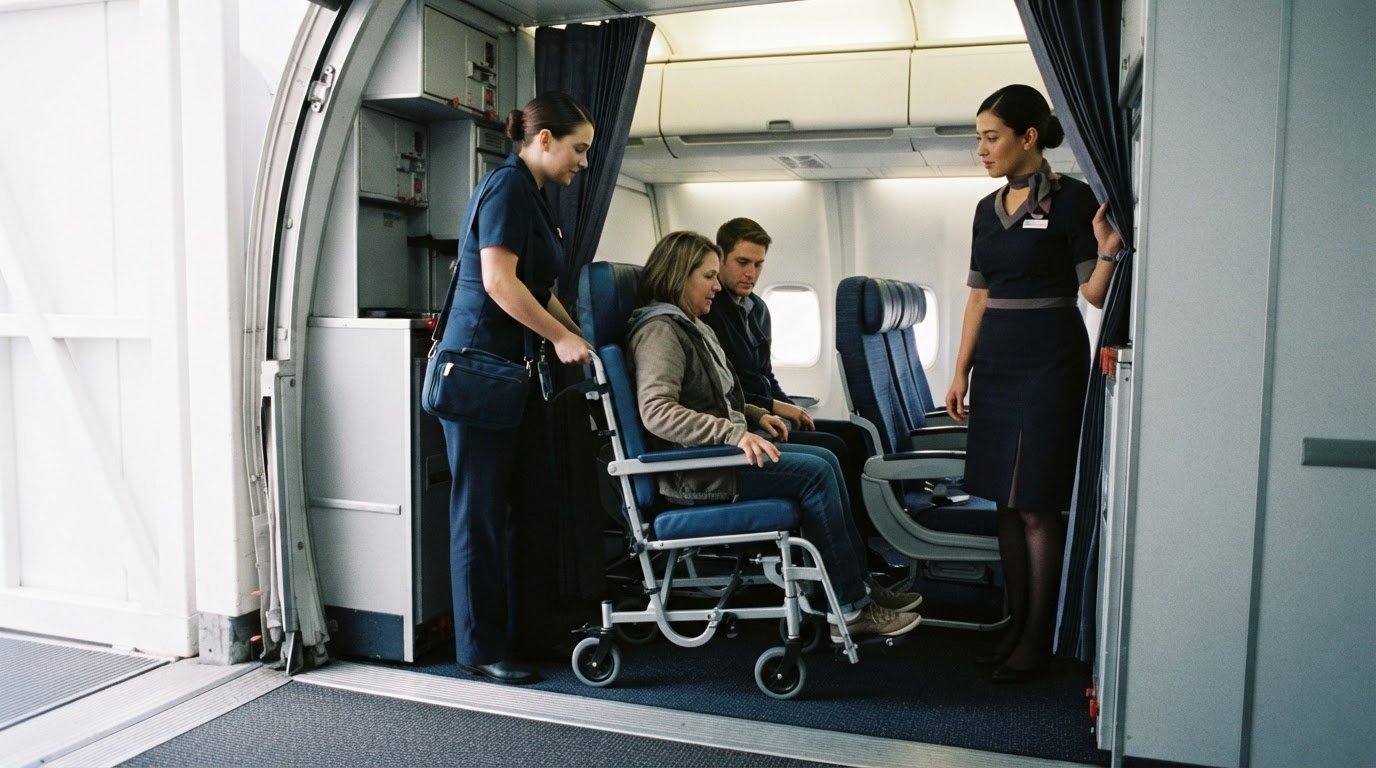
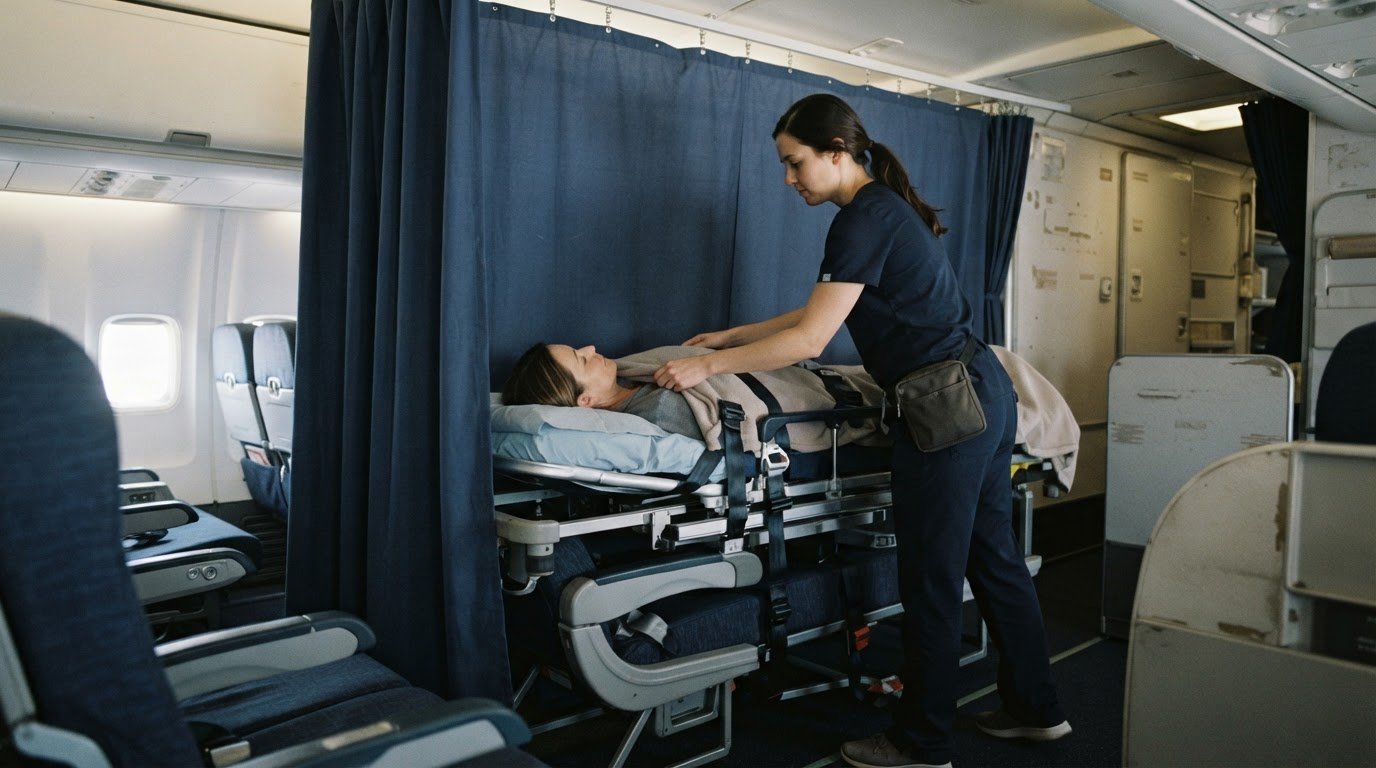
Commercial Airline Stretcher Travel with an RN Escort
Patients who cannot sit upright for a flight often assume that stretcher travel is available only through a dedicated air ambulance. That assumption leads many families to pay far more than the journey requires. A commercial airline stretcher transfer allows a medically stable patient to travel on a scheduled passenger flight, with the stretcher and clinical support arranged in advance. This guide explains how RN-escorted stretcher flights work, what the escort covers during the flight, and what patients and families should confirm before booking, particularly as fall and winter travel brings heavier schedules and weather-related changes.
Table of Contents
Quick Takeaways
Key Insight | Explanation |
|---|---|
Eligibility is based on clinical stability | A commercial stretcher transfer is intended for medically stable patients. A treating physician should confirm fitness to fly before any reservation is finalized. |
The stretcher is installed under airline approval | Stretcher configurations vary by aircraft type. Confirm the aircraft, cabin position, and equipment for every flight segment, including connecting flights. |
The RN escort manages the in-flight clinical role | The escort monitors the patient, documents observations, and coordinates with cabin crew throughout the flight. |
Ground transfers are part of the plan | Most of the risk in a stretcher journey occurs before boarding and after landing. Airport transfers, gate procedures, and baggage handling should be scheduled in detail. |
Seasonal conditions affect timing | Fall and winter weather can cause delays and cancellations. Build buffer time into both the outbound and return legs of the trip. |
Cost depends on scope and route | Costs are driven by the length of the escort, the number of legs, and the level of door-to-door support. Requesting a quote with complete details produces the most accurate estimate. |
What a Commercial Airline Stretcher Flight Is
A commercial airline stretcher transfer allows a medically stable patient to travel on a scheduled passenger airline using a specially arranged stretcher. The patient occupies a stretcher position in the cabin rather than a standard seat, and the flight operates on the airline's published schedule. This differs from a dedicated air ambulance, which is chartered for a single patient and typically departs on the family's or provider's timeline.

The distinction matters for planning. A scheduled flight depends on airline operations, seat availability, and aircraft rotation, so the itinerary must be built around the airline's network. Families who understand this early avoid assumptions that the transfer can be adjusted freely on the day of travel.
Who Is a Suitable Candidate
Suitability depends on clinical stability rather than on diagnosis alone. Patients who are expected to remain stable for the full journey, including ground transfers at both ends, are the appropriate candidates. A patient who requires continuous intensive monitoring, active treatment that cannot be paused, or ventilator support usually needs a higher level of care than this service provides.
In practice, the treating physician's assessment is the starting point. The physician should describe the current condition, medications, oxygen needs, and any recent changes, so that the escort team can judge whether the plan is appropriate before a reservation is confirmed.
Stretcher Equipment on a Passenger Aircraft
Stretcher arrangements are installed on the aircraft under the airline's approval. The setup requires the airline to confirm the aircraft type, the stretcher configuration, and the position in the cabin. Because layouts differ between aircraft, the arrangement for one flight should not be assumed to apply to the next segment of the same trip.
Planning should also account for the portable equipment the patient needs, such as oxygen supply, suction, infusion pumps, and monitoring devices. Each item should be reviewed against the airline's rules before departure so that the equipment is accepted at check-in rather than questioned at the gate.
How the RN Escort Works on the Flight
An RN escort is a licensed registered nurse who travels with the patient for the full journey. The nurse is responsible for clinical observation, medication timing where applicable, and response to changes in condition. The escort is present to manage the patient's care in a controlled way, which allows the airline crew to focus on operating the flight.
The role is preventive as much as responsive. A nurse who notices a subtle change in breathing, skin color, or comfort can address it before the situation escalates. That early recognition is often the most valuable part of the escort service.
Responsibilities of the Escorting Nurse
Before departure, the escort reviews the medical summary, medication list, equipment, and emergency contacts. During the flight, the nurse records vital signs at intervals agreed in the care plan, monitors the patient's position and comfort, and manages equipment such as oxygen. The nurse also tracks fluid intake, bathroom needs, and any symptoms that require a clinical decision.
The escort does not replace the patient's physician or the emergency services at the destination. Their role is to maintain continuity between the departure point and the receiving facility, and to document the patient's condition throughout the trip.
Coordinating With Cabin Crew
Cabin crew are trained to respond to in-flight medical events, and the escort works within that structure. Before boarding, the escort informs the crew of the patient's condition, the equipment in use, and the contact procedure if assistance is needed. This briefing reduces confusion if the situation changes during the flight.
Key insight: On a passenger aircraft, the escort's value lies less in intervention than in early recognition and clear coordination, which keeps a minor concern from becoming an emergency at altitude.
Pro tip: Ask the escort team to share a one-page summary with the cabin crew before boarding. Include the patient's name, condition, equipment, and the contact name on the ground. A written summary is easier to follow than verbal updates in a busy cabin.
Monitoring and Documentation During the Flight
Documentation provides a continuous record of the patient's condition from the origin hospital or home to the destination. The escort logs observations, medications, equipment changes, and any incidents, then hands this record to the receiving clinical team. A clear handoff protects the patient and supports the continuity of care after landing.
Medical Clearance and Airline Approval
Two approvals must be secured before a commercial airline stretcher transfer can proceed. The first is medical clearance from the treating physician. The second is acceptance by the airline, which reviews the patient's condition, the requested equipment, and the aircraft layout. Neither approval replaces the other, and a booking made without both is likely to be cancelled.
Early coordination is the most effective way to avoid delays. Requests that arrive with complete medical information and clear equipment lists move through review more smoothly than requests that are revised several times.
Physician Clearance and Fitness to Fly
The physician's clearance should address the patient's current stability, recent procedures, and any restrictions on positioning or pressure changes. Some patients require a specific assessment of their respiratory or cardiac status before flying. The clearance should be dated close to the travel date, because a condition can change between the assessment and departure.
When a physician's note is vague, the airline or escort team will usually request clarification. Asking the physician to address the specific points in advance shortens this process.
Airline Approval and Advance Notice
Airlines set their own rules for stretcher passengers, and those rules vary by carrier and by route. Advance notice is required so that the airline can allocate the correct aircraft, prepare the stretcher position, and confirm the medical equipment. The request should identify each flight segment separately, since a connection may involve a different aircraft type.
In practice, the most common cause of a delayed booking is an incomplete equipment list. Listing every device, including its power source and oxygen requirements, prevents last-minute refusals at check-in.
Ground Transfers and Timing
Ground transfers are a central part of the plan. The patient must be moved from the bed or room to the vehicle, then to the airport, through check-in, security, and boarding. Each stage adds time and handling. Scheduling the arrival earlier than standard passengers is a practical safeguard that gives the team time to complete each step without rushing.
Door-to-Door and Facility Transfers
Not every stretcher journey begins or ends at an airport gate. The service can be arranged as door-to-door medical escort, hospital-to-hospital medical escort, or nursing home medical escort assistance, depending on the patient's needs and the receiving facility. Each arrangement requires a different set of arrangements on the ground.

The point of origin and destination shape the logistics. A patient leaving a hospital bed needs coordination with discharge staff, transport crews, and the receiving care team. A patient leaving a residence needs access planning, stair assessment, and a safe route to the vehicle.
Door-to-Door Medical Escort
A door-to-door arrangement covers the trip from the patient's home to the destination. This format is common for patients returning home after treatment or traveling to a specialist facility. The escort coordinates each stage, including vehicle arrangements, airport navigation, and arrival at the final address.
Clear address information, access instructions, and a named contact at each location reduce delays. Families should also confirm who will receive the patient at the destination, since an unattended arrival can complicate the handoff.
Hospital-to-Hospital Transfers
Hospital-to-hospital transfers are usually more structured. The sending facility prepares discharge documentation, medication records, and imaging reports. The receiving facility confirms its bed availability and the clinical team that will accept the patient. The escort manages the transfer between the two facilities and provides a clinical handoff at arrival.
A common mistake is to finalize the flight before the receiving facility has confirmed acceptance. Confirmation should come first, followed by the travel booking.
Nursing Home Medical Escort Assistance
Residents of nursing homes and other healthcare facilities may travel for specialist care, family events, or relocation. These trips benefit from advance coordination with the facility's nursing staff, who know the resident's routines, medication schedule, and communication preferences. The facility should provide current records and confirm who will accompany the resident if the escort is not the primary caregiver.
Comparing Transport Options
Families and case managers often compare several ways to move a patient by air. The right choice depends on clinical needs, timing, route, and budget. The table below compares three common approaches in general terms.
Transport Option | Typical Use | Key Considerations |
|---|---|---|
Commercial airline stretcher with RN escort | Medically stable patients who need supervision and a stretcher on a scheduled flight | Depends on airline schedules and approval. Requires advance planning for each segment. Generally more economical than a dedicated aircraft. |
Dedicated air ambulance | Patients who need a higher level of clinical care or who require a flight on a fixed timeline | Chartered for the patient alone. Offers greater flexibility in timing and routing. Typically the highest-cost option. |
Standard commercial flight with airline assistance | Patients who can sit upright and need only mobility support through the airport | Does not provide a stretcher or clinical escort. Suitable only when the patient can remain seated for the full journey. |
Where Each Option Fits
The commercial stretcher option fits patients who are stable but cannot sit for a flight. It places a licensed nurse beside the patient without the cost of an aircraft dedicated to a single passenger. The dedicated air ambulance remains the appropriate choice when the clinical picture requires a higher level of care in flight.
A standard commercial flight is not a substitute for a stretcher when the patient cannot sit upright. Choosing that option for a patient who needs to lie flat can cause pain, skin injury, and clinical risk during the trip.
Cost Differences in General Terms
The main cost difference between a commercial stretcher flight and a dedicated air ambulance relates to the aircraft. A commercial stretcher flight shares the aircraft with other passengers and operates on a scheduled route. A dedicated aircraft carries only the patient and the team. Families should compare total costs, including ground transfers and any additional legs, rather than comparing flight fares alone.
Preparing for Fall and Winter Travel
Fall and winter bring specific planning considerations for stretcher travel. Weather affects both ground transfers and flight operations. Respiratory illness season can also affect the patient's health and the airline's health policies. Preparing for these conditions reduces the risk of last-minute changes.
The planning window should begin earlier than in other seasons. Booking the outbound and return legs with extra time built in helps the team absorb delays without compromising the patient's care.
Seasonal Weather and Schedule Changes
Snow, ice, and fog can delay ground vehicles and aircraft alike. A stretcher patient cannot be moved quickly to an alternative flight, so the plan should identify a backup departure time or a secondary routing option where possible. The escort team should monitor the schedule on the day of travel and communicate changes to the family and receiving facility.
Shorter daylight hours also affect ground transfers. Scheduling vehicle pickups during daylight, when access routes are clearer, can reduce the risk of delays on icy roads.
Respiratory Illness and Infection Precautions
Patients with weakened immune systems or respiratory conditions face additional risk in crowded terminals and cabins during peak illness season. The treating physician should advise on masking, hand hygiene, and any vaccination timing before travel. The escort can help maintain these precautions during transfers and boarding.
Families should also inform the airline of any respiratory equipment in use, since oxygen and other devices may need specific handling and storage.
Packing and Document Checklist
Travel documents should be organized in one folder, with copies stored digitally. The folder should include the physician clearance, the medication list with dosages, the equipment list, identification, insurance information, and emergency contacts. Warm layers, blankets, and clothing suited to cold ground transfers should be packed separately so they are accessible during the trip.
Pro tip: Keep one document folder in the patient's carry-on bag, not in checked luggage. Access to the physician clearance and medication list is often needed during security screening, at the gate, and at the receiving facility.
Cost Considerations and Requesting a Quote
Pricing for an escorted stretcher flight depends on the scope of the service, not on a single fixed fee. The main variables are the number of flight segments, the length of the escort, the amount of ground support required, and any special equipment. Requesting a quote with complete details produces a more accurate estimate than a general inquiry.

RN MEDFLIGHTS offers a free quote by phone. Preparing the information described below before the call allows the team to respond with a clearer scope of service.
What Drives the Cost of an Escorted Stretcher Flight
Each additional flight segment adds scheduling and coordination work. A trip with a connection requires a stretcher arrangement on each aircraft, which increases the time and planning involved. Door-to-door service adds ground transport and coordination at both ends. Longer escort durations and specialized equipment also affect the scope.
Families should ask for a written breakdown that separates the escort service, ground transfers, and any additional support. A clear breakdown makes it easier to compare options and to understand what is included.
Information to Gather Before Requesting a Quote
The most useful information includes the departure and destination locations, the preferred travel dates, the patient's current medical summary, and a list of equipment. It is also helpful to note whether the trip is domestic or international, since documentation and airline requirements differ. Case managers and hospital discharge teams can often assemble this information in a single request.
A request that lacks these details usually leads to follow-up questions and a slower response. Providing them at the outset shortens the path to a confirmed booking.
Frequently Asked Questions
Is a commercial airline stretcher flight the same as an air ambulance?
No. A commercial airline stretcher flight uses a scheduled passenger aircraft with a stretcher position arranged under airline approval. An air ambulance is typically a dedicated aircraft chartered for a single patient. The clinical needs and travel timeline usually determine which option is appropriate.
Who decides whether a patient can travel on a stretcher?
The treating physician provides the medical assessment and confirms fitness to fly. The airline then reviews the request, the equipment, and the aircraft layout before approving the booking. Both approvals are required.
What does an RN escort do during the flight?
The escort monitors the patient, records observations, manages equipment, and coordinates with cabin crew. The nurse also documents the patient's condition and provides a clinical handoff at the destination.
How far in advance should a stretcher flight be arranged?
Advance planning is strongly recommended, particularly for trips with connections or travel during the busy fall and winter period. Early requests allow the airline and the care team to complete the medical and equipment reviews without rushing.
Can the service include transport to and from the home or the hospital?
Yes. Door-to-door medical escort, hospital-to-hospital medical escort, and nursing home medical escort assistance are all available, depending on the patient's needs. Each arrangement requires coordination of ground transfers at both ends.
How can I request a quote?
A free quote is available by phone. Having the departure and destination details, travel dates, a medical summary, and an equipment list ready before the call helps the team provide a more accurate scope of service.
If you have arranged or considered a commercial airline stretcher trip, we welcome your feedback on which planning steps proved most useful or which questions were hardest to answer before you traveled.