How to Fly with Someone Who Has Mobility Issues: A 2026 Clinical and Logistical Guide
- Jun 22
- 12 min read
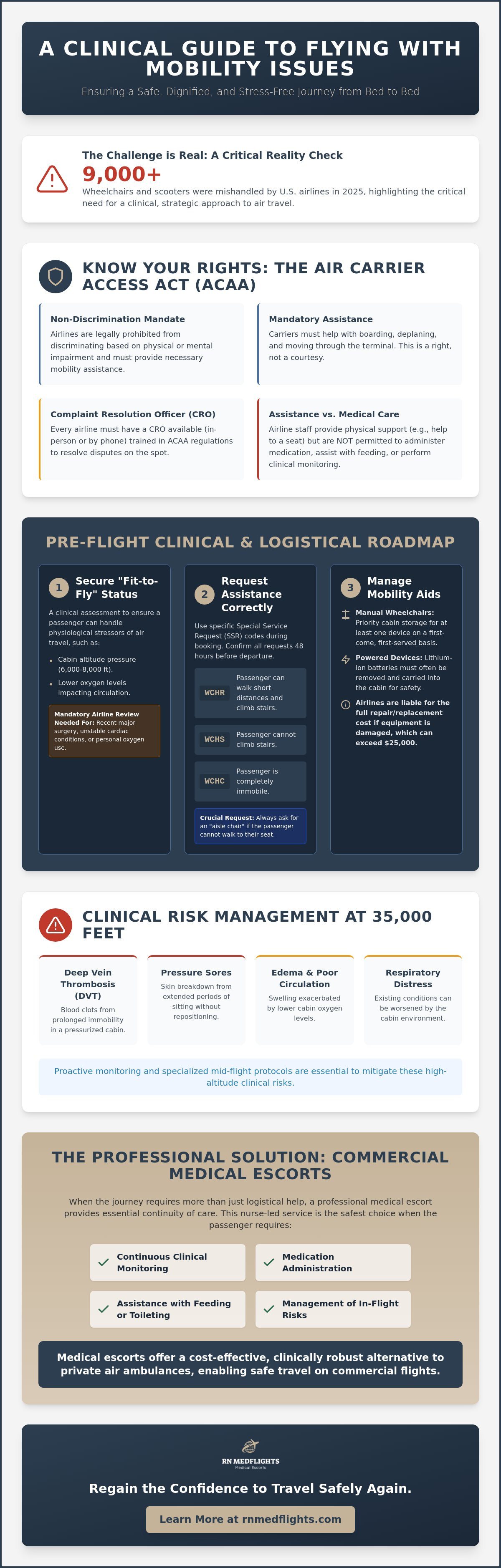
In 2025, U.S. airlines mishandled over 9,000 wheelchairs and scooters, a figure that highlights why so many families feel overwhelmed when planning a trip. Learning how to fly with someone who has mobility issues requires more than just booking a ticket; it demands a clinical strategy that treats the flight as a medical procedure rather than a simple transportation event. We understand the deep anxiety that comes with managing a loved one's safety in a crowded terminal. You shouldn't have to choose between a necessary trip and your family member's physical security.
It's completely normal to fear a fall during a transfer or worry about the technical nuances of airline medical clearance. This guide provides the clinical and logistical roadmap you need to master these complexities and ensure a stress-free journey from bed to bed. We'll examine the 2026 DOT "Wheelchair Rule" training standards, explain the difference between disability rights and medical necessity, and outline when a professional medical escort is the safest choice for your journey. By focusing on continuity of care and precise planning, you can regain the confidence to travel safely again.
Table of Contents
Understanding Passenger Rights and the Air Carrier Access Act (ACAA)
The Air Carrier Access Act (ACAA) serves as the definitive legal framework ensuring that air travel remains accessible for everyone. It's the primary foundation you'll rely on when determining how to fly with someone who has mobility issues. Unlike other service industries, airlines operate under specific federal mandates that prohibit discrimination based on physical or mental impairment. This means the carrier is legally required to provide assistance with boarding, deplaning, and moving through the terminal. While the law is robust, its effectiveness often depends on your ability to articulate the passenger's specific needs to the airline staff.
If you encounter resistance or a breakdown in service at the airport, every airline must have a Complaint Resolution Officer (CRO) available or accessible via telephone. This individual is specially trained in ACAA regulations and has the authority to resolve disputes on the spot. However, you must distinguish between "disability assistance" and "medical care." Airline personnel will help a passenger into their seat, but they won't administer medication, assist with feeding, or provide clinical monitoring. When a patient requires continuous clinical oversight, a professional medical escort becomes a necessary component of the travel plan to ensure safety and continuity of care.
To see a first-hand account of managing mobility equipment during travel, watch this helpful video:
Knowing Your Legal Entitlements for Mobility Aids
Airlines are required to provide priority cabin storage for at least one manual wheelchair on a first-come, first-served basis. If the device must be stowed in the cargo hold, strict safety protocols apply to battery-powered equipment. Lithium-ion batteries often require removal and must be carried into the cabin to prevent thermal runaway risks in the hold. For a deeper understanding of these regulations and international variations, you can review details on Assistance for airline passengers with disabilities. Under current 2026 Department of Transportation rules, if equipment is damaged, the airline is liable for the full cost of repair or replacement. This protection is vital, as custom power wheelchairs can cost upwards of $25,000.
Requesting Airline Assistance the Right Way
Logistical precision starts during the booking process. Use specific Special Service Request (SSR) codes to signal the exact level of help needed. WCHR indicates the passenger can climb stairs but needs help with long distances; WCHS is for those who cannot climb stairs; and WCHC is for passengers who are completely immobile. Always confirm these requests at least 48 hours before departure to ensure the equipment is staged. When speaking with agents, clearly request an "aisle chair" if the passenger cannot walk to their seat. This specialized narrow chair is the only way to move through the aircraft's tight corridors safely and with dignity.
Pre-Flight Medical Preparation: Ensuring "Fit-to-Fly" Status
Before any travel occurs, we must establish that the passenger meets the clinical "Fit-to-Fly" standard. This is more than a simple recommendation; it's a comprehensive assessment of whether a patient can withstand the unique physiological stressors of a pressurized cabin. When researching how to fly with someone who has mobility issues, you'll find that airlines prioritize this clearance to ensure safety for everyone on board. Cabin altitudes typically range between 6,000 and 8,000 feet, where lower oxygen levels can exacerbate existing circulatory problems. For those with limited mobility, this environment increases the risk of edema or respiratory distress.
Certain conditions mandate a formal medical desk review by the airline’s clinical team. These include recent major surgeries within the last 14 days, unstable cardiac conditions, or the requirement of a Portable Oxygen Concentrator (POC). To protect your loved one’s legal protections during this review, consult the Airline Passengers with Disabilities Bill of Rights. This document ensures that medical reviews are handled fairly and without discrimination. If the clinical complexity of the trip feels daunting, a private flight nurse can manage the communication with the airline’s medical department to ensure a smooth transition.
Oxygen Management: Ensure POC batteries have at least 150% of the flight’s duration to account for unexpected delays.
Medication Protocol: Keep all medications in original bottles with clear labels and carry a 72-hour surplus buffer.
Physician Documentation: Maintain a signed statement detailing the medical necessity of all equipment and the patient’s stability.
Securing Professional Medical Clearance
Your physician’s documentation must be precise. It should outline the patient’s current baseline and confirm they don't require specialized medical interventions that the airline cannot provide. Most carriers use a Medical Information Form (MEDIF) that requires specific clinical data. There's a significant difference between managing a stable, chronic mobility issue and an acute, post-operative recovery. Post-operative patients require specific confirmation that their wounds are stable and that they can tolerate the gas expansion that occurs at high altitudes.
Equipment and Supply Logistics
Mastering how to fly with someone who has mobility issues involves preparing for the "worst-case" logistical scenario, especially regarding hygiene. Since aircraft lavatories are often inaccessible for those with severe mobility limitations, you must plan for incontinence management with high-absorbency products and skin barrier creams. TSA Cares provides a dedicated helpline you should contact at least 72 hours before your flight. They can arrange for a passenger support specialist to guide you through security without compromising the patient’s dignity or safety. Your medical travel kit should always include physical copies of medical records, a comprehensive medication list, and emergency contact information for the treating physicians at both your origin and destination.
Tactical Airport Maneuvers: The Bed-to-Bed Transition
The journey for a passenger with limited mobility doesn't begin at the terminal curb. It starts at the bedside. To truly master how to fly with someone who has mobility issues, you must adopt a "bed-to-bed" care philosophy. This approach minimizes physical exertion by treating every transition as a critical link in a clinical chain. Arriving at the airport at least three hours before a domestic flight is essential; mobility throughput is naturally slower and requires a methodical pace to ensure safety. This deliberate timing reduces the cognitive load on the family and prevents the rushed movements that lead to injuries.
Successful transitions rely on professional non-emergency ambulance service coordination for the first and last mile of the trip. Standard rideshare vehicles often lack the space or specialized lift equipment needed for complex mobility aids. A professional ground transport team ensures a seamless hand-off at the terminal, maintaining the patient's stability from the moment they leave their home or hospital room. This level of planning aligns with CDC guidelines for travelers with disabilities, which emphasize the importance of pre-travel health coordination to prevent complications during transit.
Coordinating Ground Transportation and Transfers
The "curbside hand-off" is often where logistical plans fail. We prioritize end-to-end responsibility, ensuring that a patient is never left unattended during the transition from a ground vehicle to an airport wheelchair. Using a professional service prevents the physical exhaustion that occurs when families try to manage heavy equipment and patient transfers alone. This continuity of care is the hallmark of a clinically led transport strategy, ensuring that the patient is viewed as a person rather than a logistical hurdle.
The Boarding and Deplaning Sequence
Pre-boarding is a non-negotiable requirement. It allows the time and space needed for a dignified transfer without the pressure of a crowded cabin. For non-ambulatory passengers, the "aisle chair" transfer is a precise maneuver. Airline staff use a narrow, specialized chair to navigate the aircraft's gangway. In some cases, an Eagle Lift or manual transfer slings are used to move the patient from the aisle chair into their seat. Strategic seating is equally vital. We recommend booking bulkhead seats or aisle seats with movable armrests. These configurations provide the necessary clearance for transfers and allow for easier repositioning during the flight. By controlling these variables, you transform a high-stress event into a predictable, well-managed procedure.
Clinical Risk Management: Safety at 35,000 Feet
Flying introduces unique physiological variables that can compromise patient safety if not managed with clinical rigor. When you're learning how to fly with someone who has mobility issues, you must account for the cabin environment's impact on blood flow and skin integrity. At high altitudes, the combination of low humidity and reduced atmospheric pressure creates a challenging environment for patients with limited movement. We view the flight not just as a duration of time, but as a period of continuous clinical monitoring where every hour requires specific interventions to prevent complications.
The primary clinical concern during long-haul travel is "economy class syndrome," or the development of venous thromboembolism. A professional flight nurse mitigates this by maintaining a vigilant watch over the passenger's hemodynamic status. They provide a steady, reassuring presence, monitoring vitals even during turbulence or unexpected runway delays. If you're concerned about managing these high-altitude clinical risks alone, book a professional medical escort to ensure your loved one remains stable from takeoff to touchdown.
Preventing Circulation Issues and DVT
For mobility-impaired passengers in 2026, DVT risk factors center on the combination of prolonged venous stasis and the cabin’s hypobaric conditions which can trigger dangerous clotting. To combat this, we implement a strict protocol involving medical-grade compression stockings and passive range-of-motion exercises conducted every 60 minutes. These movements stimulate blood flow in the lower extremities even when the passenger cannot walk the aisles. Hydration is equally critical. Our standard is "water only" because caffeine and alcohol accelerate dehydration, which thickens the blood and increases the likelihood of a pulmonary embolism. We ensure the patient consumes a consistent volume of fluids throughout the journey to maintain vascular health.
Managing In-Flight Medical Emergencies
Preparation for an in-flight emergency requires understanding the limitations of the aircraft's resources. The airline’s Emergency Medical Kit (EMK) typically contains basic diagnostic tools like stethoscopes and blood pressure cuffs, along with fundamental medications for cardiac or allergic reactions. It doesn't, however, replace the specialized equipment needed for complex patient care. If a status change occurs, immediate and clear communication with the flight crew is essential. While a pilot can choose to divert the aircraft, this process can take 30 to 60 minutes to execute. We focus on stabilization and prevention, ensuring the passenger never reaches a state where a diversion becomes the only option.
The Professional Solution: Commercial Medical Escorts
Managing the clinical and logistical layers of air travel is often an exhausting burden for families. When you're determining how to fly with someone who has mobility issues, the complexity of coordinating ground ambulances, airline clearances, and mid-flight care can become overwhelming. A medical escort service provides a sophisticated, nurse-led solution that functions as a cost-effective alternative to private air ambulances. This service allows medically stable patients to travel on commercial flights while receiving the same level of vigilance they would in a clinical setting. We take over the entire process, allowing you to focus on being a family member rather than a medical coordinator.
Our expertise extends across borders through international medical repatriation services, where we navigate the varying regulations of foreign carriers and customs. RN MEDflights handles every detail, from the initial "Fit-to-Fly" assessment to the final hand-off at the destination. We manage the communication with airline medical desks and coordinate ground transportation, ensuring that the continuity of care remains unbroken. This professional intervention provides immense emotional relief, replacing the anxiety of travel with the steady confidence of a well-managed medical procedure.
Is a Medical Escort Right for Your Situation?
Choosing a professional escort depends on the complexity of the patient's condition and the duration of the flight. If the passenger requires continuous monitoring, medication administration, or assistance with respiratory equipment, a private flight nurse is essential. For patients who cannot maintain an upright seated position for the duration of the flight, we offer a Commercial Airline Stretcher Service on select international routes. This allows the patient to remain recumbent while receiving "bed-to-bed" care. We assess your specific needs to determine the safest and most efficient mode of transport, ensuring the patient's dignity is maintained throughout the journey.
Why Choose RN MEDflights for Mobility Support
Our organization is built on a foundation of veteran-owned precision and clinical excellence. We don't just provide transportation; we provide a vigilant and highly capable protector for your loved one. Our end-to-end responsibility means we own the entire process. We manage the airline booking, the ground ambulance coordination, and the clinical oversight at 35,000 feet. There's no room for ambiguity in our operations. We provide a clear, sequential path from the hospital or home to the final destination, ensuring that safety and emotional security are never compromised. If you're ready to plan a safe journey, contact RN MEDflights for a customized medical transport quote today. We're ready to help you bring your loved one home.
Securing Your Next Journey with Confidence
You now possess the clinical and logistical roadmap required to navigate the skies safely. Mastering how to fly with someone who has mobility issues involves more than just booking a ticket; it requires a continuous chain of care that begins at the bedside and ends at the final destination. By leveraging your rights under the Air Carrier Access Act and implementing strict high-altitude clinical protocols, you protect both the health and the dignity of your loved one. Every transition is a managed procedure designed to minimize physical exertion and emotional stress.
RN MEDflights stands ready as your vigilant protector during these complex transitions. As a veteran-owned and operated organization, we provide Licensed Registered Flight Nurses who specialize in comprehensive bed-to-bed coordination. We take full responsibility for the airline logistics, ground transport, and mid-flight clinical monitoring so you don't have to. Request a transparent quote for professional medical escort services to begin planning your safe return home. You can move forward with the peace of mind that every detail is under expert control.
Frequently Asked Questions
How do I get a wheelchair-bound person onto a commercial plane?
Transferring a passenger who uses a wheelchair involves a transition to a specialized aisle chair at the aircraft door. Airline staff perform this maneuver during the pre-boarding phase to ensure a dignified and unhurried experience. Once the passenger is secured in the aisle chair, staff navigate the narrow gangway to reach the assigned seat. This process requires clear communication between the family and the ground crew to ensure the passenger's comfort and safety.
Can I fly with someone who is completely non-ambulatory?
Yes, you can fly with a non-ambulatory passenger, provided they've secured a clinical "Fit-to-Fly" clearance from their physician. Learning how to fly with someone who has mobility issues often involves coordinating with the airline's medical desk to confirm the passenger can safely tolerate a seated position for the journey's duration. If the passenger cannot sit upright, specialized stretcher services or additional support equipment may be required to maintain stability at high altitudes.
Does the airline provide a nurse or medical assistant for the flight?
Airlines do not provide clinical staff like nurses or medical assistants. Their personnel are trained for safety and logistical assistance only, such as helping with boarding or stowing a wheelchair. If your loved one requires medication administration, vital sign monitoring, or incontinence care, you'll need to hire a private flight nurse or commercial airline medical escort. This ensures a professional level of care that goes beyond the basic service provided by the cabin crew.
What happens if a mobility device is too large for the aircraft?
If a mobility device exceeds the cargo door dimensions, the airline is required to explore alternative travel options to accommodate the passenger. This might include rebooking the passenger on a larger aircraft with a wider cargo hold at no additional cost. It's vital to provide the exact dimensions and weight of the device during the booking process to avoid day-of-travel complications. We always recommend confirming these details at least 48 hours before departure.
Is a medical escort covered by standard travel insurance?
Standard travel insurance rarely covers the cost of a medical escort. Most basic policies only provide for emergency stabilization and transport to the nearest medical facility rather than a planned medical relocation or repatriation. You should check your specific policy for repatriation coverage or secondary medical transport riders. In many cases, these specialized services are an out-of-pocket expense that provides a safer, more predictable alternative to standard travel.
How much does it cost to hire a flight nurse for a mobility-impaired passenger?
The cost of a flight nurse depends on the specific clinical needs of the patient and the complexity of the flight path. Factors such as domestic versus international travel and the required medical equipment will influence the total. Each journey is unique, and a one-size-fits-all approach doesn't work for medical transport. We recommend requesting a customized quote to receive a transparent breakdown of the bed-to-bed coordination costs tailored to your situation.
What is the "aisle chair" and how does it work during boarding?
An aisle chair is a narrow wheelchair specifically engineered to navigate the tight corridors of a commercial aircraft. Because standard wheelchairs are too wide for the gangway, staff use this specialized device to move the passenger from the jet bridge to their specific seat. It includes safety straps to keep the passenger secure during the boarding and deplaning sequence. This is a critical tool for ensuring safe passage for those who cannot walk even short distances.
Can a patient fly on a stretcher on a commercial airline?
A patient can fly on a stretcher via a Commercial Airline Stretcher Service, though this is primarily available on specific long-haul international routes. This configuration involves removing several rows of seats to install a certified medical unit with a privacy curtain. It's a highly specialized process that requires clinical oversight and prior coordination with the airline’s engineering department. This option is ideal for patients who must remain recumbent for the duration of the flight.


