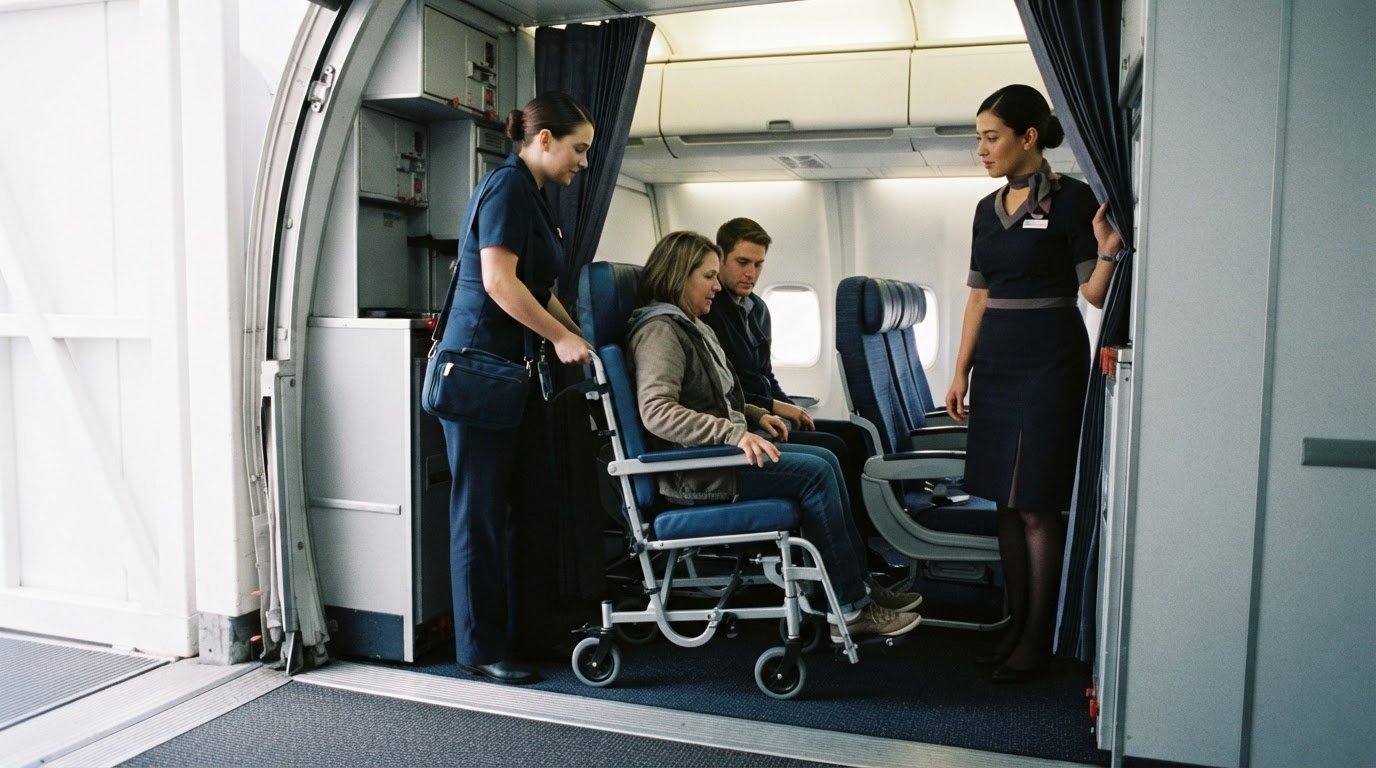
Medical Escort to Philippines: RN Support for Long Flights
Long-haul travel to the Philippines places considerable demands on patients who need ongoing medical supervision. A journey that crosses many time zones, often with at least one connection, can complicate medication schedules, fluid management, mobility, and access to care. A medical escort to Philippines itinerary addresses these risks by placing a registered nurse beside the patient for the full trip. This article explains what an RN escort does on a commercial flight, how the service is structured, and what families and case managers should prepare before departure.
Table of Contents
Quick Takeaways
Key Insight | Explanation |
|---|---|
Confirm clinical stability before booking | A treating physician should document that the patient is stable for air travel, and the escort should review that documentation before any ticket is purchased. |
Plan the full itinerary, not only the departure | Connections and ground transfers are where medication timing and mobility support most often break down. |
Convert the medication schedule to destination time | Doses should be mapped to Philippine local time before departure, with the prescribing physician confirming the revised schedule. |
Carry a written medication and equipment list | Security checkpoints and airline staff may ask about medications, oxygen, and devices, so organized paperwork shortens delays. |
Choose coverage that matches the transfer points | Door-to-door, hospital-to-hospital, and nursing home escort options each close different gaps in care. |
Request a free quote early by phone | Early review of the diagnosis, route, and service level allows time to coordinate with the treating team and the receiving facility. |
Why the Long-Haul Flight to the Philippines Requires Planning
Travel between North America and the Philippines typically involves one or more connections, and the total journey can extend across more than one calendar day. For a patient with a chronic condition, a recent surgery, or an infusion schedule, each stage of that journey changes the conditions the care plan was designed around. Planning the escort around those stages is the foundation of a safe trip.

Flight duration and time zone shifts
The Philippines is well ahead of most of North America on the clock, so a morning departure may arrive in the middle of the night by local time. Medication schedules, meal timing, and rest periods must be converted to the destination time zone before departure. In practice, families often discover this gap only after a missed dose, which is why the conversion should be written into the travel plan with the prescribing physician's confirmation.
Extended periods seated in a cabin also affect circulation, hydration, and mobility. Patients with limited movement face a higher risk of swelling and pressure injuries, and that risk increases when the journey includes several interruptions. These effects are predictable, which makes them manageable when the escort reviews them in advance.
Where risk concentrates during the journey
The transitions between flights often carry more risk than the flights themselves. Boarding, deplaning, gate changes, and ground transfers require lifting, wheelchair handling, and continuous oversight of equipment such as oxygen and infusion lines. A delayed connection can also shift medication timing by several hours, which requires a revised plan rather than a simple reset.
Weather disruptions and schedule changes are common on long routes, and they tend to affect the connection point rather than the origin. An escort who understands the contingency options at each connection can make decisions quickly and document them clearly for the receiving team.
What an RN Escort Does on a Commercial Flight
A registered nurse escort on a commercial flight serves as the patient's clinical point of contact from the departure point to the final destination. The escort's responsibilities are defined by the patient's care plan, the physician's written orders, and the nurse's licensure. Published descriptions of medical escorting on commercial flights note that escorts may administer medications, monitor vital signs, and provide immediate medical attention when needed.
Pre-flight clinical review
Before boarding, the escort reviews the discharge summary, current medication list, allergy history, and any recent laboratory results. This review identifies conditions that may limit safe air travel, such as unstable vital signs, oxygen requirements that exceed what can be arranged for the flight, or wounds that need care before departure. Where a concern is identified, the escort documents it and the case manager contacts the treating physician before travel proceeds.
The pre-flight review also confirms that the patient understands the plan and that the family knows what to expect. Patients who are anxious about flying may underreport early symptoms, so a brief conversation before boarding often improves communication later in the trip.
In-flight monitoring and medication administration
During the flight, the escort monitors vital signs at intervals set by the care plan, observes changes in breathing, skin color, and level of alertness, and administers medications on schedule. Early recognition is the central function. A change noticed in the first hours of a flight is generally easier to manage than one discovered during a layover, when the options for care may be more limited.
Early recognition of change is the most valuable function of a clinical escort on a commercial flight, because the time available to respond is longest at the beginning of the journey.
Pro tip: Ask the escort to confirm the in-flight monitoring schedule in writing, including the times for vital sign checks and scheduled doses, so that family members know when to expect updates.
Coordination with airline staff
Escorts coordinate with cabin crew on seating, access to the lavatory, oxygen handling, and the placement of medical equipment. Airlines apply their own policies to medical equipment and devices, so these requirements should be confirmed before the day of travel rather than at the gate. Clear coordination reduces the risk that a device is stowed where it cannot be reached during an episode.
Medical Escort Services for Philippine Routes
RN MEDFLIGHTS structures its escort services around the points where a patient's care begins and ends, which varies by case. The company provides domestic and international medical escort services, along with door-to-door, hospital-to-hospital, and nursing home medical escort assistance. Each option addresses a different set of handoff risks on a route to the Philippines.
Service level should match the clinical picture rather than the convenience of the itinerary. A patient who needs regular monitoring has different requirements from a patient who needs only supervision during a stable transfer, and the case manager should document which category applies before the route is confirmed.
Door-to-door escort coverage
Door-to-door coverage begins at the patient's home and continues through airport check-in, security, boarding, the flight, connections, and transfer to the destination residence or facility. This option suits patients returning home after treatment and families who are not experienced in traveling with medical needs. The main advantage is continuity, since the same clinical lead is responsible for the patient at each transition.
Hospital-to-hospital transfers
Hospital-to-hospital escort is typically used when a patient moves between facilities for treatment, rehabilitation, or continued care. The receiving hospital needs the clinical summary, the medication administration record, and a confirmed arrival time. An escort who carries that information and confirms it with the receiving team reduces the gap in care that often occurs at the point of transfer.
Stretcher services and nursing home transfers
Patients who cannot sit upright for the duration of a flight may require stretcher-level handling, which involves additional planning and specialized equipment. Nursing home residents often have complex medication regimens and a higher level of dependence, so the escort coordinates with the facility's nursing staff before departure. Where stretcher handling is required, the family should confirm the scope of services early because it affects both logistics and cost.
Preparing Clinical Documentation and Handoffs
Documentation determines how quickly a team can respond when a patient's condition changes in transit. A written record that is complete, current, and portable can save considerable time during a delay or an unexpected evaluation. The aim is a packet that any clinician can read without contacting the original facility.
A published hospital nursing procedure from Connecticut states that a registered nurse clinically assesses a patient before the patient leaves the unit, and that escorted patients are supervised by staff in line with the facility's policy. The same principle applies to air travel. The clinical assessment should take place before the patient leaves home or the facility, not during the trip.

Physician clearance and fitness-to-fly review
A treating physician's written statement that the patient is stable for air travel is the starting point for any escort arrangement. The escort reviews this statement alongside recent vital signs, laboratory results, and any pending procedures. Where the statement is missing, the case manager should obtain it before a ticket is purchased, since an unplanned cancellation after booking is costly for the family.
Medication, device, and supply inventory
The travel medication list should show drug names, doses, administration times in both home and destination time zones, and the quantity carried. Medications and devices should be packed in carry-on baggage whenever possible, with documentation available for security checks. Supplies such as dressings, syringes, and backup batteries for powered devices should be counted against the length of the itinerary plus a margin for delay.
Handoff at the destination facility
The escort's responsibility generally ends with a structured handoff to the receiving clinician or family caregiver. A useful handoff includes the last medication dose and its time, the most recent vital signs, any change observed during the flight, and the next scheduled care. A handoff delivered both verbally and in writing reduces gaps in care during the first hours after arrival.
Pro tip: Keep a second copy of the medication list and the physician statement in a separate bag from the originals, and store an electronic copy in a folder that the family and case manager can access.
Comparing Escort Options for the Philippines Route
Families and case managers usually compare several options when planning travel to the Philippines. Each option suits a different level of clinical need, and the right choice depends on the patient's stability, the length of the itinerary, and the available budget. The table below summarizes the practical differences.
Travel Option | Typical Clinical Need | Practical Considerations |
|---|---|---|
Unaccompanied commercial flight | Fully independent patient with stable medications and no monitoring requirement | No clinical oversight during travel, so the patient must manage every dose and any change in condition alone |
Family member as companion | Patient who needs supervision and help with mobility but no clinical intervention | A companion may recognize obvious problems but is usually not trained to assess deterioration or administer medications |
RN medical escort on a commercial flight | Patient who needs clinical monitoring, medication administration, or stable supervision across transfers | Generally a lower-cost option than dedicated air transport, and it requires that the patient be medically appropriate for commercial travel |
Dedicated air ambulance | Patient who needs continuous critical care or stretcher transport on a dedicated aircraft | Substantially higher cost and typically a longer planning window, with the aircraft and crew arranged for the specific case |
In practice, most patients who need more than a companion but less than critical care fall into the RN escort category. The choice should be guided by the treating physician's assessment rather than by cost alone. Where the patient's condition is unstable, a commercial flight is not appropriate regardless of the escort arrangement.
Families sometimes ask whether a relative with nursing experience can serve as the escort. A relative may provide valuable support, but the arrangement still requires a licensed clinician to assume responsibility for care decisions, medication administration, and documentation.
Common Mistakes When Booking a Medical Escort
Most planning problems share a common source, which is that the trip is booked before the clinical plan is complete. The following errors appear frequently in cases involving travel to the Philippines, and each one is avoidable with early coordination.

Booking before clinical clearance
Some families purchase tickets before the physician confirms fitness to fly. If clearance is delayed or the patient's condition changes, the cost of rebooking and the stress on the patient can be considerable. Clinical clearance should precede the booking, and the escort should review it before the itinerary is finalized.
Underestimating layovers and ground transfers
A connection that appears workable on a booking confirmation may leave little time for a wheelchair transfer, a scheduled dose, or a restroom stop with mobility support. Ground transfers at both ends of the journey add time that does not appear in the flight schedule. An itinerary with buffer time for these transitions is safer than the shortest available routing.
Waiting too long to request a quote
Requesting a quote late in the planning process limits the options for routing, staffing, and equipment. A free quote by phone allows the team to review the diagnosis, route, and service level before commitments are made. Early contact also gives the case manager time to coordinate with the treating team and the receiving facility. Families can review the available options on the air ambulance service page before making that call.
Pro tip: Ask for the escort's plan for each connection in writing before the booking is final, including the contingency steps for a missed or delayed connection.
Frequently Asked Questions
How is an RN medical escort different from the flight crew assisting a passenger?
Flight crew are trained for passenger safety and emergency procedures, but they are not assigned to assess or manage an individual patient's clinical condition throughout the flight. An RN escort is responsible for that clinical oversight, follows the patient's care plan, and documents any change in condition.
Can an RN escort administer medications during a commercial flight?
An RN escort can administer medications that are prescribed and documented for the travel period. Administration must follow the written orders in place and the scope of the escort's licensure, and the schedule should be confirmed with the prescribing physician before departure.
How far in advance should a medical escort to the Philippines be arranged?
Planning should begin as soon as the travel date is known, because clinical clearance, documentation, and routing all require lead time. The appropriate window depends on the patient's condition and the route, so an early phone consultation is the practical first step.
Does an RN escort replace an air ambulance?
Not in every case. An RN escort on a commercial flight is generally suitable for patients who are medically stable enough for commercial travel but still need clinical supervision. Patients who need continuous critical care or stretcher transport on a dedicated aircraft usually require a different level of service, as the treating physician will determine.
What information should families gather before requesting a quote?
Families should gather the discharge summary, a current medication list, the physician's statement of fitness to fly, the planned travel dates, and the origin and destination addresses or facilities. Having these documents ready allows the quote to reflect the actual clinical requirements of the trip.
We welcome feedback from families, discharge planners, and case managers who have arranged a medical escort to the Philippines, and we invite you to share which planning steps proved most useful in your experience.