Oxygen on Commercial Airlines — Rules, Devices, Approvals, and Practical Limits (Domestic U.S. and International)

Introduction
Traveling by air with a medical oxygen need is common, but it requires careful planning. Differences in regulations, airline policies, aircraft systems, and international procedures mean that what’s permitted and practical varies widely. This article explains the approval processes, the two main options for passengers who need oxygen in-flight — portable oxygen concentrators (POCs) and airline-supplied oxygen cylinders — the constraints on flow rates and delivery modes, and practical guidance for both U.S. domestic and international travel.
Overview: Why oxygen rules exist
Aircraft are pressurized but to lower ambient pressures (typically the equivalent of 6,000–8,000 feet). This reduced partial pressure of oxygen can worsen hypoxemia. Regulators and airlines therefore manage oxygen carriage and use to protect patient safety, cabin safety (flammability, pressurized gases, lithium batteries), and operational reliability. Aviation and public-safety authorities set high-level rules; manufacturers and airlines translate these into device approvals and individual policies.
Regulatory landscape (who sets the rules)
- Federal Aviation Administration (FAA, United States): Governs air travel in U.S. airspace and sets standards for carriage of medical devices and batteries on U.S.-registered carriers and flights to/from the U.S.
- Transportation Security Administration (TSA): Security screening and battery transport rules in the U.S.
- International Civil Aviation Organization (ICAO) / International Air Transport Association (IATA): Set international recommendations, Dangerous Goods Regulations (DGR), and guidance that many carriers and states adopt.
- European Union Aviation Safety Agency (EASA) and national aviation authorities: Oversee European carriers and set regional device/medical clearance expectations.
- Individual airlines: Implement and often tighten policies (airline medical departments decide final permissions, documentation, and operational constraints).
Because airlines have the final say, a traveler must do both regulatory and airline-specific due diligence.
Two main options for carrying oxygen in-flight
1) Portable Oxygen Concentrators (POCs)
2) Airline-provided oxygen cylinders (or airline oxygen service)
Each approach has trade-offs in terms of cost, availability, permitted flow rates, and logistics.
Portable Oxygen Concentrators (POCs)
What they are
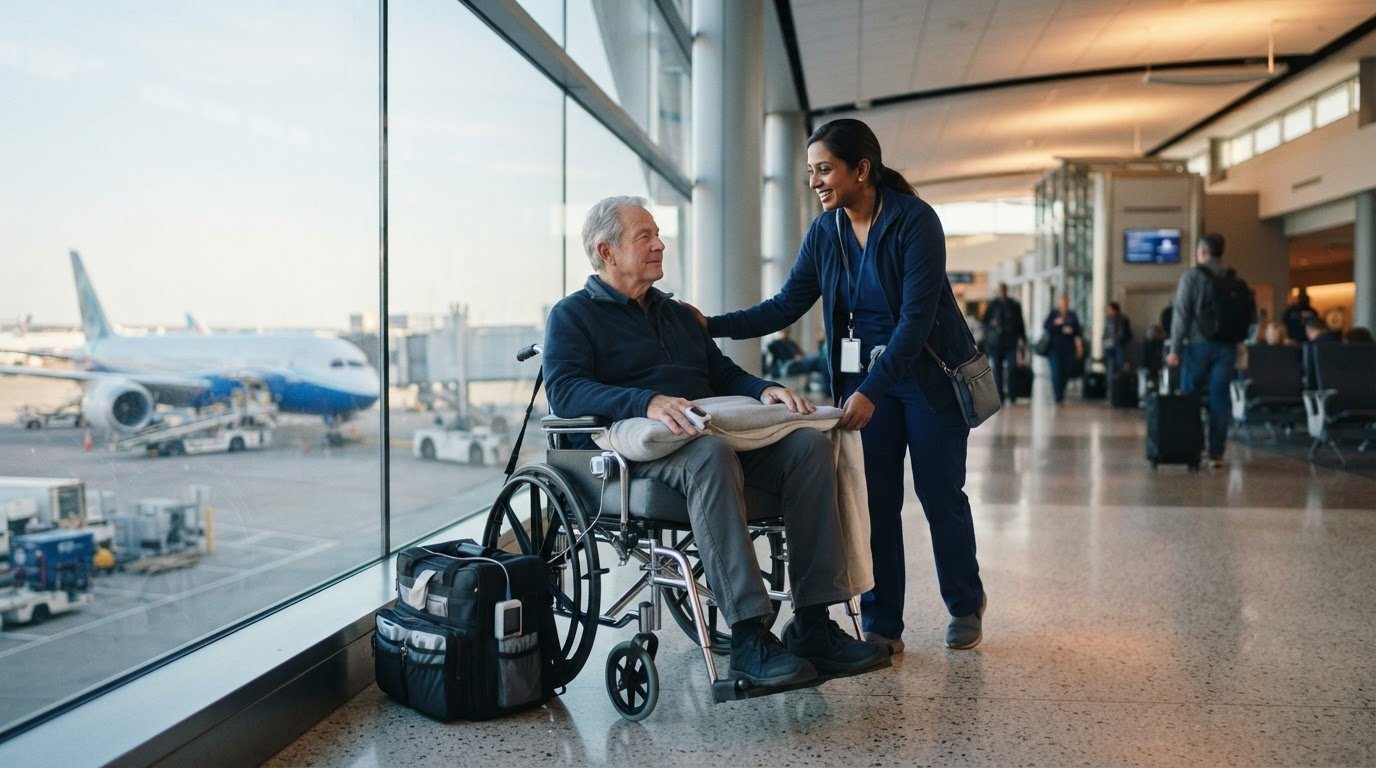
- POCs are battery-powered devices that draw ambient air and extract oxygen, delivering it to the patient either continuously or via pulse-dose (demand) delivery. Modern POCs are designed for travel and many are certified for use on commercial flights.
Regulatory & approval status
- Airlines accept only POCs that are specifically approved by the manufacturer for in-flight use and are on their accepted-devices list. IATA and FAA require that the device be declared safe for onboard use by its manufacturer and carry any required approvals or documentation.
- Airlines typically maintain an approved POC list (model and manufacturer). If your device is not listed, many airlines will still accept it if the manufacturer confirms it is certified for in-flight use — but this must be verified in advance.
Battery requirements and carriage
- Aviation battery rules (ICAO, IATA, FAA, TSA) treat lithium batteries as sensitive. Most airlines require:
- Sufficient battery power for the entire travel time (flight time plus taxi/expected delays) and typically an additional safety margin. Common airline policies require enough battery to power the POC for the planned flight duration plus 50% extra or to supply two batteries (one installed and one spare) that together cover 150% of flight time. Specific numeric requirements vary by carrier.
- Spare batteries must be carried in carry-on baggage, protected from short circuits (battery terminals taped or in original packaging). They are not checked.
- Some airlines require that the battery be manufacturer-approved for aircraft use (not a third-party battery).
- Always carry a charger/AC adapter and the battery charging/handling instructions.
Delivery modes: continuous vs pulse-dose
- POCs offer either continuous flow (liters per minute) or pulse-dose (milliliters per breath at set sensitivity). Pulse-dose is more efficient but depends on the patient’s respiratory pattern; it may be inadequate for patients with shallow breathing, high respiratory rates, or who require high flows.
- Many POCs only support pulse-mode at a setting equivalent to a low continuous flow. Discuss with clinicians whether pulse-dose will meet oxygenation needs at cabin altitudes.
Typical airline restrictions and practical flow-rate reality
- Airlines generally accept POCs for use but restrict the maximum continuous flow permitted and may limit pulse settings. Limits vary. Common practical patterns:
- Many carriers permit pulse-dose POCs up to their supported pulse setting (varies by model).
- Some airlines restrict continuous-flow POCs to relatively low flows (e.g., 1–4 LPM), but exact limits depend on the aircraft, the airline, and the device’s certification. A few carriers do not permit any continuous flow on some aircraft types without additional approvals.
- There is no single universal numeric limit mandated globally; the rule is: “check with the airline and device manufacturer.” Clinicians should test a POC’s clinically effective oxygen delivery at sea level prior to travel and, when possible, at simulated cabin pressure (clinics with hypoxia simulation capability or pulmonary labs can assist).
Strengths of POCs
- Independence: Patient-provided oxygen, available irrespective of airline stock, useful on international routes and in remote destinations.
- Cost-effective: Eliminates fees for airline-supplied oxygen on some carriers and removes reliance on airline scheduling.
- Cabin availability: More airlines permit POCs than permit personal oxygen cylinders.
Limitations of POCs
- Battery logistics: Flight delays or long itineraries require spare batteries and planning.
- Flow and performance: May not deliver sufficient oxygen for patients requiring high continuous flows or who breathe shallowly. Pulse-dose may fail in sleep or sedation.
- Environmental effect: POCs’ oxygen output declines at reduced cabin pressure; clinical oxygenation may be less effective at cruising altitudes.
- Device failure: Carries risk in remote destinations; ensure backup plan.
Airline-provided oxygen cylinders (airline-supplied oxygen)
What they are
- Many airlines can supply onboard compressed oxygen cylinders to passengers who require continuous-flow oxygen during flight. This is aircraft oxygen provided by the airline and is typically billed to the passenger.
Approval and booking process
- Airline medical departments must pre-approve the need. Approval usually requires submission of medical documentation (physician statement, MEDIF — Medical Information Form — for many European carriers) describing diagnosis, oxygen flow rate required at sea level, stability, whether a stretcher is needed, the need for a companion, and any equipment.
- For international flights, approvals may take longer and may require additional documentation or embassy/entry paperwork for the destination country.
Flow rates and cylinder capabilities
- Aircraft-supplied oxygen cylinders provide continuous flow and therefore can meet higher continuous flow requirements than many POCs. However, cylinders are limited by:
- Availability: Not all aircraft types carry passenger oxygen in quantities sufficient for prolonged high-flow needs.
- Maximum flow the airline’s system supports: The airline will state the maximum allowed continuous flow (often listed on their medical page or confirmed by their medical department).
- Duration: Cylinders are finite; airlines will estimate minutes of supply at specified flow rates. Long-haul flights may run low if high flows are required for the entire flight.
- Many airlines refuse to accommodate very high continuous flows (e.g., >10 LPM) unless arranged as part of a specialized medical escort or air ambulance.
Pros of airline oxygen
- Continuous-flow capability suitable for higher-acuity but stable patients.
- Eliminates need to bring heavy batteries or risk of POC inadequacy.
- Provided and controlled by trained crew; cylinders are already certified for aircraft use.
Cons of airline oxygen
- Availability and scheduling: Limited number of cylinders per flight; advanced notice and pre-approval are required.
- Cost: Airlines typically charge a fee for oxygen service; fees vary and can be substantial.
- Limited to what aircraft supports; may be unavailable on some regional aircraft or reduced-capacity flights.
Carrying your own oxygen cylinders: general prohibition
- Most commercial airlines prohibit passengers from bringing their own compressed oxygen cylinders into the cabin or checked baggage (due to hazardous goods rules). Exceptions for specific, pre-approved, medically-certified compressed gas cylinders are rare and tightly regulated. For travel requiring dedicated cylinders, air ambulances or special arrangements with the airline are usually necessary.
Medical clearance: the approval process (domestic U.S. and international)
1. Preliminary clinical assessment
- Determine stability, baseline oxygen requirement at sea level, recent SpO2 readings, diagnosis, and expected needs during travel (sleep, exertion, flight duration).
- If a patient uses oxygen at home, determine device type (POC vs. concentrator vs. cylinder), flow rate, and whether pulse-dose suffices.
2. Physician documentation
- Most airlines require a physician statement or completed MEDIF (Medical Information Form) confirming fitness to fly and specifying oxygen requirements, medications, mobility limitations, and any risk of in-flight deterioration.
- For U.S. domestic travel, airlines often have a simplified medical clearance; for international travel, the MEDIF process and embassy/immigration rules (for entry and transit) can take longer.
3. Contact the airline early
- Contact the airline’s medical department or special assistance line at least 48–72 hours before departure — ideally weeks ahead for complex cases or international itineraries.
- Confirm whether the airline accepts the passenger’s POC model and its allowed modes/flow settings, whether they can supply onboard oxygen, fees, and battery requirements/limits for POCs.
4. Bookings and seat selection
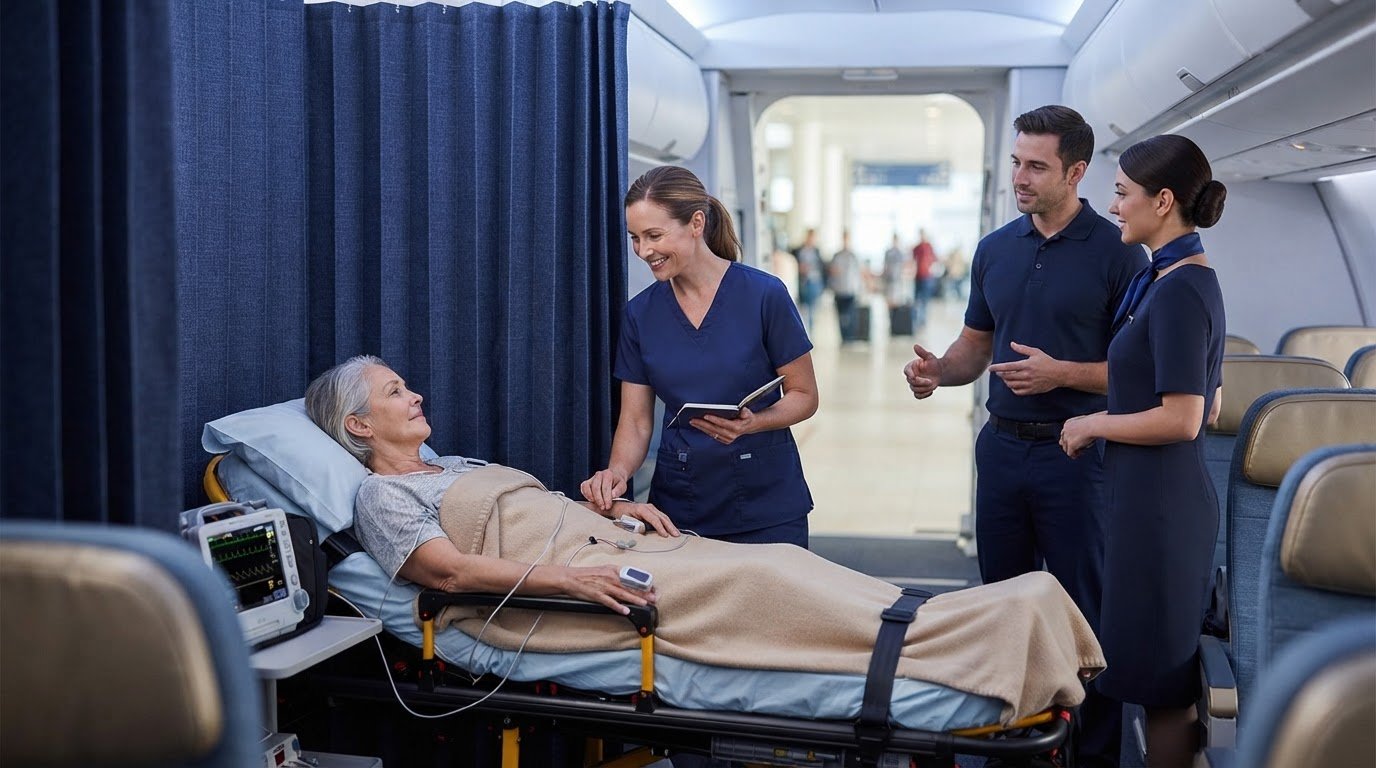
- Secure seating arrangements in advance. Stretcher requests, extra legroom, or bulkhead seats may require airline approval.
- If an escort or caregiver travels, make sure airline policies allow a companion and whether they must be ticketed separately.
5. Security screening and battery handling
- At U.S. airports, TSA allows POCs and medical batteries in carry-on; spare batteries are generally allowed but must be protected. International airports follow ICAO/IATA guidelines but may have local variations.
- Have device manuals, battery specs, and a physician letter at security for smoother screening.
6. Arrival and transfer planning
- Coordinate ground ambulance transfers if needed, ensure destination hospital acceptance, and verify customs/immigration rules for medical equipment (especially for international travel).
Flow rate limitations and physiological considerations
Why flow rate matters
- Oxygen flow rate determines how much supplemental oxygen reaches the lungs. At altitude-equivalent cabin pressures, higher flows may be needed to maintain target oxygen saturations. Delivery via pulse-dose is not the same as continuous flow; pulse-dose delivers oxygen only during inhalation and depends on the patient’s inspiratory flow and rate.
Typical flow-limit realities
- Airlines and POC manufacturers set limits; common practical rules:
- Many POCs are approved only up to certain pulse settings or continuous flows (check manufacturer specs).
- Airlines commonly restrict continuous flow to modest levels (often a few LPM). Some carriers prohibit continuous flow POCs altogether unless they’re specifically certified.
- For patients needing high continuous flows (e.g., >4–6 LPM), airline-supplied oxygen may be required, but even then, aircraft capacity or permit may limit feasibility.
- Clinicians must translate a home oxygen prescription to the in-flight needs: a patient on 2 LPM at sea level may need higher flows at cruise altitude; validator testing or oximetry during exertion and simulated altitude testing (where available) helps define safe in-flight prescriptions.
Clinical testing and “fit-to-fly”
- “Fit-to-fly” assessments should include pulse oximetry at rest and exertion, 6-minute walk if appropriate, recent clinical stability, and review of comorbidities (cardiac disease, COPD, pulmonary hypertension).
- Some pulmonary labs run hypoxic challenge tests (simulating 8,000-foot cabin altitude) to determine whether a patient needs supplemental oxygen and to identify required flow rates. This is the gold standard for some long-haul or regulatory scenarios.
International nuances
- International carriers follow ICAO and IATA guidelines, but national aviation authorities and airlines can impose additional restrictions. Some countries enforce strict rules on medical equipment carriage and controlled medications.
- Transit, visa, and customs rules may affect your ability to carry spare batteries or prescription oxygen devices through intermediate countries.
- Repatriation or inter-country transfers require coordination of both origin and destination medical and immigration authorities.
- Language barriers, local medical facility capabilities, and local oxygen infrastructure at the destination must be part of planning.
Operational tips for patients and providers
1. Early planning: Contact the airline weeks in advance for international travel and at least several days in advance for domestic trips. Obtain airline-specific POC lists and oxygen policies in writing when possible.
2. Bring documentation: Physician letter, MEDIF (if required), POC manufacturer statement that device is approved for in-flight use, device manual, battery specs, and prescription.
3. Batteries: Carry enough battery capacity (and spares) to meet airline requirements and unexpected delays. Keep batteries in carry-on, protected, and with terminals covered.
4. Test POC efficacy: Clinically verify POC performance at rest, with exertion, and with sleep if possible; consider pulse oximetry monitoring during a trial period.
5. Consider a hybrid plan: For long-haul travel where POC capacity is borderline, arrange airline-supplied oxygen on the flight or plan a medical escort or air ambulance if risk is significant.
6. Communicate in advance with ground services: Coordinate ambulances, stretcher services, and destination care.
7. Know insurance and costs: Airline oxygen may incur fees; check travel insurance and medical transport coverage.
Alternatives and contingency planning
- Medical escort on a commercial flight: A medically trained escort (RN or paramedic) can manage oxygen delivery and trades off logistics/permits with clinical oversight.
- Air ambulance: For patients requiring high-flow or continuous advanced critical care, a dedicated air ambulance is safer though far more expensive.
- Postpone travel: If the transfer or flight cannot safely be accomplished within airline constraints, postponing or changing the mode of transport is appropriate.
Conclusion
Air travel with oxygen needs is feasible but must be approached as a coordinated medical and logistical operation. The POC revolution has improved access and independence for many patients, but battery logistics, device performance at altitude, and airline-specific flow limitations mean careful pre-travel assessment is essential. Airline-supplied oxygen can meet higher continuous-flow needs but requires advance approval and is limited by aircraft capability and supply. For international travel, additional rules and customs considerations increase complexity.
Best practice: combine a thorough clinical “fit-to-fly” assessment and hypoxic testing (where available), early and documented airline coordination, adequate battery management, and a contingency plan (airline oxygen, medical escort, or air ambulance) tailored to the patient’s stability and oxygen requirements. Always confirm the final permissions and technical limits with the operating airline; regulators and manufacturers provide high-level guidance, but the carrier’s medical department makes the operational decision.