Airline Medical Clearance: What Airlines Require to Board
Airlines do not decide whether a medically supervised passenger may board based on a diagnosis alone. Each carrier evaluates whether the passenger can complete the flight without urgent medical care, and that evaluation often happens weeks before departure. Understanding what airlines require for airline medical clearance, the fitness to fly requirement, and the MEDIF form commercial flight process helps patients, families, and case managers avoid last-minute denials. This article explains each requirement, the timing rules that apply, and the steps that reduce the risk of a delayed or refused departure.
Table of Contents
Quick Takeaways
Key Insight | Explanation |
|---|---|
Certificate timing for contagious illness | United Airlines requires a doctor's medical certificate within 10 days of the initial flight when a passenger has a contagious illness or a condition that may require medical assistance during the flight. |
Certificate timing after hospitalization | When a passenger was hospitalized recently, the certificate should reach the airline at least 48 hours before the initial flight. |
Grounds for denied boarding | Airlines may refuse boarding if a passenger cannot complete the flight without urgent medical assistance, poses a risk to other travelers or crew, or has not submitted a certificate on time. |
Advance notice for equipment | Onboard medical oxygen, portable oxygen concentrators, ventilators, respirators, and CPAP machines require notice to the airline before travel. |
Confidential handling of medical forms | The ICAO Medical Manual notes that airlines using suggested MEDIF forms must ensure that confidentiality is respected once the forms are completed. |
Notice at security screening | A passenger may inform the TSA officer of a medical condition verbally, with a TSA Notification Card, or with medical documentation before screening begins. |
Escort plan in the request | Describing the escort's role and in-flight monitoring plan in the initial request allows the airline medical team to review the full travel plan at one time. |
What Airlines Mean by Medical Clearance
The term airline medical clearance describes the documented permission an airline needs before it accepts a passenger whose condition may affect the flight. In practice, clearance is not a single certificate issued by a government agency. Each carrier sets its own medical review procedures, and those procedures determine which documents are required, who reviews them, and the deadline for submission.

United Airlines states that a passenger with a contagious illness, or with a condition that may require medical assistance to complete the flight safely, needs a medical certificate from a doctor within 10 days of the initial flight. The airline defines a medical certificate as a written document confirming that a doctor has given permission to fly with the medical condition or illness. Passengers who include accommodation requests in the certificate receive a response on whether those requests can be met.
Who Typically Needs a Medical Certificate
The certificate requirement is triggered by the condition itself, not by the type of ticket purchased or the cabin class selected. A passenger who uses supplemental oxygen, has an active infection, or has been discharged from hospital recently may fall within the scope of the airline's medical review even when the passenger travels without a companion. Families often assume that a routine check-up letter satisfies the requirement. In practice, airline medical departments look for a statement that addresses the specific condition, its current stability, and the support the passenger will need during the flight.
Pro tip: Ask the airline's medical department for its current certificate requirements before the physician completes any forms. Requirements can differ between carriers and between routes, and a form prepared for one airline may not answer the questions another airline asks.
What a Medical Certificate Should Contain
A certificate that names the condition, states the treating physician's assessment of stability, and lists any accommodation requests gives the airline's reviewers what they need to answer quickly. It should also identify any equipment the passenger will bring and whether the passenger requires assistance with walking, transfers, or toileting. Vague statements such as "patient is fit to travel" without supporting detail often generate follow-up questions that delay the decision.
A common mistake is to send the certificate without confirming that the airline received it. Keep proof of transmission, and request written confirmation that the document is on file for the correct flight numbers and dates.
Fitness to Fly Requirement
The fitness to fly requirement is the judgment that a passenger can complete a flight without needing urgent medical assistance and without creating a risk to other travelers or crew. It is the central question behind most airline medical reviews. Air France recommends that passengers consult a doctor before travel if they are receiving medical treatment, have a chronic illness, or have had a recent medical event, which reflects the same underlying concern.
Criteria Airlines Apply When Refusing Boarding
United Airlines lists three conditions under which it may deny boarding. The first is a belief that the passenger cannot complete the flight without needing urgent medical assistance. The second is a risk to the health and safety of other travelers or crew. The third is the failure to submit a medical certificate at least 48 hours before the flight. Each condition is evaluated separately, so meeting one requirement does not resolve another.
Refusals of this kind are rarely arbitrary, but they are often avoidable. Most denials at the gate result from documentation that arrived late, did not match the booked itinerary, or did not address the specific risk the airline identified. Confirming the status of the review well before the travel date reduces this exposure.
How Escorts Affect the Assessment
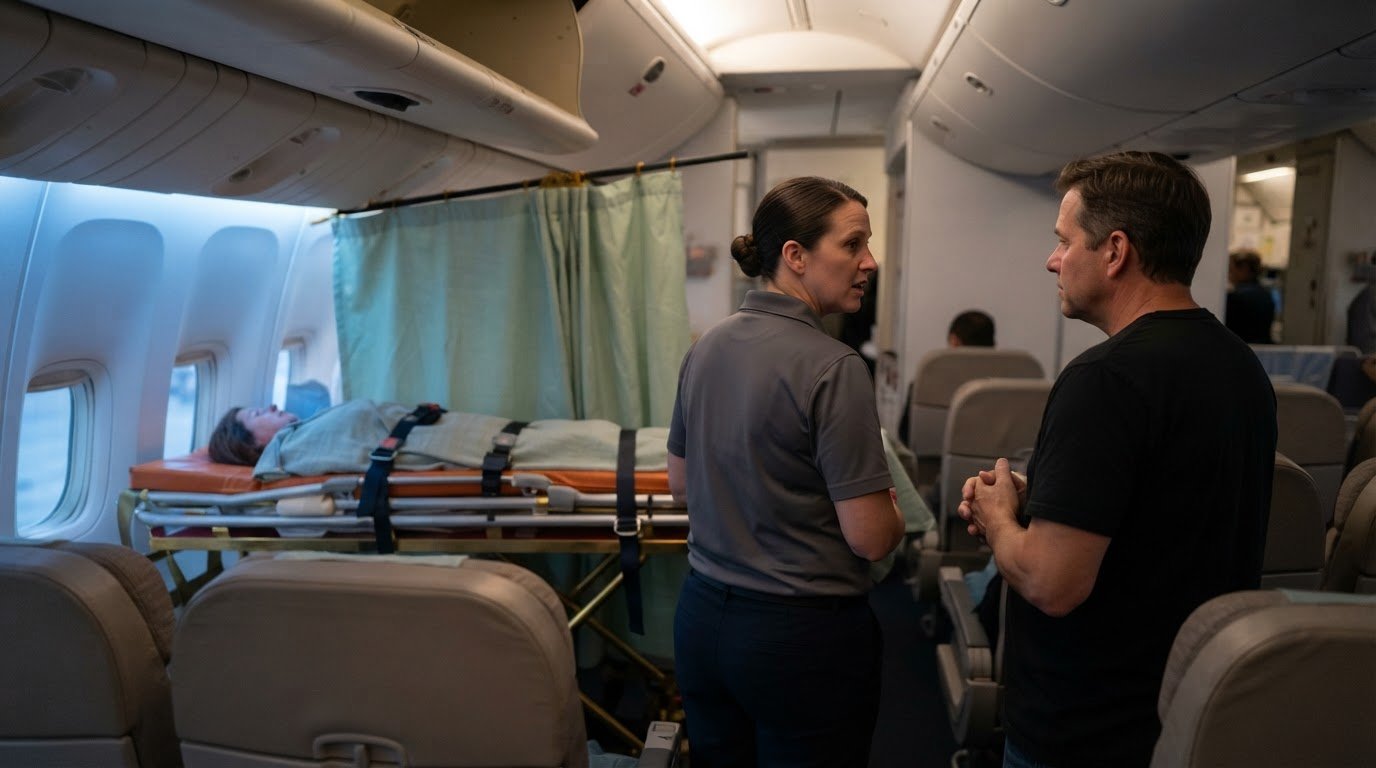
An accompanying clinician does not automatically satisfy the fitness to fly requirement. However, the escort plan is one of the most useful elements to include in the request, because it shows who will monitor the passenger during the flight, what equipment they will use, and how they will respond to a change in condition. In practice, a clearly documented plan helps the airline medical team understand that the passenger's needs are being managed rather than left to the cabin crew alone. RN MEDFLIGHTS, LLC structures its commercial flight escort arrangements around this kind of documented monitoring plan, which is prepared with the passenger's physician and submitted with the travel request.
MEDIF Form for Commercial Flights
The MEDIF forms referenced in the ICAO Medical Manual are suggested templates that airlines can use to collect medical information about a passenger before travel. The manual, in its seventh edition effective March 2015, includes notes on how these forms should be handled. Airlines that use the suggested forms must ensure that confidentiality is respected once the forms are completed. For patients and case managers, the MEDIF form is therefore both a practical requirement and a document that deserves careful handling.
How the MEDIF Process Works in Practice
The MEDIF is usually completed by the treating physician, although the exact steps depend on the airline and the passenger's condition. The form asks for information the airline needs to assess the flight, such as the diagnosis, current treatment, mobility, and any equipment or assistance required. Physicians often need several days to complete these forms accurately, particularly when a specialist must confirm the information. Submitting the form early leaves time for the airline to request clarifications.
A practical approach is to prepare a single summary for the physician that lists the flight itinerary, the planned escort, the equipment, and the specific questions the airline has asked. This reduces the number of rounds needed to complete the form and keeps the information consistent across documents.
Confidentiality and Secure Transmission
Because the form contains sensitive health information, it should be shared only with the parties that need it. Case managers and families should avoid forwarding the completed form through unsecured channels or to general mailboxes that multiple staff members can access. Requesting written confirmation of receipt from the airline's medical department supports both privacy and accountability. When the form is later revised, the most recent version should be clearly labeled so that the airline does not review an outdated document.
Oxygen and Medical Equipment Rules
Medical equipment introduces a separate set of requirements that run alongside the medical certificate. United Airlines lists onboard medical oxygen, portable oxygen concentrators, ventilators, respirators, and CPAP machines among the items that require advance notice. Passengers who travel with wheelchairs, service animals, or other medical equipment are also asked to complete additional steps before departure. Missing one of these steps can delay a flight even when the medical certificate is complete.
Onboard Oxygen and Portable Oxygen Concentrators
Oxygen requirements are among the most common sources of confusion. Airlines generally distinguish between oxygen supplied by the carrier, where it is available, and oxygen the passenger brings on board. Portable oxygen concentrators are subject to airline-specific acceptance rules, so the make and model of the device should be confirmed with the airline in advance. Requests should state the flow settings, the expected duration of use, and the battery arrangements for the full itinerary, including connections.
Pro tip: Confirm the exact device model with the airline in writing before booking the escort. A device that is accepted on one carrier may not be accepted on a connecting flight operated by another carrier.
Ventilators, Respirators, and CPAP Machines
Ventilators, respirators, and CPAP machines are treated as medical equipment that needs power, space, and clear documentation. Passengers using these devices should bring the manufacturer's documentation and a letter from the treating physician describing the device and its settings. The equipment must also fit within the seat or cabin arrangement agreed with the airline. For this reason, seat assignments and equipment requests should be finalized together rather than handled as separate tasks.
Choosing the Right Level of Medical Support
Not every passenger with a medical condition needs the same level of support. Some travelers can meet the airline's requirements with a physician's certificate and a companion. Others need a registered nurse in the cabin or a dedicated aircraft. The table below compares three common approaches and the documentation each one typically requires.
Approach | Documentation Typically Required | Best Suited For |
|---|---|---|
Standard commercial flight with a physician's medical certificate | Medical certificate within the airline's deadline, plus any accommodation or equipment notices | Stable passengers who can monitor their own condition or travel with a family companion |
Commercial flight with an RN medical escort | Medical certificate, MEDIF or equivalent airline medical form, and a written escort plan | Passengers who need clinical monitoring or assistance during the flight but do not require a stretcher or dedicated aircraft |
Dedicated air ambulance | Full medical records, flight planning documents, and operator-specific medical review | Passengers who need intensive care during transport or cannot be seated for a commercial flight |
Each approach has a distinct cost and a distinct review process. Dedicated aircraft are generally more expensive because they carry the cost of the aircraft, crew, and equipment for the full flight. Commercial flights with an RN escort offer a lower-cost option for passengers whose conditions are stable enough for a seated journey but who still need professional monitoring. Patients who are evaluating a dedicated aircraft can review the scope of the air ambulance service before making a decision.
Security Screening and Medical Devices
Airline clearance does not end at the check-in desk. Every passenger must pass security screening, and medical devices, dressings, and mobility aids can affect how that screening proceeds. The Transportation Security Administration (TSA) explains that a passenger may inform the TSA officer of a disability or medical condition verbally, by using the TSA Notification Card, or by providing medical documentation. Passengers may also ask a supervisor at the checkpoint if the screening experience does not meet their expectations.

Medical items should be declared before screening starts rather than discovered during it. A bandage, compression sleeve, or dressing may be subject to additional screening, including inspection and hand-held metal detector screening. Early notice allows the officer to plan the process and reduces the time spent at the checkpoint.
Notifying the TSA Officer Before Screening
The TSA recommends that passengers inform the officer before screening begins if they have a bandage, compression sleeve, or dressing. In standard lanes, the item may be tested for trace explosives and inspected. In TSA PreCheck lanes, additional screening is required only if the item alarms in the walk-through metal detector or the body scanner, and the officer may then direct a self-pat down of the item. Passengers who need assistance may also talk to the officer about the best way to complete screening.
Eligibility for Body Scanner Screening
The TSA states that a passenger must be able to stand and walk unassisted for the duration of Advanced Imaging Technology screening. The passenger must also be able to stand with arms raised above the head for five to seven seconds without support. Passengers who cannot meet these conditions, or who choose not to use the body scanner, receive a pat-down conducted by a TSA officer of the same sex. Escorts should plan for this step, because a pat-down may require the removal of shoes, belts, or light jackets.
Preparing a Passenger for Boarding
Successful boarding depends on a timeline that begins well before the departure date. The steps below reflect the requirements described by the airlines and security authorities cited in this article, arranged in the order that most families and case managers find practical. Each step should be confirmed in writing where possible.
Timeline From Booking to Departure
The first milestone is the initial request to the airline's medical department, which should describe the condition, the planned escort, and any equipment. The second is the physician's certificate or MEDIF form, which should be submitted within the airline's deadline and ideally well ahead of it. The third is confirmation that the airline has accepted the documents and any equipment requests for every flight segment. The final step is a pre-departure check of the documents, the equipment, and the escort arrangements on the day of travel.
In practice, a common mistake is to treat the certificate as the only task. Equipment notices, seat requests, and connection planning often require separate confirmations, and a missing confirmation at one stage can affect the whole itinerary.
Documents to Keep Within Reach
Airline guidance advises passengers to keep prescribed medications within reach in the personal item rather than in checked luggage. The traveler should carry copies of the medical certificate, the completed MEDIF or equivalent form, the equipment documentation, and the physician's contact details. A written summary of the medical history and current medications allows the cabin crew and any receiving medical team to respond quickly. These materials are best kept together in a single folder that the escort can present at each checkpoint.
Airline clearance is decided on documentation that arrives early, matches the itinerary, and answers the question the airline is actually asking.
Frequently Asked Questions
Does every passenger with a medical condition need an airline medical clearance?
No. Airlines generally require a medical certificate when a condition may require medical assistance during the flight, when the passenger has a contagious illness, or when specific equipment or services are needed. A passenger whose condition is stable and does not affect the flight may not need a certificate, but the airline's own rules should be checked before booking.
How far in advance should a medical certificate be submitted?
United Airlines asks for a medical certificate within 10 days of the initial flight when certain conditions apply, and at least 48 hours before the initial flight when the passenger was hospitalized recently. Submitting the document earlier than these deadlines allows time for the airline to request clarifications and avoids the risk of a denied boarding at the gate.
What is the purpose of the MEDIF form on a commercial flight?
The MEDIF forms described in the ICAO Medical Manual are suggested templates that airlines can use to gather medical information about a passenger before travel. They help the airline assess whether the passenger can complete the flight safely and what support is needed. Because the forms contain sensitive information, airlines using them must ensure that confidentiality is respected.
Can a passenger be denied boarding even with a completed certificate?
Yes. A certificate does not guarantee boarding if the airline believes the passenger cannot complete the flight without urgent medical assistance, or if the passenger poses a risk to other travelers or crew. Airlines retain discretion over these judgments, which is why a clear escort plan and complete documentation remain important.
Do medical devices need to be declared at airport security?
Yes. The TSA advises passengers to inform the officer of a disability or medical condition before screening begins, using a verbal statement, the TSA Notification Card, or medical documentation. Bandages, compression sleeves, and dressings may require additional screening, so early notice helps the process proceed smoothly.
Is an RN escort on a commercial flight the same as an air ambulance?
No. A commercial flight with an RN escort uses a scheduled airline and is generally a lower-cost option for passengers who are stable enough to travel seated. A dedicated air ambulance is a separate aircraft with its own medical review and is typically chosen for passengers who need a higher level of care during transport.
Have you prepared a medically supervised passenger for a commercial flight? Please share your experience with airline medical clearance, the MEDIF process, or security screening so that other readers can benefit from your insights.
References
TSA guidance on screening passengers with disabilities and medical conditions
United Airlines rules for traveling with medical certificates and medical equipment
ICAO Medical Manual, seventh edition, notes on MEDIF forms and confidentiality
Air France guidance on when medical clearance is required for air travel