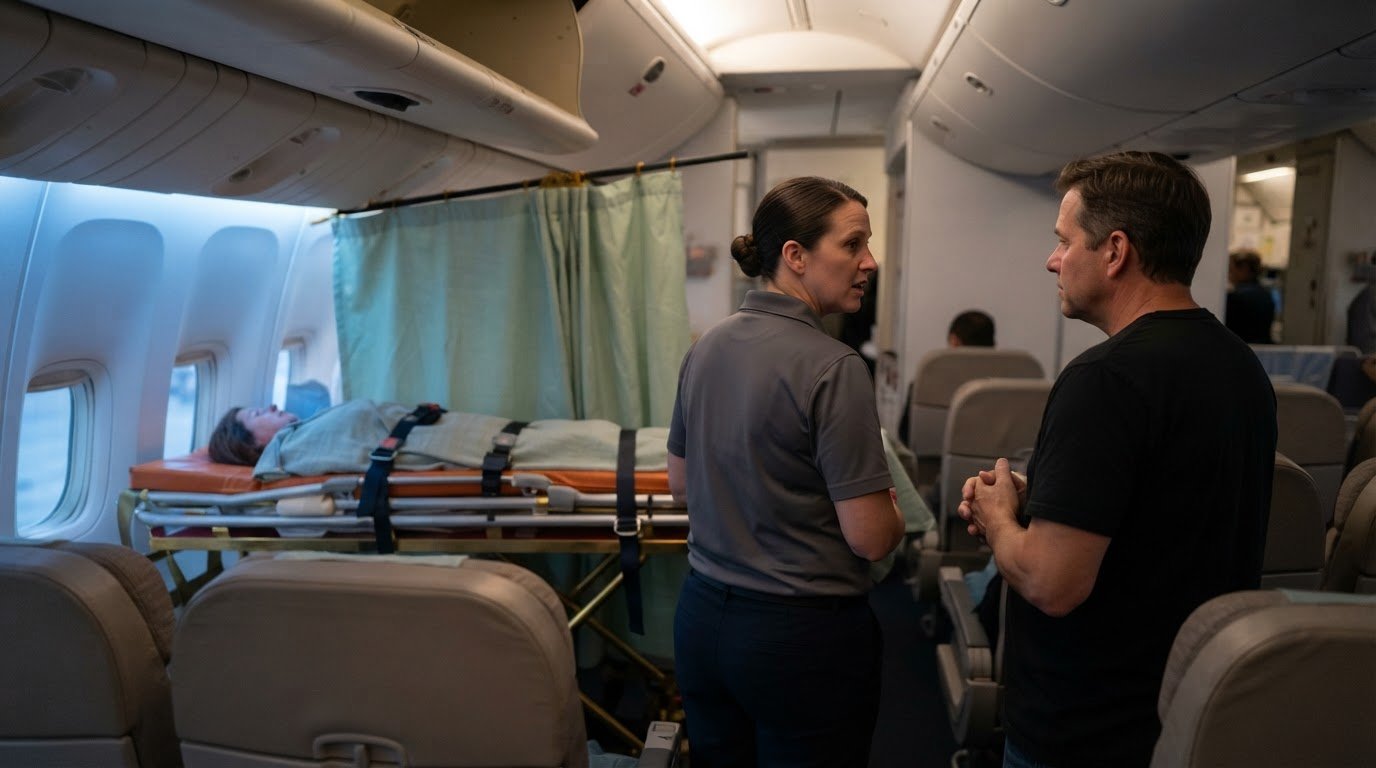
RN Medical Escorts for Skilled Nursing Facility Transfers
Skilled nursing facility patient transfer decisions often arrive with little notice. A resident may need a cardiology evaluation, an oncology infusion, a neurosurgical review, or a specialized wound assessment that cannot be delivered within the facility. Clinical guidance treats a patient transfer as more than a physical move from one surface to another, because continuity of care must be maintained during and after the trip. This article explains how skilled nursing facilities can use licensed RN medical escorts for specialist visits, when that level of support is appropriate, and how to plan each stage of the transfer safely.
Table of Contents
Quick Takeaways
Key Insight | Explanation |
|---|---|
Match the escort level to the clinical need | Residents who need skilled monitoring, scheduled medications, or oxygen management during travel usually require an RN escort, not only a companion. |
Send a complete clinical packet | The receiving team should have the medication record with last dose times, recent vital signs, code status, allergies, and the specific reason for the referral before departure. |
Treat the transfer as a continuity event | Written handoffs at departure, in transit, and at arrival protect continuity of care, since poorly organized transfers can increase morbidity. |
Select the transport mode early | Commercial airline escort, ground transport, and dedicated air ambulance serve different clinical thresholds, distances, and budgets. |
Confirm the return plan before departure | Booking the return trip, a bed hold, and readmission orders before the resident leaves the specialist site prevents gaps in care. |
Limit transfers to what is clinically necessary | Each movement carries risk, so specialist visits should be bundled and replaced by on-site or remote consultation where that can answer the clinical question. |
Document every stage | Records of the handoff times, escort observations, and any changes in condition support clinical decisions and the facility's own review process. |
Why Specialist Transfers Need More Planning Than Routine Moves
Routine transfers inside a facility, such as bed to wheelchair or bed to commode, follow established protocols and occur many times each day. A transfer to an outside specialist adds variables the facility does not control. The resident leaves familiar caregivers, a known medication schedule, and an established monitoring routine, and the receiving team may use a different chart, formulary, and communication process.

StatPearls, a clinical reference hosted on the NCBI Bookshelf, notes that successful patient transfers rely on understanding each patient's needs while adhering to evidence-based guidelines. It also states that poorly organized transfers can result in increased morbidity and mortality. For a skilled nursing resident, that risk is concentrated in the hours before departure and the period after arrival.
Where Off-Site Transfers Commonly Fail
In practice, failures tend to come from information gaps rather than from the physical act of moving the resident. A medication schedule that was not sent, an oxygen order that was left out, or a code status form that stayed in the facility can each create a preventable problem hours later. Most of these gaps are visible during planning when the facility uses a written checklist.
A transfer is complete only when the receiving clinician has the same clinical picture as the sending team.
Why the Receiving Team Needs the Full Picture
The specialist makes decisions based on the information in front of them. If the summary omits a recent fall, a change in anticoagulation, or a new dietary restriction, the visit may produce recommendations that conflict with the resident's current plan of care. Clear and current documentation prevents that outcome and reduces the time the specialist spends reconstructing the history.
Pro tip: Assign one named person at the facility as the transfer coordinator. That person owns the packet, the appointment confirmation, and the return plan, which prevents each department from assuming that another has completed a step.
When Specialist Care Justifies an Off-Site Transfer
A transfer is justified when the clinical need cannot be met within the facility and the specialist cannot reasonably deliver the service on site. Examples include advanced diagnostic imaging, surgical consultation, infusion therapy delivered in a specialized clinic, dialysis, and complex vascular or wound assessment. Before scheduling anything, the attending physician should document the medical necessity and the alternatives considered.
The lower-risk option should be the default whenever it can answer the clinical question. An on-site specialist visit or a remote consultation avoids the risks of travel, so an off-site transfer should reflect a genuine need for in-person evaluation.
Clinical Criteria for Moving a Resident
Residents are usually candidates for escorted travel when their condition is stable, they can tolerate sitting upright or lying on a stretcher for the expected duration, their oxygen needs are predictable, and their medications can be given on schedule during transit. A resident with unstable vital signs, uncontrolled pain, or an active infection requiring isolation may need a different plan. The attending physician should document that determination in writing.
Movement itself has clinical value, since it helps prevent muscle atrophy and pressure injury. Excessive or poorly planned transfers, however, raise the safety risk for both the resident and the staff who assist. The planning stage should therefore count every move the trip requires and remove those that are not essential.
Questions to Settle Before Scheduling
Several questions should be answered before a date is set. Has the specialist confirmed the appointment time and the clinical purpose of the visit? Has the resident's family been informed and asked to provide contact details? Who will accompany the resident, and who will make routine decisions if the physician cannot be reached? Written answers to these questions prevent last-minute cancellations.
What an RN Escort Does Before, During, and After the Trip
A licensed registered nurse escort is responsible for the resident's clinical monitoring during travel. The RN works within the orders from the sending physician and the policies of the escort provider. This differs from a non-clinical companion, who can assist with mobility and personal needs but cannot assess changes in the resident's condition.
Pre-Departure Assessment
The escort typically reviews the transfer packet, confirms medication timing, checks equipment such as oxygen supplies and mobility devices, and performs a baseline assessment before the resident leaves the facility. Discrepancies between the packet and the resident's current condition should be resolved before departure rather than at the departure gate.
In-Transit Monitoring
During the trip, the RN monitors vital signs at the intervals set in the orders and watches for respiratory distress, pain, dehydration, skin pressure injury, or new confusion. The RN also helps the resident manage airport procedures, which can involve long walks, security screening, and waiting periods in unfamiliar surroundings. Those transitions are often where residents experience the most stress.
Handoff at the Receiving Facility
At arrival, the escort delivers a structured handoff to the specialist's team. The handoff covers the resident's status in transit, any medications given, changes in condition, and the return plan. The escort does not replace the treating clinicians, who retain responsibility for clinical decisions, but a written summary combined with a verbal report gives the receiving team a reliable record of the journey.
Choosing Among Commercial Escort, Ground Transport, and Air Ambulance
The transport mode should match the clinical need, the distance, the timeline, and the budget. A resident who requires clinical oversight but is stable enough for a cabin seat may be a candidate for a commercial airline flight with an RN escort. That option is a practical choice for specialist visits that span long distances, and it is generally a lower-cost alternative to a dedicated air ambulance.
Facilities comparing options should understand the trade-offs. Ground transport suits shorter trips that the resident can tolerate by road. Dedicated air ambulance transport is generally reserved for residents whose condition requires an intensive level of care during transit.

Transport Option | Best Fit | Key Considerations |
|---|---|---|
Commercial airline with RN escort | Stable residents who need clinical monitoring over a long distance | Airline oxygen and medical equipment rules apply, and advance booking and physician clearance are required |
Dedicated air ambulance | Residents whose condition requires intensive care during transit | Typically the highest cost option, with the aircraft and crew dedicated to one patient |
Ground transport with attendant | Shorter trips where the resident can tolerate a road journey | Travel time can be substantial over distance, and road conditions and stops affect the schedule |
Relative cost depends on distance, timing, and the level of care required, so facilities should request written quotes that list what is included. RN Medical Escorts provides an air ambulance alternative with RN escort on commercial airlines for domestic and international travel.
Pro tip: Ask each provider to state in writing whether the RN escort remains with the resident through the return journey. Confirming this at the quote stage avoids a gap in clinical coverage on the way back to the facility.
Assembling the Transfer Packet and Authorizations
The transfer packet is the most important document set in a specialist transfer. It should be complete, current, and physically travel with the resident, with electronic copies sent to the receiving team before arrival wherever possible. Facilities should assemble the packet well before the travel date so that missing items can be obtained in time.
Clinical Summary and Medication Record
The packet should include a current medication administration record showing the time of the most recent dose for each medication, a diagnosis summary, recent vital signs and laboratory results, allergy information, and a list of active orders. Medication timing is a frequent point of failure, so the record should be reviewed against the escort's travel schedule. Equipment such as oxygen concentrators and mobility aids should be labeled with the resident's name and tagged for transport.
Advance Directives, Authorizations, and Family Notification
Code status, advance directives, and health care proxy information should be current and copied into the packet. Facilities should confirm which authorizations the resident's jurisdiction and the receiving facility require, including release of information forms and consent for transport. Family members should be notified of the appointment and the expected return time, and their contact details should appear on the transfer summary.
Coordinating With Specialists and Receiving Teams
Coordination determines whether a specialist visit produces usable recommendations. The sending facility should confirm the appointment with the specialist's office, verify the arrival location and check-in process, and identify a single contact who can answer questions on the day of travel. For international visits, the facility should also confirm language needs and how records will be shared.
Scheduling Around Specialist Availability
Specialist calendars fill quickly, and a late reschedule can disrupt an entire transfer. Facilities should book the appointment first, then the escort, then the travel. Morning appointments leave more time to absorb a same-day delay, and connections should be planned with enough margin for a resident who needs more time at each stage.
Communication Between Sending and Receiving Clinicians
Direct clinician-to-clinician communication before the visit produces better results than relying on the resident to carry a message. For complex cases, the sending physician or nurse practitioner should speak with the specialist, and the summary should state the specific question the specialist is asked to answer. A clearly stated question produces a more useful consultation note.
Pro tip: Ask the specialist's office to confirm receipt of the packet in writing before the travel date. A confirmation email or fax receipt gives the facility a record and an early warning if the specialist does not have the documents.
Planning the Return Transfer and Readmission
The return trip is often treated as an afterthought, yet it carries many of the same risks as the outbound journey. The resident may have received new medications, procedures, or dietary instructions during the visit, and the facility must reconcile these before the resident returns to the care plan. A return plan should be confirmed before the resident leaves the specialist's site.

Medication Reconciliation After a Specialist Visit
Any new or changed medication from the specialist should be reviewed by the attending physician and entered into the facility record before the next scheduled dose. The reconciliation should identify which medications continue, which change, and which stop. Discontinued medications should be removed from the administration record to prevent duplicate dosing after the resident returns.
Bed Hold, Readmission Orders, and Follow-Up
The facility should confirm that the bed is held for the expected return date and that readmission orders are available on arrival. Follow-up appointments, pending results, and specialist instructions should be listed in writing. A short return checklist, signed by the escort and the receiving nurse, closes the loop on the transfer.
Pro tip: Schedule the return transport before the resident leaves the specialist's site, and record the confirmation number in the chart. Return arrangements made after the visit leave less time to resolve delays.
Common Mistakes That Compromise Transfer Safety
Several errors recur in specialist transfers, and most are preventable with a written checklist. The following patterns are common enough to warrant a standing review step in every transfer plan.
Treating the Escort as a Companion Only
An escort without clinical training can help with mobility and comfort, but cannot assess a change in breathing, skin integrity, or mental status. When a resident requires monitoring, the level of clinical support should match the needs documented in the orders.
Underestimating Equipment and Oxygen Needs
Oxygen supply should be calculated for the full duration of the trip, including delays, ground transfers, and waiting periods. Equipment should be checked against the airline's rules and labeled for the resident. Running short of oxygen during a layover is a preventable failure.
Preparing the Resident for an Unfamiliar Setting
Caregiver guidance on transfers recommends giving the person fair warning before moving them, encouraging participation where possible, and using short, clear instructions. That guidance was written for family caregivers, but the same principles help a resident who is unfamiliar with an airport or a specialist clinic. Advance explanation of each step reduces anxiety and supports cooperation during the trip.
Frequently Asked Questions
Does every skilled nursing resident need an RN escort for a specialist visit?
No. The need for an RN escort depends on the resident's clinical condition, the orders from the attending physician, and the travel mode. A stable resident with predictable needs may travel with a non-clinical companion, while a resident who requires monitoring or scheduled clinical interventions usually requires an RN.
How does an RN escort differ from a non-clinical companion?
An RN escort is licensed to assess the resident, monitor changes in condition, and communicate those findings to the receiving team within the scope of the orders provided. A non-clinical companion can assist with mobility and personal needs but is not trained to evaluate clinical signs.
Can a resident who uses supplemental oxygen travel on a commercial airline with an RN escort?
Many residents with supplemental oxygen can travel with careful planning. Airlines set their own oxygen rules, and advance arrangements are typically required. The treating physician should confirm the resident's oxygen needs in writing, and the escort should verify equipment and supply duration before departure.
Who pays for specialist transport in a skilled nursing setting?
Coverage varies by payer, plan, and facility arrangement. Facilities and case managers should verify coverage with the resident's insurer before booking, and they should request written quotes that list what is included in the fare and the escort service.
Can an RN escort support an international specialist visit?
Yes. International medical escort services can accompany residents on travel abroad. Passports, travel authorizations, and destination medical documentation should be checked well before departure, and the facility should confirm language needs and how records will be shared with the receiving team.
We welcome feedback from administrators, directors of nursing, and case managers on how their facilities have approached specialist transfers and which planning steps proved most useful.